36 citations
,
July 1980 in “Journal of Toxicology and Environmental Health” High doses of ethynylestradiol in rats caused growth issues, organ changes, and some tumors, but didn't increase overall tumor rates.
 June 2024 in “Australasian Journal of Dermatology”
 Tofacitinib is safe and effective for treating moderate-to-severe alopecia areata.
5 citations
,
October 2024 in “Reumatismo” Upadacitinib significantly improved alopecia universalis and psoriatic arthritis in a patient.
 April 2024 in “Lečaŝij vrač”
 Valproic acid can cause low platelet counts, especially at high doses or in elderly patients.
 January 2025 in “Drug repurposing”
 New drug uses show promise but need more research.
 11 citations
,
January 2017 in “Biochemical and biophysical research communications”
11 citations
,
January 2017 in “Biochemical and biophysical research communications” 1α,25-dihydroxyvitamin D3 directly affects cartilage growth and development.
 October 2023 in “Benha Journal of Applied Sciences”
 Methotrexate and vitamin D3 are potentially more effective and safer than triamcinolone for treating localized alopecia areata.
March 2023 in “Oxford University Press eBooks”  June 2020 in “Journal of Investigative Dermatology”
 Getting insurance to cover the hair loss treatment tofacitinib is hard because it's not officially approved for that use.
 March 2026 in “Mendeley Data”
 Janus kinase inhibitors help hair regrowth in kids with alopecia areata but need more safety research.
December 2025 in “Frontiers in Nutrition” The albumin change rate helps predict treatment success in AIDS-related non-Hodgkin lymphoma.
7 citations
,
April 2013 in “International Journal of Rheumatic Diseases” Etanercept improved arthritis and psoriasis but caused hair loss, which healed after switching to sulfasalazine.
 1 citations
,
September 2024 in “Frontiers in Pharmacology”
1 citations
,
September 2024 in “Frontiers in Pharmacology” Aumolertinib effectively controls lung cancer and improves quality of life.
1 citations
,
January 2000 in “PubMed” The treatment slightly increased hair growth and was safe for most women.
 54 citations
,
September 2019 in “Journal of the European Academy of Dermatology and Venereology”
54 citations
,
September 2019 in “Journal of the European Academy of Dermatology and Venereology” Tofacitinib is somewhat effective for alopecia areata, but more research is needed on its safety and long-term effects.
 1 citations
,
January 2005 in “Side effects of drugs annual”
1 citations
,
January 2005 in “Side effects of drugs annual” The document concluded that various dermatological treatments have different effectiveness and side effects, with some causing irritation, allergic reactions, or systemic effects.
39 citations
,
January 2017 in “Dermatologic Therapy” Topical calcipotriol may help treat alopecia areata, especially in those with low vitamin D.
 March 2026 in “Korean Journal of Clinical Pharmacy”
 In 2024, the FDA approved 50 new drugs, including treatments for hair loss, anemia, high blood pressure, and Alzheimer's.
 June 2022 in “C&EN global enterprise”
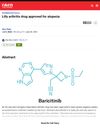
 The drug Olumiant is now approved to treat severe hair loss from alopecia and can also be used for some hospitalized COVID-19 patients.
 89 citations
,
November 2014 in “International Journal of Nanomedicine”
89 citations
,
November 2014 in “International Journal of Nanomedicine” Using nanostructured lipid carriers to deliver spironolactone could improve treatment for hair loss.
January 2008 in “프로그램북(구 초록집)” 3 citations
,
April 2025 in “International Journal of Pharmaceutics” Nanocrystals improve alopecia areata treatment by better targeting hair follicles.
December 2025 in “Drug Design Development and Therapy” Anlotinib combined with taxane/capecitabine is more effective than bevacizumab for treating HER-2 negative metastatic breast cancer.
1 citations
,
January 2010 in “Elsevier eBooks” Testosterone therapy may help men with osteoporosis.
2 citations
,
September 2024 in “Internal Medicine Journal” Upadacitinib helped regrow hair and maintain ulcerative colitis remission.
January 2008 in “xPharm: The Comprehensive Pharmacology Reference” April 2023 in “Zenodo (CERN European Organization for Nuclear Research)” Chronic use of 1 mg/day finasteride for hair loss may delay prostate cancer diagnosis by lowering PSA levels.
 July 2017 in “Clin-Alert”
 Different medications can cause serious side effects in some people.
3 citations
,
October 1993 in “Endocrinology” Ritlecitinib can reduce inflammation and help hair regrow in Alopecia Areata.