25 citations
,
January 2006 in “Journal of the European Academy of Dermatology and Venereology” A new technique effectively treats and diagnoses eruptive vellus hair cysts without recurrence.
5 citations
,
January 2016 in “Indian dermatology online journal” A 25-year-old man with multiple skin tumors was successfully treated with acitretin and methotrexate.
10 citations
,
January 2016 in “ACG Case Reports Journal” Long-term Cape Aloe use causes harmless colon pigmentation that can help detect polyps.
 19 citations
,
June 2007 in “Veterinary Dermatology”
19 citations
,
June 2007 in “Veterinary Dermatology” Amitraz effectively treated sarcoptic mange in three alpacas.
20 citations
,
January 2002 in “Laboratory Animals” Mutations in the hairless gene cause hair loss and skin cysts in rhesus macaques.
February 2024 in “Therya notes” A bat in Veracruz, México, was found with hair loss likely due to an injury and infection.
5 citations
,
May 2022 in “Diagnostics” Certain genetic markers can indicate higher or lower risk for systemic lupus erythematosus.
4 citations
,
October 2023 in “Case Reports in Dermatology” Majocchi’s granuloma should be considered when rashes don't improve with typical treatments.
 February 2024 in “Buletin Veteriner Udayana”
 Using sulfur soap helped improve skin problems in a dog with demodecosis.
 80 citations
,
August 1991 in “The journal of allergy and clinical immunology/Journal of allergy and clinical immunology/The journal of allergy and clinical immunology”
80 citations
,
August 1991 in “The journal of allergy and clinical immunology/Journal of allergy and clinical immunology/The journal of allergy and clinical immunology” Methotrexate reduced the need for steroids in asthma patients without worsening their condition.
January 2014 in “Redalyc (Universidad Autónoma del Estado de México)” A Persian cat had a rare skin condition that didn't improve with treatment.
12 citations
,
June 2022 in “International Journal of Molecular Sciences” Copper boosts cell growth in rabbit hair follicles.

Some bacteria use arsenic compounds as antibiotics, and others have evolved resistance; a particular arsenic-based compound shows potential as a new antimalarial treatment.
186 citations
,
October 1957 in “A M A Archives of Dermatology” Alopecia mucinosa is a challenging condition with unclear diagnosis and treatment.
 June 2021 in “Nepalese Journal of Ophthalmology”
 A 62-year-old woman got a lump on her eyelid from tiny mites, which is the first time this has happened.

MLO proteins are crucial for root hair growth by regulating calcium and ROS levels.
 4 citations
,
September 2018 in “Rendiconti lincei. Scienze fisiche e naturali”
4 citations
,
September 2018 in “Rendiconti lincei. Scienze fisiche e naturali” Researchers concluded that "spigo nardo" is the Himalayan plant Nardostachys jatamansi, used historically in medicine and cosmetics, now critically endangered.
19 citations
,
July 2004 in “Clinical and experimental dermatology” Acneiform follicular mucinosis can be controlled with systemic corticosteroids.
 September 2023 in “Mağallaẗ baġdād li-l-ʿulūm”
 Microbial communities in Duku plant roots vary between wet and dry habitats, affecting plant health.
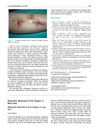 November 2012 in “Actas Dermo-Sifiliográficas”
 An 86-year-old man had a rare tongue melanoma but refused treatment, showing the need for early cancer detection and treatment.
 40 citations
,
March 1984 in “Acta dermato-venereologica”
40 citations
,
March 1984 in “Acta dermato-venereologica” Etretinate has only moderate effects on localized scleroderma and lichen sclerosus.
 June 2018 in “Reactions Weekly”
 A 65-year-old man developed a serious skin cancer linked to a drug he was taking for a fungal infection after a bone marrow transplant.
1 citations
,
January 2023 in “Journal of Clinical Medicine” Minoxidil can cause a skin reaction called ALEP.
December 2004 in “Microbial Ecology in Health and Disease” Pityriasis amiantacea is linked to Staphylococcus aureus infection and can be effectively treated with antibiotics, corticosteroids, and coal tar.
 December 2014 in “Bangladesh Journal of Veterinary Medicine”
 Ectoparasites cause skin issues in Egyptian lesser blind mole rats, affecting their population.
 May 2015 in “Journal of The American Academy of Dermatology”
 A heart transplant patient developed a skin condition called epidermodysplasia verruciformis after taking immune-suppressing drugs.
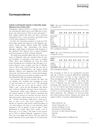 1 citations
,
July 2016 in “International Journal of Dermatology”
1 citations
,
July 2016 in “International Journal of Dermatology” Androgenetic alopecia is less common in Chilean Mapuche than Caucasians, but more common than Asians, with racial differences in prevalence and types.
36 citations
,
July 1996 in “The journal of investigative dermatology/Journal of investigative dermatology” Mice with the 'lanceolate hair' mutation have abnormal hair and skin similar to human Netherton's syndrome.
7 citations
,
September 2024 in “Journal of Microbiology and Biotechnology” Peperomia pellucida is safe to eat and has strong antioxidant benefits.