 March 2026 in “Health Psychology Report”
 Self-compassion can help reduce body shame and psychological distress in people with alopecia and psoriasis.
2 citations
,
May 2025 in “The Journal of Dermatology” Alopecia areata causes significant stigma and emotional distress, with many affected individuals not receiving adequate support or treatment.
2 citations
,
May 1979 in “PubMed” Monilethrix is not caused by a metabolic defect.
 7 citations
,
October 2020 in “Wiener medizinische Wochenschrift”
7 citations
,
October 2020 in “Wiener medizinische Wochenschrift” THA is a rare condition with no significant clinical consequences if thyroid function is normal.
 8 citations
,
April 2014 in “Practical Diabetes”
8 citations
,
April 2014 in “Practical Diabetes” Feeling shame can make it harder for people with diabetes to take care of their health.
 February 2026 in “Psychiatria”
 Stress and emotional suppression can cause hair loss, so addressing both mental and physical health is important.
January 2025 in “Dermatologic Therapy” Alopecia areata patients don't have increased atherosclerosis risk, but may have higher cardiovascular risk due to smoking, blood sugar, and blood pressure.
May 2024 in “Psychotherapie Forum” Behavioral and hypnotherapy improved self-esteem but didn't regrow hair in Alopecia areata.
20 citations
,
August 2015 in “Behaviour change” Cognitions significantly influence Trichotillomania, suggesting cognitive therapies could help.
Understanding both skin and mental health aspects of alopecia areata is crucial for better patient care.
Skin diseases like acne and vitiligo worsen anxiety, depression, loneliness, and quality of life, but alopecia does not.
February 2026 in “BMJ Open” Understanding patients' emotions can help oncologists improve communication and support during treatment decisions.
January 2025 in “Mansoura Medical Journal” TPO antibodies can help identify hypothyroid patients who still have symptoms despite normal TSH levels.
June 2024 in “European neuropsychopharmacology” June 2025 in “Annals of the Rheumatic Diseases” Lupus significantly affects men's self-image, with many struggling to fulfill traditional masculine roles.

Attractive women slightly worsened mood, green backgrounds improved mood, and older people had better moods.
 October 2025 in “Journal of Skin and Sexually Transmitted Diseases”
 Alopecia areata patients often have undetected thyroid issues, so routine thyroid screening is recommended.
 3 citations
,
April 2002 in “The American Journal of Medicine”
3 citations
,
April 2002 in “The American Journal of Medicine” The document concludes that early diagnosis of Balint's syndrome is crucial for effective treatment and that understanding drug interactions, like between ritonavir and statins, is important for patient care.

The man had myotonia, which caused delayed hand grip relaxation.
6 citations
,
January 2024 in “Journal of Cosmetic Dermatology” Alopecia areata patients have worse quality of life, anxiety, and depression than vitiligo patients.
16 citations
,
December 2006 in “Chinese Medical Journal” Early intervention and protective measures are crucial for managing CIPA due to the lack of pain and standard treatment.
 3 citations
,
November 2020 in “Cleveland Clinic Journal of Medicine”
3 citations
,
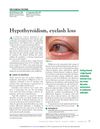
November 2020 in “Cleveland Clinic Journal of Medicine” Eyelash loss can be a sign of thyroid problems.
2 citations
,
September 1993 in “PubMed” Levothyroxine treatment fully cured the young man's hypothyroid symptoms.
8 citations
,
May 2025 in “British Journal of Dermatology” Alopecia areata impacts mental well-being more due to perceptions and stigma than disease severity.
2 citations
,
January 2015 in “Chinese Medical Journal” Lithium can cause skin discoloration even at normal levels, so monitor for signs of intoxication.
 April 2009 in “Contemporary Psychoanalysis”
 Analysts should confront their biases and self-interests to improve therapy.
47 citations
,
July 1998 in “Journal of Investigative Dermatology” A new mutation, Glu402Lys, in hair keratin is linked to variable symptoms of monilethrix.
56 citations
,
March 2017 in “Journal of the American Academy of Dermatology” Alopecia areata patients often have eczema, thyroid issues, vitamin-D deficiency, and anemia.
45 citations
,
May 2024 in “International Journal of Molecular Sciences” Alopecia areata is caused by immune attacks on hair follicles, affecting hair growth and quality of life.
 20 citations
,
February 2022 in “British Journal of Dermatology”
20 citations
,
February 2022 in “British Journal of Dermatology” People with alopecia areata have a higher risk of depression and anxiety, and often face unemployment and work absences.