2 citations
,
September 1978 in “Anatomia Histologia Embryologia” Alkaline phosphatase activity in Beagle dog hair follicles is weakest in anagen and strongest in telogen.
 9 citations
,
June 1947 in “Analytical Chemistry”
9 citations
,
June 1947 in “Analytical Chemistry” Cold waving solutions quickly reduce cystine to cysteine in hair.
7 citations
,
September 2024 in “PLANT PHYSIOLOGY” RALF22 is essential for root hair growth in response to fungal emissions in Arabidopsis.
 1 citations
,
April 2025 in “Cureus”
1 citations
,
April 2025 in “Cureus” Dead Sea water and magnetized saline water can protect skin from UVB damage by activating autophagy.
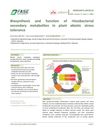 November 2025 in “Frontiers of Agricultural Science and Engineering”
 Rhizobacterial strain RT3 helps lettuce survive drought by producing protective substances like proline.
8 citations
,
January 2024 in “Current Research in Food Science” Combining polysaccharides with alginate improves protection and release of pumpkin seed protein in digestion.
 16 citations
,
September 2018 in “Journal of Molecular Liquids”
16 citations
,
September 2018 in “Journal of Molecular Liquids” The PS-b-PAA copolymer nanomicelles are effective for delivering a cancer treatment drug in photodynamic therapy.
 January 2013 in “Transactions of the Materials Research Society of Japan”
 CMADK reduces hair damage from bleaching and permanent waving.
 March 2024 in “Organic letters”
 A new method efficiently modifies alkenes to create useful medicinal compounds.
 September 2025 in “Institutional Repositories DataBase (IRDB)”
 Lactic acid bacteria fermentation can turn waste into valuable skincare ingredients.

The new sensor can detect a toxic chemical in water with high sensitivity and accuracy.
 5 citations
,
January 2018
5 citations
,
January 2018 The conclusion is that a new test was created to find substances that affect specific ion channels, and it works well for drug discovery.
 1 citations
,
August 2023 in “The journal of pharmacology and experimental therapeutics/The Journal of pharmacology and experimental therapeutics”
1 citations
,
August 2023 in “The journal of pharmacology and experimental therapeutics/The Journal of pharmacology and experimental therapeutics” Kir6.1 mutations in Cantú syndrome increase channel sensitivity and hyperpolarization, while SUR2B mutations do not.
9 citations
,
January 1981 Nucleophilic reagents break down hair keratin, forming more lanthionine and lysinoalanine than in wool.
January 2018 in “Refubium (Universitätsbibliothek der Freien Universität Berlin)” New nanocarriers were developed for safer, targeted drug delivery and diagnostics, showing promise for future medical use.
May 2019 in “Clinica chimica acta” The study developed methods to measure biomarkers in mice and found differences in hormone levels linked to gut microbiota diversity and stress response.
 34 citations
,
August 2002 in “British Journal of Dermatology”
34 citations
,
August 2002 in “British Journal of Dermatology” ALA-PDT is effective and safe for chronic X-ray dermatitis, providing complete or partial remission.
 30 citations
,
June 2024 in “Scientific Reports”
30 citations
,
June 2024 in “Scientific Reports” The hydrogel shows promise for wound healing due to its strong mechanical, antimicrobial, and antioxidant properties.
July 2025 in “Carbohydrate Polymers” The green alga Parachlorella sp. has potential for use in cosmetics and health products due to its antioxidant, anti-hypertensive, and hair growth properties.
April 2022 in “SDÜ Tıp Fakültesi Dergisi” Sodium benzoate at higher doses can harm kidney and liver functions and cause oxidative stress and DNA damage.
The zinc-doped nanocomposite helps heal bone tissue effectively.
June 2026 in “ACS Applied Materials & Interfaces” Dandelion-derived carbon dots effectively kill bacteria and speed up wound healing.
Highly concentrated water-soluble minerals improve health, cosmetics, and agriculture.
 January 2026 in “Frontiers in Bioscience-Landmark”
 Araliadiol protects skin cells from damage by boosting antioxidant defenses.
4 citations
,
August 2018 in “Journal of cellular biochemistry” Acid inside cells speeds up aging and turns on aging signs in mice.
 August 2023 in “International Journal of Molecular Sciences”
 The new hydrogel with zinc and polysaccharides improves wound healing and has antibacterial properties.
January 2025 in “Green energy and technology” August 2023 in “Fermentation” Scientists can use engineered microbes to make L-aspartate and related chemicals, but there's still room to improve their efficiency.
October 2024 in “Journal of the American Society of Nephrology” Some CKD patients' kidney function remains stable over time.
6 citations
,
May 2022 in “Journal of Organometallic Chemistry” The process efficiently converts α-pinene oxide to campholenic aldehyde using a special catalyst, achieving high yields quickly.