October 2025 in “Cell Death and Disease” CD271 is crucial for maintaining healthy skin and preventing inflammation.
 February 2026 in “IOP Conference Series Earth and Environmental Science”
 Candlenut plants in Karo have common traits and varied kinship, with MTB1 and MTB2 being closest.
 December 2025 in “Babcock University Medical Journal”
 CD27 and IL-35 can help diagnose alopecia areata linked to bacterial infections.
 33 citations
,
May 1991 in “British Journal of Pharmacology”
33 citations
,
May 1991 in “British Journal of Pharmacology” Cromakalim relaxes various blood vessels, while minoxidil sulphate is more selective; they likely act on different potassium channels.
January 1997 in “Journal of agricultural medicine and community health” Lower zinc and copper and higher cadmium in hair may be linked to non-insulin dependent diabetes.
65 citations
,
February 2011 in “Molecular cancer therapeutics” CCT128930 is a promising new drug that effectively targets and inhibits a cancer-related protein, showing potential for cancer treatment.
May 2026 in “International Journal of Health Management Review” Alkaline substances can severely damage hair and scalp health.
 January 2024 in “American journal of clinical dermatology”
 Ritlecitinib is safe and well-tolerated for treating alopecia areata in patients aged 12 and older.
8 citations
,
June 2023 in “European Journal of Endocrinology” The inhibitor affects androgen metabolism but not ovarian function.
 6 citations
,
January 1985 in “ACTA HISTOCHEMICA ET CYTOCHEMICA”
6 citations
,
January 1985 in “ACTA HISTOCHEMICA ET CYTOCHEMICA” Tumor cells in calcifying epithelioma of Malherbe resemble hair follicle cells.
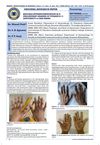 July 2021 in “PARIPEX INDIAN JOURNAL OF RESEARCH”
 Knuckle darkening can be an early sign of vitamin B12 deficiency.
September 2010 in “대한화장품학회지(J. Soc. Cosmet. Scientists Korea)” The study developed a reliable method to measure active ingredients in hair nourisher products using HPLC.
 3 citations
,
July 2021 in “Life science alliance”
3 citations
,
July 2021 in “Life science alliance” PNKP is essential for keeping adult mouse progenitor cells healthy and growing normally.
12 citations
,
September 1990 in “The Anatomical Record” Human anagen hair follicles have unique carbohydrate patterns during keratinization.
18 citations
,
December 2010 in “Journal of analytical atomic spectrometry” A new method accurately measures lead levels in hair to assess exposure.
April 2025 in “International Journal of Dermatology” JAK inhibitors effectively reduce alopecia areata symptoms in Black patients.
April 2020 in “The FASEB journal” Poncirin is a promising inhibitor of Janus Kinase 3, potentially better than tofacitinib.
1 citations
,
June 2021 in “Preprints.org” Hair relaxers and straighteners can be toxic to skin cells.
1 citations
,
April 2016 in “Journal of lipid research” Lipin-1 is important for skin cell differentiation and skin barrier function.
6 citations
,
April 2016 in “Australasian journal of dermatology” Renal transplant patients on tacrolimus and sirolimus may develop acne keloidalis nuchae.
November 2025 in “ACS Omega” The films can help heal wounds by promoting blood vessel growth.
66 citations
,
April 1989 in “Alcoholism Clinical and Experimental Research” The ethanol patch test reliably identifies ALDH phenotype.
7 citations
,
May 1993 in “Journal of the European Academy of Dermatology and Venereology” Cell adhesion molecules are important in the development of certain skin diseases.
7 citations
,
May 2022 in “Cancers” UC.145 may be a new biomarker for predicting gastric cancer.
Activating cannabinoid receptor 1 may help manage psoriasis by reducing certain keratins.
 January 2025 in “Journal of Materials Chemistry B”
  March 2024 in “Organic letters”
 A new method efficiently modifies alkenes to create useful medicinal compounds.
1 citations
,
July 2025 in “Journal of Investigative Dermatology” IL-27 may help prevent hair loss by creating immune-suppressing cells.
 February 2022 in “International journal of reproduction, contraception, obstetrics and gynecology”
 Acanthosis nigricans in teenage girls with PCOS is a sign of obesity, not insulin resistance or glucose intolerance.
 13 citations
,
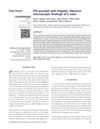
January 2012 in “International journal of trichology”
13 citations
,
January 2012 in “International journal of trichology” The study found that hair fragility in Pili annulati may be caused by cavities and damage within the hair shafts.