1 citations
,
January 2002 in “Yaoxue jinzhan” Finasteride reduces sperm count and affects male reproductive function, while Epristeride does not.
July 2026 in “Journal of the American Academy of Dermatology” Ritlecitinib helps adolescents with severe alopecia areata regrow scalp hair and normalize body hair and nails.
August 2025 in “International Journal of Pharmaceutics” A new finasteride treatment may quickly and effectively promote hair regrowth.
 88 citations
,
January 2011 in “Annals of Dermatology”
88 citations
,
January 2011 in “Annals of Dermatology” The document concludes that specific itchy skin diseases during pregnancy have varying fetal risks and treatments, including corticosteroids and other medications.
1 citations
,
July 2022 in “JEADV Clinical Practice” New and existing treatments for hair loss show promise, with some being more effective for men and others for women.
 25 citations
,
September 2015 in “Clinical Endocrinology”
25 citations
,
September 2015 in “Clinical Endocrinology” Using 17-hydroxyprogesterone levels to diagnose nonclassic congenital adrenal hyperplasia can result in many incorrect diagnoses.
Niosomes improve aminexil's effectiveness in preventing hair loss without needing propylene glycol.
 44 citations
,
February 2015 in “Journal of the American Academy of Dermatology”
44 citations
,
February 2015 in “Journal of the American Academy of Dermatology” Combining diphenylcyclopropenone with anthralin is more effective for hair regrowth in alopecia areata than using diphenylcyclopropenone alone, but may cause more side effects.
 August 2009 in “Expert Review of Dermatology”
 Pregnancy can cause skin changes and conditions that need correct diagnosis and treatment for the health of the mother and baby.
January 2020 in “International Journal of Applied Biology and P” Finasteride treatment for three years changes certain polyamine levels in the blood but not in urine.
26 citations
,
August 2004 in “Alcoholism Clinical and Experimental Research” Ethanol-induced motor incoordination in rats is not affected by increased neuroactive steroids.
27 citations
,
May 2011 in “Journal of dermatology” Methylprednisolone pulse therapy works best for recent and specific types of severe alopecia areata.
16 citations
,
March 1986 in “Biochemical Pharmacology”  July 2025 in “International Journal of Dermatology”
 Safe alopecia treatments for breastfeeding women are limited due to potential risks to infants.
 6 citations
,
September 2013 in “The Obstetrician & Gynaecologist”
6 citations
,
September 2013 in “The Obstetrician & Gynaecologist” Pregnancy can cause unique skin issues, some of which may risk the mother and baby's health and need careful treatment.
5 citations
,
July 2007 in “PubMed” Combining oral prednisolone and topical minoxidil effectively reduces hair loss and promotes regrowth in alopecia areata.
October 2025 in “Indian Journal of Paediatric Dermatology” The infant's hair loss resolved naturally by 20 months without treatment.
20 citations
,
December 2021 in “Journal of the American Academy of Dermatology” Continuous treatment with ritlecitinib and brepocitinib is needed to maintain hair regrowth in alopecia areata.
10 citations
,
November 2019 in “American Journal of Tropical Medicine and Hygiene” Overdosing on veterinary albendazole can cause severe health issues like hair loss and low blood cell count.
1 citations
,
May 2022 in “Journal of Drugs in Dermatology” Low-dose naltrexone and platelet-rich plasma can regrow hair in lichen planopilaris.
 September 2016 in “Más dermatología”
 Postpartum hair loss usually stops within 4-6 months.
58 citations
,
May 2004 in “British Journal of Dermatology” Diphenylcyclopropenone treatment helps hair growth in alopecia areata by promoting blood vessel growth and cell survival.
6 citations
,
June 1983 in “Cancer” A six-drug treatment for metastatic breast cancer showed promising results with low side effects, especially in premenopausal women.
 27 citations
,
July 1982 in “British Journal of Dermatology”
27 citations
,
July 1982 in “British Journal of Dermatology” The antiandrogen 11α-hydroxyprogesterone effectively reduces skin oil and cholesterol when applied to the skin.
 3 citations
,
April 2012 in “Osteoporosis International”
3 citations
,
April 2012 in “Osteoporosis International” A woman experienced hair loss after taking strontium ranelate for osteoporosis.
 2 citations
,
July 2021 in “Journal of Dermatology and Dermatologic Surgery”
2 citations
,
July 2021 in “Journal of Dermatology and Dermatologic Surgery” Exposure to the hair loss drug finasteride during pregnancy can cause genital anomalies in male babies, but not in female babies. It's best to avoid this drug in women who could potentially become pregnant.
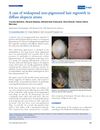 March 2019 in “Our Dermatology Online”
 A woman with severe hair loss regrew mostly white hair after treatment.
 64 citations
,
June 1992 in “International Journal of Dermatology”
64 citations
,
June 1992 in “International Journal of Dermatology” Pregnancy often causes skin changes like darkening, stretch marks, and hair growth, which may improve after childbirth.
 1 citations
,
May 2015 in “Journal of The American Academy of Dermatology”
1 citations
,
May 2015 in “Journal of The American Academy of Dermatology” Both azathioprine and betamethasone treatments effectively regrow hair in alopecia areata, but azathioprine may be safer.