 January 2022 in “Juniper Online Journal of Case Studies”
 A patient regrew hair after a lung transplant using standard post-transplant medication.
 March 2021 in “Actas Dermo-Sifiliográficas”
 The microbiome may be linked to hair loss and could be a target for new treatments.
 January 2020 in “Der Pharmacia Lettre”
 Nanoparticle-based herbal remedies could be promising for treating hair loss with fewer side effects and lower cost, but more research is needed.
 May 2018 in “Journal of dermatology and dermatitis”
 PRP is a promising treatment for autoimmune hair loss but its exact workings are not fully understood.
 January 2018 in “Elsevier eBooks”
 The document concludes that alopecia has various forms, each with specific treatments, but no definitive cure for certain types like CCCA has been proven.
October 2017 in “Our Dermatology Online” DCP in isopropanol is better tolerated for treating alopecia areata.
 January 2017 in “Springer eBooks”
 Over 40% of postmenopausal women experience hair loss, with treatments aiming to stop further loss and possibly thicken hair.
 March 2015 in “Polish Journal of Public Health”
 Blood vessel patterns in skin diseases relate to certain blood markers in systemic sclerosis but not in psoriasis or psoriatic arthritis, and may indicate circulation issues in alopecia.
 November 2012 in “South African Family Practice”
 The article concludes that early treatment of alopecia is crucial to prevent permanent hair loss.
 January 2012 in “Elsevier eBooks”
 Hair loss can cause emotional and social issues, and various treatments, including medication, surgery, and psychological support, are needed.
 January 2008 in “Springer eBooks”
 Thyroid disease can cause hair loss and treating thyroid problems might help with hair disorders.
January 2023 in “Journal of Cosmetic Dermatology” Alopecia areata gained more interest on social media than pattern hair loss, with TikTok showing more personal stories and YouTube offering higher quality educational content.
September 2022 in “International Journal of Trichology” Both microneedling and injections are equally effective for treating alopecia areata.
August 2022 in “Precision Clinical Medicine” JAM-A helps hair regrowth in alopecia areata by protecting VCAN in skin cells.
 September 1998 in “Journal of The European Academy of Dermatology and Venereology”
 Auto-portraits help evaluate scalp hair.
June 2025 in “Frontiers in Medicine” Omalizumab may cause temporary hair loss, especially in women aged 18-60.
1 citations
,
May 2017 in “InTech eBooks” New treatments focusing on immune pathways show promise for stubborn hair loss.
 2 citations
,
November 1998 in “Journal of The European Academy of Dermatology and Venereology”
2 citations
,
November 1998 in “Journal of The European Academy of Dermatology and Venereology” A patient with a severe type of hair loss experienced partial hair regrowth after treatment with a specific light therapy and a medication called interferon α2a.
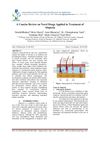
New therapies like JAK inhibitors, PRP, and stem cell treatments show promise for better alopecia management.
2 citations
,
November 1999 in “Journal of Cutaneous Medicine and Surgery” May 2025 in “International Journal of Trichology” Partially bald areas in Indian AGA patients still have hair growth cells, suggesting early treatment is best.
July 2021 in “Journal of reports in pharmaceutical sciences” The 2% minoxidil nanosuspension is as effective as the commercial product but safer and easier to use.
September 2025 in “Value in Health” 2 citations
,
July 2024 in “Digestive Diseases and Sciences” October 2024 in “Zeitschrift für angewandte Mathematik und Physik”  January 2022 in “Journal of Dermatology and Dermatologic Surgery”
 Trichoscopy is useful for quickly diagnosing different types of hair loss without needing biopsies.
2 citations
,
May 2023 in “Journal of Indian Society of Periodontology” Dental care may help improve hair loss in alopecia patients.
 May 2026 in “Zenodo (CERN European Organization for Nuclear Research)”
 New treatments for hair loss focus on personalized and regenerative approaches for better results.
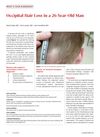 January 2022 in “Consultant”
 The man's occipital hair loss was due to temporal triangular alopecia, not alopecia areata.
 May 2019 in “Australasian Journal of Dermatology”
 The document discusses hair and nail conditions, updates on treatments for alopecia, and controversies around finasteride use.