 38 citations
,
February 2009 in “Journal of The European Academy of Dermatology and Venereology”
38 citations
,
February 2009 in “Journal of The European Academy of Dermatology and Venereology” Severe vertex pattern hair loss may indicate a higher risk for artery plaque buildup.
 23 citations
,
November 2018 in “Journal of the European Academy of Dermatology and Venereology”
23 citations
,
November 2018 in “Journal of the European Academy of Dermatology and Venereology” The study concluded that severity of Frontal fibrosing alopecia is not linked to how long someone has it, can start before menopause, and eyebrow loss may be an early sign.
14 citations
,
May 2009 in “Journal of the American Academy of Dermatology” The patient's scalp lesions stabilized with a combination of treatments after initial therapies failed.
 7 citations
,
August 2021 in “Journal of the European Academy of Dermatology and Venereology”
7 citations
,
August 2021 in “Journal of the European Academy of Dermatology and Venereology” Early treatment of fibrosing alopecia in a pattern distribution may improve outcomes.
 7 citations
,
December 2020 in “Clinics in Dermatology”
7 citations
,
December 2020 in “Clinics in Dermatology” Some alopecia treatments might help treat COVID-19, but more research is needed.
 6 citations
,
September 2021 in “AESTHETIC OROFACIAL SCIENCE”
6 citations
,
September 2021 in “AESTHETIC OROFACIAL SCIENCE” Platelet-rich plasma (PRP) is a cost-effective way to improve skin rejuvenation and repair in facial aesthetics.
 6 citations
,
January 2017 in “British Journal of Dermatology”
6 citations
,
January 2017 in “British Journal of Dermatology” Frontal fibrosing alopecia is a scarring hair loss condition mainly affecting older women, with no known cause and treatments that may help stabilize hair loss.
 4 citations
,
January 2021 in “Postępy Dermatologii i Alergologii”
4 citations
,
January 2021 in “Postępy Dermatologii i Alergologii” Hydroxychloroquine can help treat certain types of hair loss.
 1 citations
,
April 2016 in “The American Journal of the Medical Sciences”
1 citations
,
April 2016 in “The American Journal of the Medical Sciences” The document concludes that doctors should check for frontal fibrosing alopecia in patients with acquired hyperpigmentation and that early treatment is important.
 May 2012 in “CRC Press eBooks”
 Some patients on anti-TNF drugs experience a type of hair loss called TAIAPA.
June 2026 in “British Journal of Dermatology” Photodynamic therapy for actinic keratosis can cause permanent hair loss.
December 2025 in “Actas Dermo-Sifiliográficas” Use a combination of oral dutasteride, topical treatments, and hydroxychloroquine to manage frontal fibrosing alopecia.
November 2025 in “Contribuciones a las Ciencias Sociales” PRP is a safe and versatile treatment option, but more standardized clinical trials are needed to confirm its effectiveness.
September 2024 in “Revista Foco” Platelet-Rich Plasma (PRP) is a safe and effective tool for facial rejuvenation and scar treatment.
July 2024 in “LA Referencia (Red Federada de Repositorios Institucionales de Publicaciones Científicas)” PRP shows promise in improving skin health and rejuvenation, but more research is needed.
 October 2023 in “Peer review”
 PRP is a safe and effective treatment for hair loss.
 January 2021 in “Anais do Congresso Brasileiro de Reumatologia 2020”
 Tofacitinib improved arthritis and partially improved hair loss in a lupus patient without side effects.
 December 2020 in “Skin appendage disorders”
 A young man with an unusual type of scarring hair loss suggests a possible new variant of a known scalp condition.
August 2020 in “European Journal of Dermatology” Dutasteride for hair loss can cause skin reactions like itchy red plaques.
 December 2019 in “Medicina estética/Medicina estética”
 PRP may help improve hair transplant results.
 December 2019 in “Medicina estética/Medicina estética”
 PRP may help improve hair transplant results.
April 2015 in “Journal of the American Academy of Dermatology” The woman likely has secondary syphilis, treatable with penicillin.
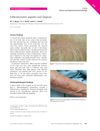 May 2014 in “Clinical and Experimental Dermatology”
 A 70-year-old woman with a rare skin condition improved after treatment with topical steroids and acitretin.
 February 2013 in “Journal of the American Academy of Dermatology”
 A woman's hair loss looked like a different condition due to her hairstyle, and treatment stopped further hair loss but didn't regrow hair.
 117 citations
,
March 2013 in “Journal of the European Academy of Dermatology and Venereology”
117 citations
,
March 2013 in “Journal of the European Academy of Dermatology and Venereology” No effective treatment for frontal fibrosing alopecia was found, but oral 5-alpha-reductase inhibitors had the best response; for lichen planopilaris, topical corticosteroids were commonly used but had a high relapse rate.
 8 citations
,
October 2018 in “Journal of The American Academy of Dermatology”
8 citations
,
October 2018 in “Journal of The American Academy of Dermatology” The review suggests there's no agreed treatment for Frontal Fibrosing Alopecia, but hydroxychloroquine and 5a-reductase inhibitors are most effective. New treatments like platelet-rich plasma and LED light could help if standard treatments fail.
 41 citations
,
July 2017 in “Journal of The American Academy of Dermatology”
41 citations
,
July 2017 in “Journal of The American Academy of Dermatology” Men with Frontal fibrosing alopecia typically lose hair on the front scalp and sometimes on sideburns and upper lip, with treatments showing varied success.
 26 citations
,
June 2018 in “Australasian Journal of Dermatology”
26 citations
,
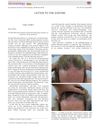
June 2018 in “Australasian Journal of Dermatology” Stopping sunscreen use on the forehead led to hair regrowth in a woman with frontal fibrosing alopecia.
 11 citations
,
May 2010 in “Annals of the Academy of Medicine Singapore”
11 citations
,
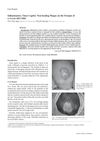
May 2010 in “Annals of the Academy of Medicine Singapore” Tinea capitis can cause scalp issues in children and should be considered in similar cases; treatment with griseofulvin and selenium sulfide is effective.
 8 citations
,
September 2011 in “European Journal of Dermatology”
8 citations
,
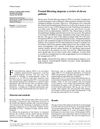
September 2011 in “European Journal of Dermatology” Most treatments for Frontal Fibrosing Alopecia are ineffective, but early anti-inflammatory therapy may help and the condition may stabilize over time.