 3 citations
,
January 2021 in “Skin appendage disorders”
3 citations
,
January 2021 in “Skin appendage disorders” Hair loss can occur about 4 weeks after scalp surgery but usually grows back within 3 months without treatment.
 1 citations
,
October 2013 in “Expert Review of Dermatology”
1 citations
,
October 2013 in “Expert Review of Dermatology” Diagnosing alopecia areata is challenging and requires careful examination and various tests to distinguish it from other hair loss types.
 24 citations
,
September 1985 in “Journal of The American Academy of Dermatology”
24 citations
,
September 1985 in “Journal of The American Academy of Dermatology” The report suggests a possible link between hair loss and hidden scalp tumors but states more evidence is needed to confirm this.
 8 citations
,
January 1996 in “Springer eBooks”
8 citations
,
January 1996 in “Springer eBooks” Male pattern baldness may be caused by factors like poor blood circulation, scalp tension, stress, and hormonal imbalances, but the exact causes are still unclear.
 2 citations
,
January 2019 in “Case Reports in Dermatology”
2 citations
,
January 2019 in “Case Reports in Dermatology” A 66-year-old woman's thick scalp and hair loss were confirmed as lipedematous alopecia, a rare condition possibly influenced by genetics, with no effective treatment known.
 March 2023 in “International journal of trichology”
 Six genetic conditions are often linked to complete scalp hair loss in children.
 18 citations
,
December 2014 in “Plastic surgery”
18 citations
,
December 2014 in “Plastic surgery” Follicular Unit Transplantation is an effective and safe treatment for hair loss due to scarring.
7 citations
,
May 2021 in “Clinical Case Reports” Alopecic and aseptic nodules of the scalp are rare, treatable, and often resolve with doxycycline or on their own.
 3 citations
,
January 2014 in “Plastic surgery (Oakville. Print)”
3 citations
,
January 2014 in “Plastic surgery (Oakville. Print)” Hair transplant surgery is a safe and effective way to treat hair loss from scarring in Chinese patients.
 2 citations
,
July 2018 in “Elsevier eBooks”
2 citations
,
July 2018 in “Elsevier eBooks” Trichoscopy is a useful tool for diagnosing and managing hair and scalp conditions, often better than traditional methods.
 245 citations
,
March 2012 in “Journal of The American Academy of Dermatology”
245 citations
,
March 2012 in “Journal of The American Academy of Dermatology” Dermatoscopy is useful for identifying different hair and scalp conditions and can reduce the need for biopsies.
 235 citations
,
January 2011 in “Journal of Clinical Investigation”
235 citations
,
January 2011 in “Journal of Clinical Investigation” Men with baldness due to androgenetic alopecia still have hair stem cells, but lack specific cells needed for hair growth.
 69 citations
,
January 2015 in “Current problems in dermatology”
69 citations
,
January 2015 in “Current problems in dermatology” Trichoscopy is a quick, noninvasive method to diagnose hair and scalp disorders, often reducing the need for biopsies.
 25 citations
,
August 2014 in “Endocrinology”
25 citations
,
August 2014 in “Endocrinology” Researchers created a mouse model of a type of rickets that does not cause hair loss.
 24 citations
,
September 2014 in “Journal of the European Academy of Dermatology and Venereology”
24 citations
,
September 2014 in “Journal of the European Academy of Dermatology and Venereology” Trichoscopy is reliable for diagnosing Temporal Triangular Alopecia and can prevent unnecessary biopsies and wrong treatments.
 6 citations
,
February 1974 in “The BMJ”
6 citations
,
February 1974 in “The BMJ” The document concludes that scalp disorders can be treated with hair washing, specific shampoos, medications, and sometimes surgery or hair transplants, but hereditary baldness is untreatable.
 3 citations
,
April 2016 in “International Journal of Dermatology”
3 citations
,
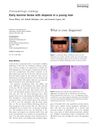
April 2016 in “International Journal of Dermatology” A young man was diagnosed with trichoepitheliomas, causing thick skin and hair loss.
 1 citations
,
February 1988 in “The BMJ”
1 citations
,
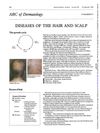
February 1988 in “The BMJ” The document explains different hair and scalp conditions, including common hair loss after pregnancy or illness, drug-induced hair loss, hereditary excessive hair growth, patterned baldness, autoimmune hair loss, and permanent loss due to skin disease, with generally limited treatment options.
 August 2018 in “Journal of The American Academy of Dermatology”
 The study concluded that a new method can effectively assess scalp sun damage in balding men, which increases with age and sun exposure.
 September 1998 in “Journal of The European Academy of Dermatology and Venereology”
 Aging can lead to poorer scalp and hair health, including less hair and more scalp diseases, which should be managed to help older people feel better.
 January 2009 in “Egyptian Journal of Medical Human Genetics”
 The study suggests that a specific gene variation and higher gene activity are linked to increased baldness in Egyptian men.
48 citations
,
April 2019 in “PloS one” Alopecia areata patients have more Propionibacterium acnes and less Staphylococcus epidermidis on their scalps.
 6 citations
,
January 2015 in “Dermatology”
6 citations
,
January 2015 in “Dermatology” Trichoscopy helps diagnose hair and scalp problems but isn't always definitive and should be used with other methods.
 4 citations
,
July 2015 in “Case Reports in Dermatology”
4 citations
,
July 2015 in “Case Reports in Dermatology” A woman with unexplained hair loss was found to have harmless skin tumors and a scarring hair loss condition, but the tumors didn't cause the hair loss.
 1 citations
,
May 2017 in “InTech eBooks”
1 citations
,
May 2017 in “InTech eBooks” The document concludes that alopecia areata is an unpredictable autoimmune hair loss condition with no cure, but various treatments exist that require personalized approaches.
 April 2026 in “International Journal of Drug Delivery Technology”
 Trichoscopy is a reliable, non-invasive tool for diagnosing scalp alopecias.
 November 2025 in “Journal of Pioneering Medical Science”
 Dietary interventions improved hair density and reduced dandruff by balancing scalp microbiota and reducing inflammation.
2 citations
,
August 2023 in “Infection and Drug Resistance” A scalp infection by Mycobacterium abscessus can cause hair loss even in healthy individuals and may be misdiagnosed.
 60 citations
,
September 2010 in “Journal of the American Academy of Dermatology”
60 citations
,
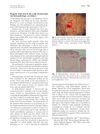
September 2010 in “Journal of the American Academy of Dermatology” Small white dots on the scalp seen with a dermoscope correspond to sweat ducts and vary with different hair disorders.
 53 citations
,
September 2011
53 citations
,
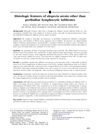
September 2011 Other common signs, not just the well-known immune cells around hair bulbs, are important for diagnosing hair loss from alopecia areata.