Search
forProducts matching "alpecin c1"
Tracking 2 products like 318 Alpecin C1 Caffeine Shampoo and 318 Alpecin C1 Caffeine Shampoo from by companies like Amazon and oxfordon line pharmacy. View all 2 products »
Sort by
Research
210-240 / 1000+ results
research Efficacy of a Complex of 5-Aminolevulinic Acid and Glycyl-Histidyl-Lysine Peptide on Hair Growth
A complex of 5-aminolevulinic acid and glycyl-histidyl-lysine peptide may help increase hair count in male pattern hair loss without side effects.
research An Uncontrolled Case Series Using a Botanically Derived, β-Cyclodextrin Inclusion Complex in Two Androgenetic Alopecia-Affected Male Subjects
Herbal formula shows promise for hair loss treatment.
research Evaluation of Eclipta alba L. selections for higher biomass and bioactive compound
Eclipta alba IIHR Sel EA 43 is best for large-scale cultivation due to high growth, yield, and wedelolactone content.

research Central Centrifugal Cicatricial Alopecia (CCCA)
CCCA is a common hair loss condition in African American women, often inherited and influenced by hairstyling, with unique scalp features detectable by special tools.
research MECHANISM OF ACTION OF AVICENNIA MARINA HEARTWOOD EXTRACT AND AVICEQUINONE C ON HUMAN DERMAL PAPILLA CELLS ISOLATED FROM ANDROGENIC ALOPECIA PATIENTS
Avicennia Marina extract and avicequinone C can reduce hair loss hormone production and increase hair growth factors, suggesting they could be used to treat androgenic alopecia.
research Safety and efficacy of ALRV5XR in women with androgenetic alopecia or telogen effluvium: A randomised, double-blinded, placebo-controlled clinical trial
ALRV5XR significantly improves hair density in women with hair loss and is well-tolerated.
research 695 Selectively targeting JAK1 or JAK3 pathway is sufficient to reverse alopecia areata
Blocking JAK1 or JAK3 helps reverse hair loss in a mouse model of alopecia areata.
research Alopesi areata hastalarında topikal kortikosteroid (%0.05 Klobetasol Propionat) tedavisi ile % 1 topikal pimekrolimus tedavisinin karşılaştırılması / Comparison of topical corticosteroid (%0.05 Clobetasol propionate) treatment and %1 pimecrolimus treatment in alopesia areata patients
research Alopecia Areata is associated with MICA and an extended HLA haplotype
Certain genes are linked to the risk of developing Alopecia Areata.
research Cellular retinol‐binding protein‐1 expression increases with increasing clinical severity of alopecia areata
Higher CRBP1 levels are linked to more severe alopecia areata.
research Hair Loss Profiles and Ritlecitinib Efficacy in Patients with Alopecia Areata: Post Hoc Analysis of the ALLEGRO Phase 2b/3 Study
Ritlecitinib effectively improves hair growth in alopecia areata patients, regardless of hair loss pattern.
research Connubial Androgenetic Alopecia
Hamilton scale imprecise, hair shaft diameter decreases, stem cell transplant regrows hair, ECP ineffective for alopecia areata universalis.
research Allopregnanolone is required for prepulse inhibition deficits induced by D1 dopamine receptor activation
Allopregnanolone is needed for certain brain processing issues caused by D1 dopamine receptor activation.
research OA01.03. Antisecretory and antiulcer activities of eclipta alba linn. In rats
Eclipta alba extract reduces ulcers and protects the stomach in rats.
research A Cost-per-Responder Analysis of Ritlecitinib vs Baricitinib in Severe Alopecia Areata
Ritlecitinib is more effective and cheaper than baricitinib for treating severe alopecia areata.
research Mechanotransduction in Androgenetic Alopecia: An In Silico Repositioning Study of PIEZO1 + MLCK Axis Using Cofolding and Pilosebaceous Single-Cell Atlas Constraints
Potential compounds may inhibit hair loss by targeting a non-androgen pathway.
research Apremilast and tofacitinib exert differential effects in the humanized mouse model of alopecia areata
Tofacitinib was more effective than apremilast in treating hair loss in a mouse model of alopecia areata.
research 42146 Concurrent improvement in scalp hair and eyebrow or eyelash regrowth in patients with severe alopecia areata treated with baricitinib
Baricitinib treatment can help regrow scalp hair and eyebrows or eyelashes in people with severe alopecia areata.
research 1270 Fibroproliferative genes are preferentially expressed in central centrifugal cicatricial alopecia
CCCA may be a fibroproliferative disorder, and anti-fibrotic therapies could help.
research Development of topical patches releasing allicin using garlic extract
Topical patches with garlic extract effectively release allicin for hair loss treatment.
research Mechanotransduction in Androgenetic Alopecia: An In Silico Repositioning Study of PIEZO1 + MLCK Axis Using Cofolding and Pilosebaceous Single-Cell Atlas Constraints
Potential compounds may inhibit hair loss by targeting a non-androgen pathway.
research Integrated Safety Analysis of Ritlecitinib in Adolescent Patients with Alopecia Areata from the Randomized, Placebo-Controlled ALLEGRO Phase 2b/3 and Ongoing Open-Label Phase 3 ALLEGRO-LT Studies
research Comparison of The Efficacy of Topical Cetirizine 1% Versus Topical Minoxidil 5% Solution in Treatment of Male Androgenetic Alopecia
Minoxidil is more effective than cetirizine for treating male hair loss.
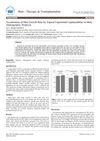
research Acceleration of Hair Growth Rate by Topical Liposomal Cepharanthine in Male Androgenetic Alopecia
Liposomal cepharanthine lotion speeds up hair growth in men with early balding.
research Development and pilot-testing of the Alopecia Areata Assessment Tool (ALTO)
The Alopecia Areata Assessment Tool (ALTO) effectively identifies alopecia areata from other hair loss types but needs more validation.
research MiR‐200c‐3p as a novel genetic marker and therapeutic tool for alopecia areata
miR-200c-3p could help diagnose and treat alopecia areata.
research Proteomic Profiling of Central Centrifugal Cicatricial Alopecia Reveals Role of Humoral Immune Response Pathway and Metabolic Dysregulation
CCCA involves immune response and metabolism issues, suggesting new treatment options.
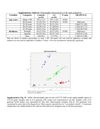
research Association of Rs231775 Genetic Variant of Cytotoxic T-lymphocyte Associated Protein 4 with Alopecia Areata Disease in Males: A Case–Control Study
The rs231775 genetic variant is linked to a higher risk and severity of Alopecia Areata in males.
research Teicoplanin alleviates androgenetic alopecia through inhibition of androgen receptor expression and enhancing dermal papilla cell proliferation
Teicoplanin may help treat hair loss by reducing androgen receptors and boosting hair cell growth.