Search
forProducts matching "alpha reductase"
Tracking 14 products like 142 Firide 1mg, 142 Firide 1mg, 118 REGROWTH LABS 7HP, 184 DUTASTERIDE / TAMSULOZIN 0.5 MG and 141 Firide 5mg Hair Growth prevent Hair Loss from by companies like oasisstad.net, HealthyAreaStore, Minoxidil Express and OnlinePharmacy-BG. View all 14 products »
Sort by
Research
210-240 / 1000+ resultsresearch Reduced Prostate Cancer Risk in Patients with Androgenetic Alopecia Using 5-Alpha Reductase Inhibitors: A TriNetX Real-World Cohort Study
research Re: A Review of the FAERS Data on 5-Alpha Reductase Inhibitors: Implications for Post-Finasteride Syndrome
research The effect of finasteride, a 5 alpha-reductase inhibitor, on scalp skin testosterone and dihydrotestosterone concentrations in patients with male pattern baldness
research Effect of finasteride, a 5 alpha-reductase inhibitor, on serum gonadotropins in normal men
research Psychiatric Comorbidity Related to the Therapy of Male Androgenetic Alopecia Independent of the 5–Alpha Reductase Pathway
research Effect of MK-386, a novel inhibitor of type 1 5 alpha-reductase, alone and in combination with finasteride, on serum dihydrotestosterone concentrations in men
research Inhibitors of 5α-Reductase in the Treatment of Benign Prostatic Hyperplasia
5α-reductase inhibitors and alpha-1 adrenergic antagonists together effectively treat benign prostatic hyperplasia, with long-term benefits.
research Medikamentöse Therapie der BPH Ist eine Kombinationstherapie mit 5α-Reduktasehemmern und α-Rezeptorenblockern sinnvoll?
Combination therapy is more effective for prostate volumes over 60 ml.
research 5‐α reductase inhibitors and the risk of anaemia among men with benign prostatic hyperplasia: A population‐based cohort study
5α-reductase inhibitors do not increase anaemia risk compared to α-blockers in men with BPH.

research Evaluating the safety profile of α-1 blockers, 5α-reductase inhibitors, and PDE5I for BPH: a disproportionality analysis of real-world adverse events based on FDA adverse event reporting system (FAERS)
These medications for BPH have known risks and may have new side effects.

research Evaluating the safety profile of α-1 blockers, 5α-reductase inhibitors, and PDE5I for BPH: a disproportionality analysis of real-world adverse events based on FDA adverse event reporting system (FAERS)
These medications for BPH have known risks and may have new side effects.
research Evaluating the safety profile of α-1 blockers, 5α-reductase inhibitors, and PDE5I for BPH: a disproportionality analysis of real-world adverse events based on FDA adverse event reporting system (FAERS)
PDE5 inhibitors cause earlier adverse events in BPH treatment, requiring careful monitoring.
research Review: Adding α1-blockers to 5α-reductase inhibitors improves lower urinary tract symptoms in men
Combining α1-blockers with 5α-reductase inhibitors improves urinary symptoms in men.
research A Comparison of Varying alpha-Blockers and Other Pharmacotherapy Options for Lower Urinary Tract Symptoms.
Alpha-blockers are the most effective and widely used treatment for lower urinary tract symptoms, with minimal side effects.
research 5α-reductase activity in the prostate
Blocking the enzyme 5α-reductase can shrink the prostate and help treat enlarged prostate issues.
research DIHYDROTESTOSTERONE AND THE PROSTATE: THE SCIENTIFIC RATIONALE FOR 5α-REDUCTASE INHIBITORS IN THE TREATMENT OF BENIGN PROSTATIC HYPERPLASIA
Drugs that block DHT production can effectively treat enlarged prostate and improve urinary issues with some sexual side effects.
research The Risks and Benefits of 5α-Reductase Inhibitors for Prostate-Cancer Prevention
5α-reductase inhibitors may prevent prostate cancer but could also raise the risk of more severe cancers.
research Effects of Finasteride (MK-906), a 5α-Reductase Inhibitor, on Circulating Androgens in Male Volunteers*
Finasteride safely lowers DHT levels without affecting testosterone.
research Effect of Testosterone Supplementation With and Without a Dual 5α-Reductase Inhibitor on Fat-Free Mass in Men With Suppressed Testosterone Production
Testosterone's muscle-building effects do not require its conversion to DHT.
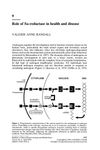
research 9 Role of 5α-reductase in health and disease
5α-reductase is essential for male sexual development and its inhibitors have potential in treating various conditions related to hormone action.
research 5α‐Reductase Isozymes and Androgen Actions in the Prostate
5α‐reductase isozymes are crucial for prostate development and health, and targeting them can help prevent and treat prostate issues.

research Association of Suicidality and Depression With 5α-Reductase Inhibitors
Men over 66 taking medication for prostate enlargement have a higher risk of depression and self-harm, especially in the first 18 months of treatment.
research Inhibition of skin 5α-reductase by oral contraceptive progestinsin vitro
Norgestimate is the most effective birth control progestin for reducing an enzyme linked to acne and excessive hair growth in women.
research Expression of mRNA for androgen receptor, 5alpha-reductase and 17beta-hydroxysteroid dehydrogenase in human dermal papilla cells
Hair sensitivity to androgens is partly controlled by specific enzyme expressions in different hair areas.
research Effect of 5α-Reductase Inhibitors on Sexual Function: A Meta-Analysis and Systematic Review of Randomized Controlled Trials
5α-reductase inhibitors increase the risk of sexual dysfunction, especially in men with enlarged prostate.
research Dihydrotestosterone Stimulates 5a-Reductase Activity in Pubic Skin Fibroblasts*
Dihydrotestosterone increases the activity of an enzyme in pubic skin cells that converts testosterone to dihydrotestosterone.
research Nipple Differentiation in Fetal Male Rats Treated with an Inhibitor of the Enzyme 5α-Reductase: Definition of a Selective Role for Dihydrotestosterone*
Blocking a specific enzyme in male rat fetuses leads to the development of nipples and feminized genitalia.

research Inhibition of 5α-Reductase, IL-6 Secretion, and Oxidation Process of Equisetum debile Roxb. ex Vaucher Extract as Functional Food and Nutraceuticals Ingredients
Equisetum debile extract, especially the ethyl acetate type, may be a promising natural ingredient for anti-hair loss products.
research Overexpression of aldo-keto reductase 1C3 (AKR1C3) in LNCaP cells diverts androgen metabolism towards testosterone resulting in resistance to the 5α-reductase inhibitor finasteride
Too much AKR1C3 enzyme causes resistance to finasteride by increasing testosterone.