Search
for
Sort by
Research
330-360 / 1000+ results
research Medical treatments for balding in men.
Two drugs, Minoxidil and Finasteride, can modestly maintain or regrow hair on the scalp's vertex with minimal side effects.
research Lasers in Onychomycosis
Oral minoxidil effectively increases hair growth in male baldness but can cause side effects like excessive hair growth and swelling.
research Low-dose oral minoxidil for treating alopecia: A 3-year North American retrospective case series
Low-dose oral minoxidil is an effective and well-tolerated treatment for hair growth in alopecia patients.

research What's Old Is New Again
Low-dose oral minoxidil is being revisited as a promising hair loss treatment.

research 52952 Oral Minoxidil New York Times Coverage: The Impact on Patient Perceptions and Dermatologists’ Approaches to Androgenetic Alopecia
The New York Times article boosted interest in using low dose oral minoxidil for hair loss.

research Efficacy and safety of low-dose oral minoxidil in the management of androgenetic alopecia
Low-dose oral minoxidil is effective and safe for treating hair loss in men and women.

research Low‐dose oral minoxidil as treatment for non‐scarring alopecia: a systematic review
Low-dose oral minoxidil effectively treats non-scarring hair loss with some side effects like hypertrichosis and postural hypotension.
research RF – Oral Minoxidil for Female Pattern Hair Loss and Other Alopecias
Oral minoxidil helps treat hair loss and has reversible side effects.
research Development of delivery systems for the topical passive and iontophoretic administration of minoxidil for the androgenic alopecia treatment
Iontophoresis and chitosan microparticles improve minoxidil delivery for hair loss treatment.
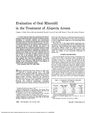
research Evaluation of Oral Minoxidil in the Treatment of Alopecia Areata
Oral minoxidil helps hair regrowth in 80% of alopecia patients, but only 18% see cosmetic improvement.
research Rosemary oil vs minoxidil 2% for the treatment of androgenetic alopecia: a randomized comparative trial.
Rosemary oil and minoxidil 2% both effectively increase hair count in people with androgenetic alopecia, but rosemary oil causes less scalp itching.
research Novel agents for the treatment of alopecia
New treatments for hair loss show promise, especially finasteride for men and a stronger minoxidil formula.
research 74924 Oral Minoxidil for Pediatric and Adolescent Hair Loss: A Cross-Sectional Survey of Satisfaction and Perceived Benefit
Most young patients found oral minoxidil helpful for hair loss and were willing to continue using it.
research Safety and Efficacy of Minoxidil Treatment in Scarring Alopecia: A Scoping Review.
Minoxidil may help with hair regrowth and disease stabilization in scarring alopecia, but side effects vary, needing more research for consistent safety and effectiveness.
research Minoxidil topical treatment may be more efficient if applied on damp scalp in comparison with dry scalp
Minoxidil works better when applied on a damp scalp than a dry one.
research PLATELET-RICH PLASMA VS. MINOXIDIL IN ANDROGENETIC ALOPECIA: COMPARATIVE EFFECTIVENESS, SAFETY, AND PATIENT SATISFACTION – A SYSTEMATIC REVIEW
PRP may be more effective and satisfying for hair regrowth than minoxidil, with similar safety.

research A Comparative Study between the Efficacy and Safety of 5% Minoxidil Solution and 5% Minoxidil Milky Lotion in the Treatment of Male Androgenic Alopecia.
Both 5% minoxidil solution and milky lotion effectively and safely treat male hair loss, with the lotion being a good alternative for those sensitive to certain ingredients.
research Eficácia Do Minoxidil Tópico E Oral No Tratamento Da Alopecia Androgenética
Low-dose oral minoxidil is as effective as or better than topical minoxidil for hair growth but may cause mild side effects.
research Preparation and evaluation of a multimodal minoxidil microemulsion versus minoxidil alone in the treatment of androgenic alopecia of mixed etiology: a pilot study
The multimodal microemulsion with minoxidil, diclofenac, and tea tree oil is more effective for hair growth than minoxidil alone.
research Minoxidil 1 mg orally versus minoxidil 5% solution topically for the treatment of female pattern hair loss: a randomized clinical trial
Oral minoxidil 1 mg is effective and safe for female hair loss, with less shedding but more hair growth on the body.
research Psychological Characteristics of Men With Alopecia Androgenetica and Effects of Treatment With Topical Minoxidil An Exploratory Study
Men using minoxidil felt better about hair loss and self-esteem than those using a placebo.
research Minoxidil, Platelet-Rich Plasma (PRP), or Combined Minoxidil and PRP for Androgenetic Alopecia in Men: A Cost-Effectiveness Markov Decision Analysis of Prospective Studies
Minoxidil alone is the most cost-effective treatment for male hair loss at a $50,000 threshold.

research Oral Minoxidil 2.5mg vs 5mg for Male Androgenetic Alopecia: A Double-Blind Randomized Clinical Trial.
Both 2.5 mg and 5 mg doses of oral minoxidil are effective for hair regrowth in men with hair loss.

research Minoxidil nanoliposomes as a hair growth stimulator and a scalp disinfectant.
Minoxidil nanoliposomes boost hair growth and reduce scalp bacteria better than regular minoxidil.
research Comprehensive review of oral minoxidil in alopecia
Oral minoxidil effectively treats different types of hair loss with fewer side effects.
research ORAL MINOXIDIL EFFICACY AND SAFETY IN MALE ANDROGENETIC ALOPECIA - A LITERATURE REVIEW
Low-dose oral minoxidil is effective and safe for treating male pattern baldness.
research Blood Pressure Monitoring for Minoxidil Therapy in Alopecia Patients
research Topical Minoxidil-Loaded Nanotechnology Strategies for Alopecia
Nanotechnology improves minoxidil treatment for hair loss.
research Quantitative assessment of 2% topical minoxidil in the treatment of male pattern baldness
The study tested a hair treatment and found it can help grow hair, but won't stop baldness. It's safe and works well, but needs more testing.