 34 citations
,
August 2016 in “Scientific Reports”
34 citations
,
August 2016 in “Scientific Reports” Blocking TGFβ-RI signaling enhances surface ectoderm differentiation from human stem cells.
Smad4 is crucial for muscle repair, especially in aging, by promoting cell growth over differentiation.
 December 2022 in “bioRxiv (Cold Spring Harbor Laboratory)”
 MicroRNA-205 helps hair grow by changing the stiffness and contraction of hair follicle cells.
January 2025 in “Mansoura Medical Journal” Age and androgen levels significantly affect meibomian gland structure and function.
 25 citations
,
June 2022 in “Developmental cell”
25 citations
,
June 2022 in “Developmental cell” Overactivating Hedgehog signaling makes hair follicle cells in mice grow hair faster and create more follicles.
9 citations
,
April 2010 in “The Journal of Dermatology” Nestin helps identify certain melanoma cells in nodular melanoma.
 2 citations
,
August 2020 in “Scientific reports”
2 citations
,
August 2020 in “Scientific reports” Genes related to keratin, skin cell differentiation, and immune functions are key in hedgehog skin and spine development.
1 citations
,
September 2025 in “PLoS ONE” Actin and alpha-smooth muscle actin help skin heal in mouse fetuses.
January 1999 in “Birkhäuser Basel eBooks” Metallothionein likely helps in cell growth and development in wool follicles of fetal sheep.
56 citations
,
December 2002 in “The Journal of Clinical Endocrinology & Metabolism” Human bone cells mainly produce a type 1 enzyme that may help regulate bone health.
12 citations
,
August 2015 in “Experimental Dermatology” The mineralocorticoid receptor temporarily affects mouse skin development, but the glucocorticoid receptor has a more lasting impact.
 3 citations
,
January 2019 in “Advances in stem cells and their niches”
3 citations
,
January 2019 in “Advances in stem cells and their niches” Dermal papilla cells are key for hair growth and color, influencing hair type and size, and their interaction with stem cells could help treat hair loss and color disorders.
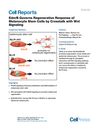 59 citations
,
April 2016 in “Cell Reports”
59 citations
,
April 2016 in “Cell Reports” EdnrB signaling helps melanocyte stem cells regenerate and could be targeted to treat pigmentation issues.
January 2018 in “Belarusian State Pedagogical University repository (Belarusian State Pedagogical University)” Adipose-derived stem cells can be used to create cells that help grow new hair.
 December 2012 in “Journal of dermatological science”
 Langerhans cells and melanocytes migrate to the skin and hair follicles during early human development.
 March 2022 in “Indian Journal of Animal Research”
 Dog hair follicle stem cells can turn into fat cells.
November 2025 in “Journal of Investigative Dermatology” Skin-associated cartilage cells can influence hair growth by altering specific signaling pathways.
208 citations
,
November 2000 in “Development” Edar and Eda proteins are crucial for proper tooth development.
 38 citations
,
April 2017 in “PLOS Genetics”
38 citations
,
April 2017 in “PLOS Genetics” GRHL3 is important for controlling gene activity in skin cells during different stages of their development.
 87 citations
,
September 2019 in “Nature Communications”
87 citations
,
September 2019 in “Nature Communications” SOX11 and SOX4 help skin cells act like embryonic cells to heal wounds in mice.
 9 citations
,
August 2017 in “Journal of comparative pathology”
9 citations
,
August 2017 in “Journal of comparative pathology” Trichoblastomas in rabbits are linked to uncontrolled embryonic hair growth and have distinct histological features.
87 citations
,
January 1999 in “British Journal of Dermatology” Trichoblastic fibroma and basal cell carcinoma are similar but different from trichoepithelioma.
75 citations
,
October 1999 in “Differentiation” Mouse keratin 6 isoforms have different expression patterns in various tissues.
54 citations
,
May 1999 in “Journal of Cutaneous Pathology” Apocrine type cutaneous mixed tumors often resemble hair follicles, sebaceous glands, and apocrine glands.
16 citations
,
April 1998 in “Journal of Investigative Dermatology” ACTH promotes hair growth in mink, but α-MSH does not.
2 citations
,
March 1994 in “Oncology Reports” Keratoacanthomas and squamous cell carcinomas have similar keratin patterns, making them hard to tell apart.
2 citations
,
May 2021 in “International journal of molecular sciences” Stem cells from hair follicles in a special gel show strong potential for bone regeneration.
4 citations
,
December 1995 in “Archives of Dermatological Research”  September 2024 in “Genes”
 CRABP1 boosts hair cell growth in Hu sheep by affecting key genes.
April 2026 in “Stem Cell Reviews and Reports”