29 citations
,
April 2011 in “Journal of Microscopy” The modified osmium method improves hair cortex staining for better visualization.
1 citations
,
December 2025 in “Inorganics” Silver nanoparticles help heal wounds by preventing infections and promoting tissue repair.

Surgical repigmentation can permanently restore color to white hair in vitiligo patients.
 90 citations
,
January 1979 in “International review of cytology”
90 citations
,
January 1979 in “International review of cytology” Wool follicles are complex, involving interactions between different cell types and structures.
 44 citations
,
April 2017 in “Genes & development”
44 citations
,
April 2017 in “Genes & development” Scientists found cells in hair that are key for growth and color.
 10 citations
,
May 2016 in “Journal of Dermatological Science”
10 citations
,
May 2016 in “Journal of Dermatological Science” PDGF-BB helps young melanocytes grow but stops mature ones from growing, and it makes melanocytes more specialized.
 9 citations
,
February 1981 in “Australian journal of biological sciences”
9 citations
,
February 1981 in “Australian journal of biological sciences” Lambs fed a liquid diet showed abnormal wool and skin, which improved with more B-vitamins, suggesting a link to B-vitamin deficiency.
 7 citations
,
January 2009 in “Biological & pharmaceutical bulletin”
7 citations
,
January 2009 in “Biological & pharmaceutical bulletin” Ferrous Ferric Chloride may improve skin cell function and increase hair growth in mice.
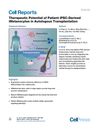 31 citations
,
April 2019 in “Cell reports”
31 citations
,
April 2019 in “Cell reports” Patient-derived melanocytes can potentially treat vitiligo by restoring skin pigmentation.
 18 citations
,
November 2010 in “Journal of morphology”
18 citations
,
November 2010 in “Journal of morphology” Antler velvet hair and body hair of red deer have different structures that help with protection and insulation.
 August 2025 in “Annals of Medicine”
 Mycophenolate mofetil may safely help restore skin color in depigmentation conditions.
 62 citations
,
October 2017 in “JAMA facial plastic surgery”
62 citations
,
October 2017 in “JAMA facial plastic surgery” Condensed nanofat with fat grafts effectively improves atrophic facial scars.
 2 citations
,
September 2016 in “Journal of Dermatological Science”
2 citations
,
September 2016 in “Journal of Dermatological Science” Squarticles, tiny particles made from sebum-derived lipids, can effectively deliver minoxidil, a hair growth drug, directly to hair follicles and skin cells, with less skin penetration and more tolerability.
 June 2022 in “bioRxiv (Cold Spring Harbor Laboratory)”
 ILC1-like cells can cause alopecia areata by attacking hair follicles.
 September 2016 in “Journal of Dermatological Science”
 Certain factors can start hair growth in adult skin by making cells communicate and form new hair follicles.
 January 1983 in “Journal of the American Oil Chemists' Society”
 The U.S. soybean industry wanted government help due to foreign competition, while the jojoba industry was growing and expected to stabilize.
 52 citations
,
October 1999 in “Developmental Dynamics”
52 citations
,
October 1999 in “Developmental Dynamics” Mutations in the hairless gene in mice affect its expression and lead to a range of developmental issues in multiple tissues.
169 citations
,
January 2018 in “Cell Reports” Scientists grew hair follicles from mouse stem cells in a lab setting.
132 citations
,
September 2009 in “Experimental Dermatology” A reliable system was developed to distinguish hair growth stages, aiding in identifying hair growth promoters or inhibitors.
18 citations
,
February 2023 in “eLife” ILC1-like cells can independently cause alopecia areata.
14 citations
,
May 2022 in “Animals” Female goslings have darker feathers than males due to more melanin.
4 citations
,
March 2024 in “Journal of Investigative Dermatology” SPRY1 deficiency in skin cells causes stem cells to move to the skin surface, leading to increased pigmentation.
1 citations
,
September 2025 in “Frontiers in Veterinary Science” Ganxi goats' skin and hair adapt to heat and humidity, possibly aided by GSDMA protein.
June 2025 in “Molecular Therapy — Nucleic Acids” A new treatment using a DNA aptamer can promote hair growth by targeting a specific receptor.
ILC1-like cells can independently cause alopecia areata by affecting hair follicles.
1 citations
,
January 2021 in “Processes” Researchers successfully grew horse skin cells that produce pigment from hair follicle samples.
 8 citations
,
January 2023 in “Biosensors”
8 citations
,
January 2023 in “Biosensors” Piezoelectric Nanogenerators are promising for non-invasive health monitoring but need efficiency and durability improvements.
19 citations
,
March 1998 in “Microchimica Acta”  3 citations
,
October 2024 in “World Journal of Advanced Research and Reviews”
3 citations
,
October 2024 in “World Journal of Advanced Research and Reviews” Silver nanoparticles are useful in medicine and technology for their antibacterial properties and potential in drug delivery and dentistry.
4 citations
,
November 2024 in “Nano Biomedicine and Engineering” Jackfruit leaf-derived silver nanoparticles in gel form effectively fight infections, especially against E. coli.