July 2009 in “International Journal of Cosmetic Science” Japanese women's curved hair has an uneven internal structure and varied amino acid composition.
 May 2024 in “Ultramicroscopy”
 Atomic Force Microscopy is a more accurate way to assess hair damage and the effect of cosmetic treatments.
1 citations
,
September 2025 in “PLoS ONE” Actin and alpha-smooth muscle actin help skin heal in mouse fetuses.
May 2018 in “Journal of advanced research in medicine” The document's conclusion cannot be provided because the document is not accessible or understandable.
30 citations
,
July 2000 in “PubMed” Hair has unevenly distributed proteins and lipids, with lipids mainly in the cuticle and proteins in the cortex and medulla.
 1 citations
,
July 2025 in “Frontiers in Endocrinology”
1 citations
,
July 2025 in “Frontiers in Endocrinology” ApoBDs, once seen as waste, are now viewed as potential tools for disease treatment and tissue repair.
5 citations
,
January 2017 in “Chalmers Publication Library (Chalmers University of Technology)” Cubosomes enhance antimicrobial peptide stability and effectiveness.
 October 2019 in “Skin appendage disorders”
 The vitreous membrane in hair follicles changes shape during the hair cycle and may affect hair growth and nutrient exchange.
May 2025 in “Journal of Clinical Medicine” Women with alopecia areata have poor blood flow, possibly due to nerve inflammation.
15 citations
,
October 1996 in “Archives of Dermatology” Researchers identified a new hair loss pattern called "sisaipho type," where hair is lost across the scalp except around the edges.
17 citations
,
March 2005 in “Journal of Investigative Dermatology” Autofluorescence in hair follicle stem cells can interfere with studies but may help isolate these cells.
 4 citations
,
October 2018 in “Experimental Dermatology”
4 citations
,
October 2018 in “Experimental Dermatology” Dermoscopy shows that diffuse alopecia areata progresses through specific hair growth stages.
September 2023 in “International Journal of Trichology” A rare hair regrowth pattern can occur in some people with alopecia areata.
Sodium fluoride can harm hair follicles, but sodium selenite can help protect them.
 35 citations
,
November 2010 in “Journal of Cutaneous Pathology”
35 citations
,
November 2010 in “Journal of Cutaneous Pathology” Dilated follicular infundibula and increased catagen/telogen follicles are key indicators for diagnosing alopecia areata.
 18 citations
,
May 2017 in “Experimental Dermatology”
18 citations
,
May 2017 in “Experimental Dermatology” AMT may cause hair loss and changing dWAT activity could help treat it.
2 citations
,
October 2000 in “Journal of Investigative Dermatology” AUC and APL are distinct conditions needing careful clinical assessment.
 11 citations
,
June 2017 in “Journal of cell science”
11 citations
,
June 2017 in “Journal of cell science” AGD1's PH domain is essential for its role in root hair growth and polarity.
6 citations
,
February 2020 in “Journal of Cutaneous Pathology” Nevus psiloliparus lacks mature hair follicles but keeps other skin structures intact.
 December 2007 in “CRC Press eBooks”
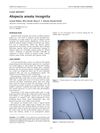
 Alopecia areata incognita causes widespread hair loss without patches and needs a scalp biopsy for diagnosis.
January 2025 in “SSRN Electronic Journal” 1 citations
,
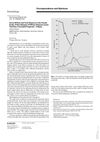
March 1991 in “PubMed” Naevoid bundle hair is an unusual hair growth pattern where multiple hairs fuse together.
 29 citations
,
January 2003 in “Dermatology”
29 citations
,
January 2003 in “Dermatology” The condition called 'acute diffuse and total alopecia of the female scalp' is actually a known condition named alopecia areata incognita.
 16 citations
,
July 2015 in “Journal of Molecular Structure”
16 citations
,
July 2015 in “Journal of Molecular Structure” Finasteride crystals are held together by hydrogen bonds and weak interactions, forming synthon pseudopolymorphs.
 October 2025 in “Folia Morphologica”
 Lymph vessels in airways vary by location, with the most in the upper pharynx and changes after birth.
1 citations
,
April 2019 in “PubMed” The medulla in Asian scalp hair has a tubular structure that allows ions and large molecules to flow through it.
36 citations
,
January 1994 in “Cell and Tissue Research”  10 citations
,
August 2011 in “Clinics”
10 citations
,
August 2011 in “Clinics” The author clarified that Alopecia Areata Incognita (AAI) and diffuse Alopecia Areata (AA) are different conditions and the case discussed was actually AA, not AAI.
2 citations
,
January 2022 in “Annals of Dermatology” Treatment type and patch size affect hair regrowth patterns in alopecia areata.
 July 2025 in “The Journal of Physiology”
 C-tactile afferents are linked to emotional touch and social bonding through hair movement.