5 citations
,
August 2005 in “Anatomy and Embryology” Rat skin has a linear system of nerve fibers linked to hair follicles and muscles.
Different crystal forms of drugs can change their effectiveness.
 23 citations
,
January 2017 in “Current Rheumatology Reports”
23 citations
,
January 2017 in “Current Rheumatology Reports” Unique fat cells near fibrotic areas contribute to systemic sclerosis progression.
7 citations
,
January 2012 in “International Journal of Trichology” Sudden, unusual hair loss may indicate serious underlying health issues.
59 citations
,
March 1984 in “Journal of Investigative Dermatology”  September 2023 in “bioRxiv (Cold Spring Harbor Laboratory)”
 Some hair growth cells remain in partially bald areas of Indian men with hair loss.
7 citations
,
January 1990 in “Archives of Dermatological Research” Syringomas likely start in the upper dermis and form distinct luminal structures.
4 citations
,
January 1981 in “PubMed” Hair medullary cells in mammals vary in complexity, with humans having more structured cells similar to inner root sheath cells.
1 citations
,
December 2019 Selenium is essential for health, but too much or too little can cause problems; blood selenium levels are a good measure of intake.
 April 2026 in “Zenodo (CERN European Organization for Nuclear Research)”
 Nanocrystals improve drug delivery and bioavailability for poorly soluble drugs.
 April 2026 in “Zenodo (CERN European Organization for Nuclear Research)”
 Nanocrystals improve drug delivery and effectiveness.

The patch effectively promotes hair growth for alopecia areata without pain.
January 2002 in “Linchuang pifuke zazhi” A young woman had a rare scalp tumor usually found in older women.
February 1999 in “The anatomical record” Two mouse mutants have defective hair cuticle cross-linking.
 7 citations
,
August 2009 in “Applied Mathematics and Mechanics-English Edition”
7 citations
,
August 2009 in “Applied Mathematics and Mechanics-English Edition” Hair fibers have fractal patterns with properties related to the golden mean, which may affect their functionality.
 March 2026 in “JOURNAL OF CLINICAL AND DIAGNOSTIC RESEARCH”
 Recognizing unusual patterns of hair loss helps dermatologists diagnose and manage Alopecia Areata better.
 March 2026 in “Zenodo (CERN European Organization for Nuclear Research)”
 Restoring cell communication can treat tissue disorders.
 March 2026 in “Zenodo (CERN European Organization for Nuclear Research)”
 Restoring cell communication can treat tissue disorders.
9 citations
,
November 2006 in “Journal of Microscopy” Dye mainly stays on the hair surface and endocuticle.
8 citations
,
January 2020 Alopecia areata causes patchy hair loss, and certain hair features can suggest its presence.
August 2024 in “Steroids” The androgen receptor's shape-changing ability helps it function but can lead to cancer treatment resistance.
 April 2026 in “Zenodo (CERN European Organization for Nuclear Research)”
 The model improves understanding of androgen interactions by focusing on signal intensity and system capacity.
28 citations
,
September 2002 in “The Journal of Comparative Neurology” Presynaptic inhibition of certain nerve fibers in cats is mainly controlled by GABA and glycine.
7 citations
,
April 2000 in “Mammalian Genome” A new mutation in mice causes crooked whiskers and messy hair.
 6 citations
,
December 2014 in “Clinical and Experimental Dermatology”
6 citations
,
December 2014 in “Clinical and Experimental Dermatology” Hair density and thickness decrease in all scalp areas for East Asians with AGA.
January 2013 in “Wool textile journal” 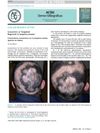 April 2016 in “Actas Dermo-Sifiliográficas”
 The document concludes that a unique target-like hair regrowth pattern in alopecia areata may be more common than thought and should be properly identified.
11 citations
,
December 1990 in “British Journal of Dermatology” Alopecia areata may involve disrupted mesenchymal function in hair follicles.
 January 2023 in “bioRxiv (Cold Spring Harbor Laboratory)”
 Newly born mesenchymal cells quickly spread out in response to tissue tension during early development.
 April 2019 in “Journal of Investigative Dermatology”
 Non-coding RNA boosts retinoic acid production and signaling, aiding regeneration.