 5 citations
,
January 2012 in “PubMed”
5 citations
,
January 2012 in “PubMed” Anti-MND antibodies are present in various diseases, not just PBC, and their levels don't correlate with disease activity or skin symptoms.

Careful diagnosis and management of MCTD are crucial due to potential severe complications.
2 citations
,
June 2017 in “Journal of Evidence Based Medicine and Healthcare” Skin and mucous symptoms are key for diagnosing autoimmune connective tissue diseases.
 23 citations
,
January 2015 in “Journal of The American Academy of Dermatology”
23 citations
,
January 2015 in “Journal of The American Academy of Dermatology” People with myotonic dystrophy type 1 have a higher chance of getting skin tumors, including melanoma.
1 citations
,
November 1991 in “PubMed” Immunoadsorption successfully treated a man's resistant polymyositis.
 April 2020 in “Journal of the Endocrine Society”
 A patient with myotonic dystrophy had several autoimmune disorders and thyroid cancer, suggesting a possible link between these conditions.
 4 citations
,
February 2022 in “International Journal of Molecular Sciences”
4 citations
,
February 2022 in “International Journal of Molecular Sciences” Myotonic Dystrophy may age cells faster, and drugs that target aging could be potential treatments.
8 citations
,
October 2014 in “The Journal of Dermatology” Patients with alopecia areata should be checked for muscle spasms, diarrhea, and ANA to avoid missing Satoyoshi syndrome.
 8 citations
,
January 2003 in “JEADV. Journal of the European Academy of Dermatology and Venereology/Journal of the European Academy of Dermatology and Venereology”
8 citations
,
January 2003 in “JEADV. Journal of the European Academy of Dermatology and Venereology/Journal of the European Academy of Dermatology and Venereology” Women with myotonic dystrophy might get diseases related to male hormones because their body tissues are extra sensitive to these hormones.
 November 2022 in “The journal of investigative dermatology/Journal of investigative dermatology”
 A patient with a new PLEC gene mutation showed symptoms of both muscular dystrophy and myasthenia gravis, which improved with steroid treatment.
May 2022 in “Journal of Neurology Neurosurgery & Psychiatry” The woman's facial symptoms are best explained by primary Sjögren’s Syndrome.
Early diagnosis and treatment of myositis in SLE patients lead to positive outcomes.
 5 citations
,
January 1998 in “Clinical and experimental dermatology”
5 citations
,
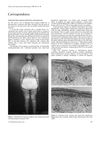
January 1998 in “Clinical and experimental dermatology” Myotonic dystrophy should be considered in patients with hair thinning, and genetic counseling is important.
 April 2024 in “Current Rheumatology Reviews”
 MCTD should be considered in children with recurring muscle issues, lupus-like symptoms, and edema.
 April 2026 in “SHILAP Revista de lepidopterología”
 Early diagnosis and treatment of myositis in SLE patients lead to better outcomes.
 August 2023 in “Rheumatology”
 Early referral to a pediatric rheumatologist and thorough evaluation are crucial for treating complex overlap syndromes effectively.
7 citations
,
January 2017 in “Neuromuscular Disorders” A rare autoimmune condition, Satoyoshi syndrome, can start in adults and improve with immunosuppressive treatment.
 December 2023 in “Journal of Cutaneous Immunology and Allergy”
 A man developed myasthenia gravis after alopecia areata, and treatment improved his symptoms and stopped hair loss.
54 citations
,
May 2019 in “Multiple Sclerosis and Related Disorders” Azathioprine can help with relapses and disability in NMOSD but has more side effects and needs more research.
 January 2024 in “JAAD case reports”
 MSUD patients need careful monitoring of amino acids and zinc to prevent severe symptoms.

There is no cure for myotonic dystrophy type 1, so treatment focuses on managing symptoms and complications.
 10 citations
,
January 2016 in “Dermatology”
10 citations
,
January 2016 in “Dermatology” People with myotonic dystrophy type 1 tend to develop basal cell carcinoma at a younger age but not more frequently than others.
7 citations
,
November 2021 in “JAAD Case Reports” Mogamulizumab can cause hair loss and skin rashes.
 June 2023 in “Romanian Medical Journal”
 The case shows how hard it is to tell apart Multiple Autoimmune Syndrome from other similar autoimmune conditions, but correct diagnosis is key for treatment to work.
7 citations
,
October 2008 in “Arthritis Care & Research” Aggressive immunosuppressive treatment improved a woman's severe heart condition linked to autoimmune disease.
 3 citations
,
March 2019 in “Case Reports”
3 citations
,
March 2019 in “Case Reports” A man with myotonic dystrophy type 1 had 28 skin cancers, suggesting a link between the disease and skin cancer, emphasizing the need for sun protection and regular skin checks.
54 citations
,
November 1986 in “Journal of the American Academy of Dermatology” Generalized trichoepitheliomas with hair loss may indicate myasthenia gravis.
 March 2005 in “Journal of The American Academy of Dermatology”
 Mycophenolate mofetil improved skin condition in a man with nephrogenic fibrosing dermopathy.
 1 citations
,
January 2013 in “The Journal of Dermatology”
1 citations
,
January 2013 in “The Journal of Dermatology” A skin condition called pyodermatitis vegetans was found in a patient with multiple myeloma for the first time.
2 citations
,
September 2018 in “JAAD case reports” A rare type of skin cancer with mucosal involvement was partially treated but eventually relapsed.