 January 2025 in “Journal of Materials Chemistry B”
 A new treatment using special microneedles and a nitric oxide-releasing drug could improve hair growth and be more convenient for people with hair loss.
1 citations
,
October 2018 in “The American journal of gastroenterology” Relapsing hepatitis A can cause prolonged abnormal liver tests even without symptoms.
75 citations
,
June 2005 in “Archives of Dermatology” Etanercept may not prevent alopecia areata from coming back.
 July 2022 in “Media Dermato Venereologica Indonesiana”
 The combination of PRP and triamcinolone injections improved hair growth in a man with alopecia areata.
 4 citations
,
May 2019 in “Journal of The European Academy of Dermatology and Venereology”
4 citations
,
May 2019 in “Journal of The European Academy of Dermatology and Venereology” Hair loss treatment caused more hair loss in a man.
135 citations
,
March 2000 in “Journal of Biological Chemistry” Agouti and AGRP affect pigmentation and obesity, with implications for metabolic disorders.
 60 citations
,
October 2009 in “Dermatology”
60 citations
,
October 2009 in “Dermatology” Alopecia areata may appear differently depending on the individual's type of hair loss and scalp condition.
 10 citations
,
August 2011 in “Clinics”
10 citations
,
August 2011 in “Clinics” The author clarified that Alopecia Areata Incognita (AAI) and diffuse Alopecia Areata (AA) are different conditions and the case discussed was actually AA, not AAI.
3 citations
,
January 2019 in “The Journal of Pediatrics of Korean Medicine” Herbal medicine helped regrow hair in a child with alopecia areata.
 September 2024 in “Journal of the American Academy of Dermatology”
 AH-001 could be a safer and more effective treatment for hair loss.
 1 citations
,
July 2023 in “Cutis”
1 citations
,
July 2023 in “Cutis” Scalp rolling might help regrow hair in people with a hair loss condition called Alopecia Areata.
 June 2026 in “Drug Delivery and Translational Research”
 The solid microneedle booster improves hair regrowth and follicle enrichment when used with minoxidil.
Acupuncture and herbal treatments effectively reduced hair loss in androgenetic alopecia.
January 2015 in “프로그램북(구 초록집)” Two patients with stubborn hair loss grew hair after PDRN injections.
 11 citations
,
December 2018 in “Journal of the European Academy of Dermatology and Venereology”
11 citations
,
December 2018 in “Journal of the European Academy of Dermatology and Venereology” Stopping JAK inhibitor treatment for hair loss can lead to worse hair loss than before the treatment.
May 2025 in “International Journal of Biological Macromolecules” A new microneedle treatment shows promise for better hair regrowth in androgenetic alopecia.
July 2026 in “Journal of the American Academy of Dermatology”  19 citations
,
March 1997 in “Journal of Cutaneous Pathology”
19 citations
,
March 1997 in “Journal of Cutaneous Pathology” Alopecia areata involves specific T-cells, unlike androgenetic alopecia.
April 2023 in “Journal of Investigative Dermatology” A new treatment for hair loss shows promise with fewer side effects.
January 2026 in “Case Reports in Dermatological Medicine” Intralesional steroids effectively treated a young female's scalp nodules without recurrence.
 January 2023 in “Journal of surgery and research”
 New treatment effectively reverses hair thinning in most patients with mild side effects.
 7 citations
,
August 2013 in “Journal of the European Academy of Dermatology and Venereology”
7 citations
,
August 2013 in “Journal of the European Academy of Dermatology and Venereology” Less than a quarter of alopecia areata cases were unusual forms or had paradoxical regrowth.
 18 citations
,
May 2015 in “Australasian Journal of Dermatology”
18 citations
,
May 2015 in “Australasian Journal of Dermatology” Serenoa repens extract in topical products improves hair growth and appearance in male pattern baldness with mild side-effects.
 December 2022 in “Small methods”
 A new hair loss treatment using dissolving microneedles was found to speed up hair growth and was more effective than daily use of common hair growth drugs.
Alopecia areata causes patchy hair loss but hair can regrow on its own.

Androgenetic alopecia (AGA) is a common, hereditary hair loss condition that can be slowed but not permanently reversed with available therapies.
2 citations
,
December 2023 in “International Journal of Dermatology” A unique type of hair loss mimics another condition but has minimal inflammation and specific immune cells present.
 53 citations
,
January 2014 in “Journal of Cutaneous and Aesthetic Surgery”
53 citations
,
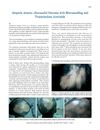
January 2014 in “Journal of Cutaneous and Aesthetic Surgery” Microneedling combined with triamcinolone can safely stimulate faster hair regrowth in people with Alopecia Areata.
CAG repeat numbers in the AR gene likely don't affect male pattern baldness in Korean men.
1 citations
,
November 2025 in “Journal of the American Academy of Dermatology”