90 citations
,
January 2002 in “Dermatology” Kenogen is a resting phase in hair follicles that may contribute to baldness, especially in androgenetic alopecia.
 120 citations
,
November 2014 in “Biological Reviews”
120 citations
,
November 2014 in “Biological Reviews” The telogen phase of hair growth is active and important for preparing hair follicles for regeneration, not just a resting stage.
 38 citations
,
October 1988 in “Clinics in Dermatology”
38 citations
,
October 1988 in “Clinics in Dermatology” Hormones, nutrition, and seasonal changes regulate hair growth cycles, with androgens extending growth phases and factors like aging and malnutrition affecting hair loss and thinning.
 March 2003 in “CRC Press eBooks”
 Telogen effluvium is hair loss caused by many hairs stopping growth suddenly, often due to stress or illness, but sometimes it's normal and not due to disease.
January 2007 in “Durham e-Theses (Durham University)” Hair growth and shedding involve specific cell changes and gene roles.
 November 2021 in “CRC Press eBooks”
 Anagen effluvium is a reversible condition causing sudden hair loss, often due to chemotherapy or head radiation.
 January 2018 in “Springer eBooks”
 Telogen effluvium is hair loss caused by disruption of the normal hair cycle.
16 citations
,
January 1998 in “Dermatology” Androgens may worsen a natural hair resting phase, possibly leading to hair loss.
 21 citations
,
November 2011 in “The journal of investigative dermatology/Journal of investigative dermatology”
21 citations
,
November 2011 in “The journal of investigative dermatology/Journal of investigative dermatology” Telogen is an active phase with important biological processes, not a resting phase.
 40 citations
,
December 2004 in “Dermatology”
40 citations
,
December 2004 in “Dermatology” Kenogen increases with hair loss in women.
 January 2018 in “Springer eBooks”
 Telogen Effluvium causes more hair loss because hair moves to the resting phase too soon.
 130 citations
,
January 1994 in “Differentiation”
130 citations
,
January 1994 in “Differentiation” Mouse hair follicle cells briefly grow during the early hair growth phase, showing that these cells are important for starting the hair cycle.
 49 citations
,
July 2019 in “British Journal of Dermatology”
49 citations
,
July 2019 in “British Journal of Dermatology” Wnt signaling is important for the change from the resting phase to the growth phase in human hair cycles.
 November 2001 in “CRC Press eBooks”
 Hair loss from telogen effluvium happens when a disturbance or imbalance causes hair to fall out prematurely.
 January 2012 in “Journal of Cosmetics, Dermatological Sciences and Applications”
 The document concluded that certain clinical signs and hair growth tests help diagnose Short Anagen Syndrome.
 25 citations
,
October 1996 in “Dermatologic Clinics”
25 citations
,
October 1996 in “Dermatologic Clinics” Loose Anagen Syndrome causes easy-to-pull, thin hair, mainly in young girls, and improves with age.
161 citations
,
June 1994 in “The journal of investigative dermatology/Journal of investigative dermatology” Hair stops producing melanin as it transitions from the growth phase to the resting phase.
May 2022 in “British Journal of Dermatology” The girl's hair condition improved on its own in 24 months.
 4 citations
,
April 2016 in “Experimental Dermatology”
4 citations
,
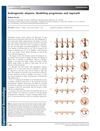
April 2016 in “Experimental Dermatology” AGA causes hair loss through follicle miniaturization and hair cycle changes; regrowth depends on anagen initiation in kenogen follicles.
19 citations
,
February 1998 in “Cellular Immunology” Hair growth phase in mice weakens certain immune responses.
 May 2009 in “Hair transplant forum international”
 Androgens affect hair growth and shedding, with genetic and non-genetic factors influencing baldness.
 34 citations
,
May 2013 in “Journal of the European Academy of Dermatology and Venereology”
34 citations
,
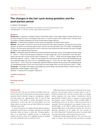
May 2013 in “Journal of the European Academy of Dermatology and Venereology” Hair growth slows and shedding increases after childbirth, but most women don't experience excessive hair loss.
 61 citations
,
January 2013 in “Indian Journal of Dermatology, Venereology and Leprology”
61 citations
,
January 2013 in “Indian Journal of Dermatology, Venereology and Leprology” Hair usually grows back 1-3 months after treatment for anagen effluvium, and children with Loose Anagen Hair Syndrome often improve by adolescence.
 October 2024 in “Experimental Dermatology”
 The belief about hair shedding phases is likely incorrect and needs reevaluation.
 103 citations
,
January 2006 in “Journal of Cell Science”
103 citations
,
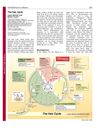
January 2006 in “Journal of Cell Science” The document concludes that the hair cycle is a complex process involving growth, regression, and rest phases, regulated by various molecular signals.
 375 citations
,
February 2006 in “Journal of Cell Science”
375 citations
,
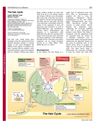
February 2006 in “Journal of Cell Science” The document concludes that the hair cycle is a complex process involving growth, regression, and rest phases, regulated by various molecular signals.
4 citations
,
January 2014 in “PubMed” Hair growth is controlled by cycles influenced by hormones and various signals.
28 citations
,
June 2010 in “Pediatric dermatology” Short anagen syndrome causes short hair that may grow longer after puberty.
20 citations
,
January 2017 in “Experimental Dermatology” Igf1r helps regulate hair growth cycles.
13 citations
,
June 2020 in “International Journal of Molecular Sciences” HNG helps hair grow by keeping hair in the growth phase longer.