October 2025 in “JURNAL BIOLOGI TROPIS” Androgenetic alopecia is common hair loss due to genetics and hormones, manageable with early treatment.
1 citations
,
January 2016 in “Journal of Contemporary Medicine” Androgenetic alopecia causes hair loss, affects men more severely, and treatments are only temporarily effective.
 May 2024 in “Research Square (Research Square)”
 Pediatric androgenetic alopecia is linked to obesity, family history, hormonal imbalances, and requires personalized treatment including managing comorbidities.
TGF-β1 and 2 in hair follicles may be linked to hair loss in AGA.
 31 citations
,
January 2003 in “Dermatology”
31 citations
,
January 2003 in “Dermatology” Steroidogenic isoenzymes may help improve treatments for common hair loss.
 January 2018 in “Springer eBooks”
 Telogen effluvium is hair loss caused by disruption of the normal hair cycle.
 1 citations
,
October 2011 in “PubMed”
1 citations
,
October 2011 in “PubMed” Teen hair loss is common, can be caused by genetics or health issues, and can be diagnosed and treated.
February 2021 in “PubMed” A 2-year-old girl had a hair disorder not shared by her identical twin.
November 2025 in “Food Science & Nutrition” Apigenin may effectively promote hair growth for androgenetic alopecia when applied topically.
23 citations
,
July 1997 in “British Journal of Dermatology” The inner root sheath is vital for hair follicle stability during growth changes.
 12 citations
,
June 2009 in “Journal of Cosmetic Dermatology”
12 citations
,
June 2009 in “Journal of Cosmetic Dermatology” Loose Anagen Hair syndrome occurs in dark-skinned children and often improves on its own.
 19 citations
,
January 2013 in “International journal of medical sciences”
19 citations
,
January 2013 in “International journal of medical sciences” Increasing Wnt5a in mice skin delays hair growth but doesn't stop it.
The estrogen receptor pathway controls hair growth cycles and affects skin cell growth.
October 2021 in “European Journal of Dermatology” CAL-PDT is safer and more effective for treating actinic keratosis on the scalp.
 18 citations
,
July 2016 in “Medicine”
18 citations
,
July 2016 in “Medicine” Wnt/β-catenin and TGF-β pathways affect hair loss, and activating Wnt/β-catenin could be a potential treatment.
Minoxidil and finasteride are the only FDA-approved treatments for hair loss caused by genetic and hormonal factors, but their effectiveness is often doubted, indicating a need for new treatments.
 29 citations
,
August 2008 in “Current Opinion in Pediatrics”
29 citations
,
August 2008 in “Current Opinion in Pediatrics” Hair loss in teenagers is hard to treat and lacks a cure, with some treatments available depending on the type of hair loss.
 13 citations
,
May 1993 in “International Journal of Dermatology”
13 citations
,
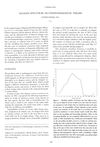
May 1993 in “International Journal of Dermatology” The paper suggests that telogen effluvium, a type of hair loss, may be a long-lasting condition triggered by stress or illness in people whose hair growth is unusually synchronized.
25 citations
,
October 1975 in “Journal of Cutaneous Pathology” Hair growth in alopecia areata is hindered due to impaired cell activity in the surrounding tissue.
15 citations
,
June 1993 in “Archives of Dermatology” A 22-year-old's gray hair partially turned back to its original color without known causes.
141 citations
,
November 2007 in “Journal of Investigative Dermatology” Balding cells age faster due to stress, suggesting stress-targeting treatments for hair loss.
Alternative treatments with nutrients, minerals, and vitamins are being explored for safer hair loss management.
13 citations
,
March 2020 in “Spectrochimica Acta Part A Molecular and Biomolecular Spectroscopy” Alopecic hair has more irregular structures and chemical changes than normal hair, reducing its strength.
 42 citations
,
June 2009 in “Journal of Cosmetic Dermatology”
42 citations
,
June 2009 in “Journal of Cosmetic Dermatology” Hair loss in males involves inflammation, collagen buildup, and follicle damage, with severity increasing with age and baldness duration.
 September 2024 in “Journal of the American Academy of Dermatology”
 AH-001 could be a safer and more effective treatment for hair loss.
A 14-year-old girl with Loose Anagen Hair Syndrome was successfully treated with oral Minoxidil and a Silicon supplement.
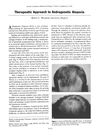 November 1999 in “Journal of Cutaneous Medicine and Surgery”
 Treatments for hair loss include hormone modifiers, minoxidil, and hair transplant surgery.
Androgenetic alopecia can cause distress and lower quality of life.
 8 citations
,
July 2007 in “International Journal of Dermatology”
8 citations
,
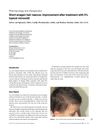
July 2007 in “International Journal of Dermatology” Using 5% topical minoxidil improved and normalized the hair growth in a girl with short anagen hair naevus.
 27 citations
,
July 2013 in “Journal of Dermatological Science”
27 citations
,
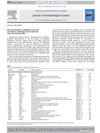
July 2013 in “Journal of Dermatological Science” The conclusion is that androgenetic alopecia and senescent alopecia have unique gene changes, suggesting different causes and potential treatments for these hair loss types.