 45 citations
,
December 2014 in “Journal of the European Academy of Dermatology and Venereology”
45 citations
,
December 2014 in “Journal of the European Academy of Dermatology and Venereology” Plasmacytoid dendritic cells are a key factor in causing hair loss in alopecia areata and could help differentiate it from other hair loss conditions.
Alopecia areata involves immune system changes, especially in severe cases, with potential new treatment targets identified.
 October 2023 in “Research Review”
 Some skin tumors from hair follicles and glands can be linked to genetic syndromes and may be benign or malignant.
2 citations
,
June 2019 in “The Journal of Dermatology” Two cases showed skin abnormalities without bone or neural defects.
January 2024 in “International Journal of Trichology” Recognizing perinevoid alopecia and concentric regrowth is important for diagnosing and treating alopecia areata.
12 citations
,
January 1987 in “Carcinogenesis” TCDD changes skin cell growth and keratin production in mice.
 16 citations
,
March 2013 in “JAMA Dermatology”
16 citations
,
March 2013 in “JAMA Dermatology” A cancer drug called nilotinib might cause hair loss due to inflammation around hair follicles.
1 citations
,
January 2018 in “CHEST Journal” Thyroid dysfunction can cause heart issues, and bedside ultrasound helps diagnose cardiac arrest causes.
254 citations
,
December 2003 in “Journal of the American Academy of Dermatology” Accurate diagnosis and aggressive treatment are crucial to prevent permanent hair loss in cicatricial alopecia.
November 2025 in “npj Breast Cancer” Tamoxifen increases the risk of lasting hair loss after chemotherapy despite scalp cooling.
 4 citations
,
January 2019 in “Dermatologic Therapy”
4 citations
,
January 2019 in “Dermatologic Therapy” Scalp basal cell carcinoma may be more aggressive and harder to treat than other types, requiring special attention and further research.
66 citations
,
July 2010 in “Journal of Proteome Research” Trichohyalin may trigger the immune response causing alopecia areata.
10 citations
,
July 2015 in “Clinical and Experimental Dermatology” Etanercept may cause hair fragility and breakage.
6 citations
,
December 1990 in “PubMed” Keratinocytes in hair follicles differentiate similarly to skin cells, with specific patterns in different regions.
21 citations
,
April 2000 in “Journal of Cutaneous Pathology” The hamartoma is an abnormal hair growth with limited development in the upper hair follicle.
3 citations
,
October 1994 in “Journal of Dermatological Science” The new antibody, TYHF-1, specifically targets certain hair-related structures.
May 2019 in “CINECA IRIS Institutial Research Information System (University of Genoa)” MITF+ melanoma patients are more likely to have multiple melanomas and unique skin patterns.
May 2023 in “The Journal of Immunology” Alopecia areata involves unique activation of certain immune cells.
2 citations
,
March 2025 in “Journal of Translational Autoimmunity” Targeting the AhR pathway may help treat alopecia areata.
 1 citations
,
January 2019 in “Medical principles and practice”
1 citations
,
January 2019 in “Medical principles and practice” A boy's hair loss improved after tumor removal and vitamin D treatment, but hair loss returned despite normal vitamin D and no tumor regrowth.
November 2025 in “Journal of Investigative Dermatology” Certain CD8+ T cells attack hair follicles in alopecia areata, suggesting they could be targeted for treatment.
26 citations
,
January 1992 in “Carcinogenesis” TPA strongly increases ODC activity in certain skin cells, potentially aiding tumor growth.
January 2011 in “Repository KITopen (Karlsruhe Institute of Technology)” Blocking certain proteins on immune cells may help treat alopecia areata.

This rare genetic disorder causes permanent hair loss and skin bumps from birth.
7 citations
,
June 2017 in “Journal of Cutaneous Pathology” Cystic panfolliculoma resembles hair follicle tumors due to specific cell interactions.
 13 citations
,
March 2002 in “Pediatric Dermatology”
13 citations
,
March 2002 in “Pediatric Dermatology” A child was initially wrongly diagnosed with a fungal scalp infection but actually had a non-scarring hair loss condition called Temporal Triangular Alopecia.
 65 citations
,
February 2015 in “Neuro-Oncology”
65 citations
,
February 2015 in “Neuro-Oncology” Alisertib was found to be an effective and tolerable treatment for children with recurrent brain tumors.
 3 citations
,
April 2016 in “International Journal of Dermatology”
3 citations
,
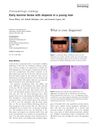
April 2016 in “International Journal of Dermatology” A young man was diagnosed with trichoepitheliomas, causing thick skin and hair loss.
 1 citations
,
September 2025 in “Clinical Cosmetic and Investigational Dermatology”
1 citations
,
September 2025 in “Clinical Cosmetic and Investigational Dermatology” Upadacitinib is effective and safe for treating severe Alopecia Areata in adolescents.
 March 2026 in “Lithuanian University of Health Sciences”
 Adrenal tumors should be considered in Addison's disease if unusual results appear, with surgery as a solution.