April 2026 in “BMJ Case Reports” Leydig cell tumors can cause high testosterone in women and are treated by removing the ovaries.
 2 citations
,
August 2017 in “British Journal of Dermatology”
2 citations
,
August 2017 in “British Journal of Dermatology” Hair loss in Cronkhite-Canada syndrome may be due to an autoimmune response.
October 2024 in “Journal of the Endocrine Society” Recognizing macro-TSH is crucial to avoid unnecessary treatments.
18 citations
,
January 2013 in “Veterinary Dermatology” K15 is a reliable marker for studying stem cells in dog hair follicle tumors.
 2 citations
,
February 2023 in “Journal of the American Academy of Dermatology”
2 citations
,
February 2023 in “Journal of the American Academy of Dermatology” People with autism are more likely to develop alopecia areata than those without autism.
April 2019 in “Journal of the Endocrine Society” A woman with severe hypothyroidism had a rare skin condition usually linked to a different thyroid disease.
August 2024 in “Skin Research and Technology” TAF can be identified by excessive skin thickening and clogged hair follicles, helping distinguish it from similar skin conditions.
6 citations
,
March 2018 in “The American journal of dermatopathology/American journal of dermatopathology” BerEP4 and CD34 staining can help tell apart tricholemmoma from basal cell carcinoma.
47 citations
,
December 2011 in “Experimental Dermatology” CGRP may help protect hair follicles from immune system attacks, potentially slowing hair loss.
52 citations
,
April 2012 in “Journal of Investigative Dermatology” KRTAP2 genes are crucial for hair structure and may impact hair disorders and treatments.
 5 citations
,
January 2014 in “Journal of Cutaneous and Aesthetic Surgery”
5 citations
,
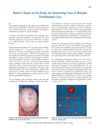
January 2014 in “Journal of Cutaneous and Aesthetic Surgery” A woman had 13 non-cancerous cysts on her scalp successfully removed in one surgery.
January 2018 in “Refubium (Universitätsbibliothek der Freien Universität Berlin)” Chemotherapy causes temporary hair loss in women, while Tamoxifen does not significantly affect hair, and genetics show no link between female pattern hair loss and common baldness genes.

Skin changes can help predict thyroid diseases.
 6 citations
,
January 2007 in “Actas dermo-sifiliográficas/Actas dermo-sifiliográficas”
6 citations
,
January 2007 in “Actas dermo-sifiliográficas/Actas dermo-sifiliográficas” Gray hair regained color after thyroid hormone treatment.
February 2026 in “World Academy of Sciences Journal” Lymphoma should be considered in unusual scalp hair loss cases, as treatment can work but may lead to severe complications.
September 2023 in “Journal of the American Academy of Dermatology” Red tattoo ink may cause skin growths, needing careful monitoring.
ILC1-like cells may contribute to hair loss in alopecia areata and could be new treatment targets.
 1 citations
,
February 2009 in “Journal of Investigative Dermatology”
1 citations
,
February 2009 in “Journal of Investigative Dermatology” VEGF helps squamous cell carcinoma grow in ways beyond just blood vessel formation.
 January 2012 in “Journal of Cosmetics, Dermatological Sciences and Applications”
 The document concluded that certain clinical signs and hair growth tests help diagnose Short Anagen Syndrome.
March 2026 in “JCEM Case Reports” Surgery removed ovarian tumors, normalizing testosterone and improving symptoms.
30 citations
,
June 2000 in “Journal of dermatological science” Human keratinocytes do not naturally respond to androgens.
12 citations
,
August 2002 in “Archives of Dermatology” April 2016 in “The journal of investigative dermatology/Journal of investigative dermatology” Neoplasms hide in hair follicles to avoid the immune system.
November 2020 in “bioRxiv (Cold Spring Harbor Laboratory)” Apoptotic cells may trigger cell death in hair follicles during their regression cycle.
6 citations
,
December 2018 in “Ophthalmic Plastic and Reconstructive Surgery” Afatinib can cause eyelash and eyebrow issues, leading to eye irritation and pain.
2 citations
,
April 2020 in “International Journal of Dermatology and Venereology” Beta-HPV and MCPyV are linked to certain skin cancers, with ongoing research and vaccine development.
32 citations
,
April 2011 in “Journal of the American Academy of Dermatology” Erlotinib may cause scarring hair loss.
11 citations
,
July 2004 in “Journal of Investigative Dermatology” Certain tyrosine kinases may regulate hair growth and could help develop hair loss treatments.
22 citations
,
June 2010 in “Experimental Dermatology” Lower MC2R expression may contribute to alopecia areata.
 1 citations
,
December 2018 in “Journal of cutaneous pathology”
1 citations
,
December 2018 in “Journal of cutaneous pathology” Some skin growths with mucin can form hair follicles and resemble skin cancer, but a special stain can help tell them apart.