 6 citations
,
March 2014 in “Herba Polonica”
6 citations
,
March 2014 in “Herba Polonica” Plant extracts may help treat hormone-related hair loss.
6 citations
,
June 2006 in “International Journal of Gynecological Pathology” A postmenopausal woman's hormone imbalance and symptoms improved after removing benign ovarian tumors.
 5 citations
,
January 2004 in “Japanese journal of geriatrics”
5 citations
,
January 2004 in “Japanese journal of geriatrics” Male hormones can cause hair loss, but treatments like Minoxidil and Finasteride can help, and targeting TGF-B1 could be a future solution.
 3 citations
,
November 2015 in “Journal of Investigative Dermatology”
3 citations
,
November 2015 in “Journal of Investigative Dermatology” Testosterone can both promote hair growth and cause baldness by affecting hair growth signals.
 2 citations
,
January 2023 in “International Journal of Biological Sciences”
2 citations
,
January 2023 in “International Journal of Biological Sciences” A specific pathway involving AR, miR-221, and IGF-1 plays a key role in causing common hair loss.
 2 citations
,
May 2018 in “Diagnosis”
2 citations
,
May 2018 in “Diagnosis” A 68-year-old woman developed male traits due to a tumor in her ovary, which was removed, returning her hormone levels to normal.
 1 citations
,
October 2018 in “InTech eBooks”
1 citations
,
October 2018 in “InTech eBooks” Only minoxidil and finasteride are FDA-approved for hair loss, with other treatments available but less effective or with side effects.
 1 citations
,
March 2018 in “Hair transplant forum international”
1 citations
,
March 2018 in “Hair transplant forum international” Using one's own fat may help treat hair loss.
 1 citations
,
December 2010 in “Elsevier eBooks”
1 citations
,
December 2010 in “Elsevier eBooks” Cell transplantation faces challenges in genitourinary reconstruction, but alternative tissue sources and microencapsulation show promise.
 1 citations
,
December 1992 in “International Journal of Dermatology”
1 citations
,
December 1992 in “International Journal of Dermatology” No significant hormone differences found in postmenopausal women with androgenetic alopecia.
July 2026 in “Cell Transplantation” Fibroblasts in hair follicles play a key role in hair loss, suggesting they could be a target for treatment.
 March 2026 in “Frontiers in Pharmacology”
 New treatments for hair loss show promise but need more testing for effectiveness and safety.
October 2025 in “F1000Research” Postmenopausal women with excess male hormones may have ovarian tumors, and surgery usually cures them.
 August 2025 in “Journal of Cosmetic Dermatology”
 Interest in new and personalized treatments for hair loss is growing.
 July 2025 in “Annals of Human Genetics”
 Genetics play a major role in acne, but environmental factors and epigenetics also contribute.
 May 2025 in “Frontiers in Bioengineering and Biotechnology”
 EX104 shows promise in treating hair loss by promoting hair growth and improving scalp health.
February 2025 in “Clinical Chemistry” The woman's symptoms were due to an androgen-secreting tumor, not PCOS.
 January 2024 in “Journal of Biosciences and Medicines”
 Future treatments for androgenic alopecia may focus on reactivating hair follicle stem cells and improving drug delivery.
 September 2023 in “Cureus”
 Topical finasteride might be a good alternative for hair loss treatment with fewer side effects, but more research is needed.
 June 2023 in “Food frontiers”
 Ginsenoside CK, found in Panax ginseng, can prevent hair loss by controlling certain growth pathways and promoting hair follicle development.
 December 2022 in “Cureus”
 Hormones significantly influence hair growth, with conditions like hirsutism and patterned hair loss linked to hormone levels; more research is needed for full understanding.
 September 2017 in “Journal of Investigative Dermatology”
 Aging causes sweat glands to shrink, leading to skin issues, and blue light can help hair grow.
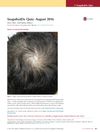 July 2016 in “Journal of Investigative Dermatology”
 Balding scalps show different gene expressions affecting hair growth compared to non-balding scalps.
 April 2015 in “Experimental Dermatology”
 Melanoma risk tools need improvement, certain gene mutations cause skin diseases and could be treated by targeting those mutations, skin wrinkling may relate to lung aging due to genetic factors, and oxidative stress affects hair loss but can be reduced in low oxygen.
 March 2011 in “European Urology Supplements”
 Blood tests for tumor cells could improve prostate cancer diagnosis and treatment; hair loss severity linked to a gene affecting prostate conditions.
January 2011 in “Padua Research Archive (University of Padua)” Local estrogen synthesis in skin may improve wound healing.
 November 2008 in “Medical Hypotheses”
 The conclusion suggests a new treatment for infantile hemangiomas and a potential target for hair loss treatment.
 May 2003 in “Journal of Investigative Dermatology”
 The meeting covered advances in understanding hair growth, causes of hair loss, and potential treatments.
Hirsutism is excessive male-pattern hair growth in women, often treated cosmetically or with hormone therapy if contraception is also desired.
 January 2022 in “Social Science Research Network”
 The Ar/miR-221/IGF-1 pathway is involved in male pattern baldness, with miR-221 potentially being a new target for treatment.