 January 2024 in “Journal of the Endocrine Society”
 The research found that measuring androgens in urine can give extra information about body metabolism and is linked to androgen levels in the blood, especially in young girls.
 January 2024 in “Wiadomości Lekarskie”
 Influencers impact medical communication both positively and negatively.
 January 2024 in “International Journal of Biological and Environmental Investigations”
 PCOD increases weight but keeps BMI normal in young women.
 December 2023 in “Frontiers in endocrinology”
 Excess androgens may cause PCOS, not just be a symptom.
 January 2022 in “Asian journal of Current Research in Clinical Cancer”
 Some dibenzo compounds might help treat cancer with fewer side effects.
 December 2020 in “Current Sexual Health Reports”
 Finasteride can have lasting negative effects on brain function and behavior by disrupting neurosteroid production.
 April 2019 in “Majalah Obat Tradisional”
 Menthol boosts the hair growth effects of Phyllanthus niruri gel.
 December 2015 in “University of Birmingham Institutional Research Archive (University of Birmingham)”
 AKR1C3 could be a treatment target for metabolic issues in PCOS.

Hormonal treatments can help with hair loss, acne, and excess hair growth, but it takes 3-6 months to see results and patients should know the possible side effects.
 April 2006 in “Current Opinion in Endocrinology & Diabetes”
 Testosterone therapy can help improve sexual function, mood, and bone density in women with low androgen levels, but more research is needed on long-term safety.
 October 2021 in “Meditsinskiy sovet = Medical Council”
 Cyproterone acetate improves skin symptoms and quality of life in women with androgen-related issues.
 November 2014 in “Elsevier eBooks”
 Gene mutations can cause problems in male genital development.
 October 2007 in “Postgraduate obstetrics & gynecology”
 Testosterone therapy can help with androgen deficiency in women but should be used with caution and monitoring due to potential risks.
 October 2007 in “Postgraduate obstetrics & gynecology”
 Testosterone therapy can help postmenopausal women with low sexual desire but needs more safety research and should be used with estrogen therapy.
 January 2009 in “Egyptian Journal of Medical Human Genetics”
 The study suggests that a specific gene variation and higher gene activity are linked to increased baldness in Egyptian men.
 46 citations
,
April 2008 in “Archives of Dermatological Research”
46 citations
,
April 2008 in “Archives of Dermatological Research” Substance P may worsen acne by increasing inflammation, but corticosteroids might help by reducing this effect.
 32 citations
,
February 2017 in “Human Reproduction”
32 citations
,
February 2017 in “Human Reproduction” Women with polycystic ovary syndrome tend to have a longer anogenital distance.
 24 citations
,
March 2001 in “Journal of Endocrinology/Journal of endocrinology”
24 citations
,
March 2001 in “Journal of Endocrinology/Journal of endocrinology” Red deer only have androgen receptors in neck hair cells for mane growth during breeding season.
 12 citations
,
January 1981 in “Springer eBooks”
12 citations
,
January 1981 in “Springer eBooks” Environmental factors like temperature and nutrition affect hair growth, with humans showing seasonal hair growth differences.
 9 citations
,
January 2016 in “Skin Pharmacology and Physiology”
9 citations
,
January 2016 in “Skin Pharmacology and Physiology” The study concluded that both estrogen and androgen receptors, which decrease with age, are linked to skin aging and may be hormonally regulated.
 9 citations
,
August 2000 in “Journal of Periodontal Research”
9 citations
,
August 2000 in “Journal of Periodontal Research” Finasteride reduces testosterone conversion, progesterone lessens this, and levamisole enhances finasteride's effect.
 4 citations
,
January 1994 in “Journal of hepatology”
4 citations
,
January 1994 in “Journal of hepatology” Cyclosporine A therapy changes sex hormone levels differently in pre-menopausal and post-menopausal women with primary biliary cirrhosis.
 August 2009 in “International Journal of Dermatology”
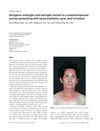
 A postmenopausal woman's facial redness, acne, and excess hair were caused by too much hormone therapy for insomnia, but improved after stopping the treatment.
 139 citations
,
December 2020 in “Cell Stem Cell”
139 citations
,
December 2020 in “Cell Stem Cell” Male hormones affect COVID-19 severity and certain drugs targeting these hormones could help reduce the risk.
 134 citations
,
April 2020 in “Journal of Cosmetic Dermatology”
134 citations
,
April 2020 in “Journal of Cosmetic Dermatology” Male pattern hair loss could hint at androgens affecting COVID-19 severity.
 343 citations
,
October 2015 in “Endocrine Practice”
343 citations
,
October 2015 in “Endocrine Practice” The guide recommends specific methods for diagnosing PCOS and various treatments for its symptoms, while considering the health impacts on adolescents.
 196 citations
,
March 2016 in “Nature Communications”
196 citations
,
March 2016 in “Nature Communications” Genetic factors influence hair traits like shape, color, and greying in Latin Americans.
 83 citations
,
April 1992 in “Clinical Endocrinology”
83 citations
,
April 1992 in “Clinical Endocrinology” Having enough iron improves the effectiveness of a specific hair loss treatment in women.
 54 citations
,
April 2010 in “Baillière's best practice and research in clinical endocrinology and metabolism/Baillière's best practice & research. Clinical endocrinology & metabolism”
54 citations
,
April 2010 in “Baillière's best practice and research in clinical endocrinology and metabolism/Baillière's best practice & research. Clinical endocrinology & metabolism” Impaired androgen production in 46,XY DSDs causes ambiguous genitalia and requires long-term care.
 40 citations
,
February 2005 in “Fertility and Sterility”
40 citations
,
February 2005 in “Fertility and Sterility” Some women with PCOS have CYP21 mutations and IRS1 variants, but these genetic factors are not major contributors to PCOS.