December 1998 in “福井大学教育学部紀要 第4部 教育科学” HA-P5 effectively treats acne without causing side effects seen in other treatments.
Knocking out the FGF5 gene in sheep increased wool production and hair-follicle density.
 18 citations
,
July 2010 in “Expert Review of Endocrinology & Metabolism”
18 citations
,
July 2010 in “Expert Review of Endocrinology & Metabolism” The document concludes that PCOS has a strong genetic component, but more research is needed to fully understand the specific genes involved.
 65 citations
,
February 2009 in “The journal of investigative dermatology/Journal of investigative dermatology”
65 citations
,
February 2009 in “The journal of investigative dermatology/Journal of investigative dermatology” Anti-acne medications may work by reducing the activity of a protein involved in acne development.
 22 citations
,
March 2018 in “American Journal of Clinical Dermatology”
22 citations
,
March 2018 in “American Journal of Clinical Dermatology” New acne treatments show promise as alternatives to traditional therapies.
2 citations
,
January 2023 Nano-sized molybdenum may help treat hair loss and works well with minoxidil.
 November 2025 in “International Journal of Molecular Sciences”
 Combining different drugs can improve hair loss treatment.
 10 citations
,
December 2017 in “Chemosphere”
10 citations
,
December 2017 in “Chemosphere” Bisphenol-A (BPA) increases connections between brain cells and boosts their activity, but it blocks the effects of a male hormone on brain cell plasticity.
May 2004 in “Biochimica et Biophysica Acta (BBA) - Molecular Basis of Disease” Vitamin E affects liver metabolism, enhancing stress resistance, reducing blood clotting, and altering hormone processing.
 December 2025 in “BENTHAM SCIENCE PUBLISHERS eBooks”
 PCOS often causes skin issues like excess hair, acne, hair thinning, and dark patches due to hormone imbalances and insulin resistance.
 March 2013 in “Hair transplant forum international”
 Inflammation linked to the immune response may play a role in causing various types of hair loss.
 January 2026 in “Biology”
 Androgenetic alopecia is influenced by multiple genes and pathways, with genetic risk varying by population, and personalized treatments are being explored.
4 citations
,
June 2025 in “MedComm” PROTACs show promise for cancer treatment, but designing them effectively is challenging.
New steroid derivatives show promise as anticancer agents, even against resistant cells.
 20 citations
,
August 2005 in “Journal of Cutaneous Pathology”
20 citations
,
August 2005 in “Journal of Cutaneous Pathology” The protein ARA70/ELE1 is involved in male pattern baldness, and lower levels of its short form may lead to hair thinning.
 16 citations
,
January 2003 in “Nuclear Receptor Signaling”
16 citations
,
January 2003 in “Nuclear Receptor Signaling” Androgens and SARMs play a role in body mass, frailty, skin health, and hair growth, and are used in treating prostate cancer, acne, and hair loss, with potential for new uses and improved versions in the future.
 12 citations
,
December 2012 in “Current Drug Targets”
12 citations
,
December 2012 in “Current Drug Targets” The Androgen Receptor could be a target for treating diseases like cancer, but more research is needed to confirm the effectiveness of potential treatments.
 11 citations
,
August 2009 in “Expert Opinion on Drug Discovery”
11 citations
,
August 2009 in “Expert Opinion on Drug Discovery” We need better ways to test and understand SARMs to make safer and more effective treatments.
 2 citations
,
November 2017 in “Elsevier eBooks”
2 citations
,
November 2017 in “Elsevier eBooks” Different substances that activate or block the androgen receptor can affect male development and treat conditions like prostate cancer.
 76 citations
,
April 2005 in “Cancer Epidemiology, Biomarkers & Prevention”
76 citations
,
April 2005 in “Cancer Epidemiology, Biomarkers & Prevention” E211 G>A gene linked to lower risk of severe prostate cancer and hair loss.
 23 citations
,
January 2021 in “Biomedicine & Pharmacotherapy”
23 citations
,
January 2021 in “Biomedicine & Pharmacotherapy” DHT stops hair regrowth in mice, similar to human hair loss.
 9 citations
,
January 2016 in “Skin Pharmacology and Physiology”
9 citations
,
January 2016 in “Skin Pharmacology and Physiology” The study concluded that both estrogen and androgen receptors, which decrease with age, are linked to skin aging and may be hormonally regulated.
 7 citations
,
January 2019 in “Postepy Dermatologii I Alergologii”
7 citations
,
January 2019 in “Postepy Dermatologii I Alergologii” Certain gene variations might be linked to severe acne in women but not in men.
 6 citations
,
January 2013 in “Genetics and Molecular Research”
6 citations
,
January 2013 in “Genetics and Molecular Research” Women with hair loss have more androgen receptors in certain hair follicles.
 6 citations
,
January 2010 in “Neoplasma”
6 citations
,
January 2010 in “Neoplasma” Certain gene patterns in breast cancer are linked to how active hormone receptors are and could affect patient survival.
 1 citations
,
January 2013 in “MedChemComm”
1 citations
,
January 2013 in “MedChemComm” PF-05314882 selectively activates androgen receptors without much effect on prostate and may help in prostate cancer treatment and hair loss prevention.
 1 citations
,
November 2008 in “Acta crystallographica”
1 citations
,
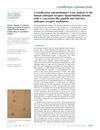
November 2008 in “Acta crystallographica” Scientists successfully created and analyzed the structure of a part of the human androgen receptor with specific modulators and a peptide to understand how it binds differently in various tissues.
 25 citations
,
June 2019 in “Endocrine Related Cancer”
25 citations
,
June 2019 in “Endocrine Related Cancer” Mutations in certain receptors can cause diseases and offer new treatment options.
 23 citations
,
May 2019 in “Expert Opinion on Therapeutic Patents”
23 citations
,
May 2019 in “Expert Opinion on Therapeutic Patents” New androgen receptor modulators show promise for treating diseases like prostate cancer and muscle wasting.
 14 citations
,
January 2015 in “Hormones and Cancer”
14 citations
,
January 2015 in “Hormones and Cancer” Androgen receptor inactivation delays skin cancer onset and reduces incidence in mice, with gender differences in susceptibility.