 March 2011 in “European Urology Supplements”
 Gene variation affects prostate issues and hair loss.
 26 citations
,
December 2020 in “Cleveland Clinic Journal of Medicine”
26 citations
,
December 2020 in “Cleveland Clinic Journal of Medicine” Testosterone and DHEA can benefit women's health but must be prescribed carefully due to potential risks.
 157 citations
,
April 1994 in “Clinical endocrinology”
157 citations
,
April 1994 in “Clinical endocrinology” Androgens can cause hair growth in some areas and hair loss on the scalp.
 1744 citations
,
August 2006 in “The Journal of Clinical Endocrinology and Metabolism”
1744 citations
,
August 2006 in “The Journal of Clinical Endocrinology and Metabolism” Polycystic Ovary Syndrome should be seen mainly as a condition of excess male hormones, with a focus on this in its definition.
 253 citations
,
March 2006 in “The Journal of Clinical Endocrinology and Metabolism”
253 citations
,
March 2006 in “The Journal of Clinical Endocrinology and Metabolism” Exposure to too much androgen before birth might cause polycystic ovary syndrome later in life.
 195 citations
,
June 2005 in “American Journal of Human Genetics”
195 citations
,
June 2005 in “American Journal of Human Genetics” Genetic variation in the androgen receptor gene mainly causes early-onset hair loss, with maternal inheritance playing a key role.
 186 citations
,
July 1998 in “Journal of Cutaneous Medicine and Surgery”
186 citations
,
July 1998 in “Journal of Cutaneous Medicine and Surgery” Shorter CAG repeats may cause hair and skin issues, while longer ones may link to acne.
 134 citations
,
April 2020 in “Journal of Cosmetic Dermatology”
134 citations
,
April 2020 in “Journal of Cosmetic Dermatology” Male pattern hair loss could hint at androgens affecting COVID-19 severity.
 119 citations
,
November 2009 in “Human Reproduction”
119 citations
,
November 2009 in “Human Reproduction” Women with PCOS and higher androgen levels are more likely to have fatty liver disease.
 99 citations
,
August 2003 in “Fertility and Sterility”
99 citations
,
August 2003 in “Fertility and Sterility” Too much male hormone is the main cause of Polycystic Ovary Syndrome.
 99 citations
,
June 1999 in “The Journal of Clinical Endocrinology and Metabolism”
99 citations
,
June 1999 in “The Journal of Clinical Endocrinology and Metabolism” Testosterone replacement may help some postmenopausal women with symptoms like fatigue and low libido, but more research is needed to fully understand its effects.
 82 citations
,
May 2016 in “Best Practice & Research in Clinical Obstetrics & Gynaecology”
82 citations
,
May 2016 in “Best Practice & Research in Clinical Obstetrics & Gynaecology” The conclusion is that managing androgen excess requires long-term treatment, including hormonal contraceptives and androgen blockers, with follow-up after six months.
 71 citations
,
July 2015 in “The Journal of Clinical Endocrinology and Metabolism”
71 citations
,
July 2015 in “The Journal of Clinical Endocrinology and Metabolism” Women with PCOS have higher androgen levels that decrease with age but are still higher than in women without PCOS.
 67 citations
,
July 2006 in “Clinics in Dermatology”
67 citations
,
July 2006 in “Clinics in Dermatology” Androgens cause skin issues like acne and hair growth in women, often due to PCOS, and can be treated with medication and lifestyle changes.
 54 citations
,
February 1993 in “Endocrine reviews”
54 citations
,
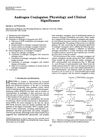
February 1993 in “Endocrine reviews” Androgen conjugates might be better indicators of skin sensitivity to hormones in women with excessive hair growth.
 52 citations
,
June 2013 in “The Journal of Clinical Endocrinology and Metabolism”
52 citations
,
June 2013 in “The Journal of Clinical Endocrinology and Metabolism” The research found that anovulatory young women have higher androgen and hormone levels than those who ovulate, suggesting immature hormonal regulation rather than a specific condition.
 45 citations
,
November 2012
45 citations
,
November 2012 The conclusion is that androgen receptor gene polymorphism might be a marker for polycystic ovary syndrome, but more research is needed.
 44 citations
,
May 2012 in “Endocrinology”
44 citations
,
May 2012 in “Endocrinology” High levels of androgens during early development may cause PCOS-like symptoms.
 44 citations
,
January 2008 in “Fertility and Sterility”
44 citations
,
January 2008 in “Fertility and Sterility” Longer CAG repeat lengths in the androgen receptor gene are linked to higher testosterone levels in women with PCOS.
 37 citations
,
June 2011 in “Journal of Cellular Biochemistry”
37 citations
,
June 2011 in “Journal of Cellular Biochemistry” Androgen is important in controlling stem cell differentiation, reducing fat development, and increasing lean mass.
 37 citations
,
January 2008 in “Gynecological Endocrinology”
37 citations
,
January 2008 in “Gynecological Endocrinology” Shorter CAG repeats in a specific gene may increase male hormone activity and symptoms like acne and excess hair in women with PCOS.
 35 citations
,
May 2022 in “Baillière's best practice and research in clinical endocrinology and metabolism/Baillière's best practice & research. Clinical endocrinology & metabolism”
35 citations
,
May 2022 in “Baillière's best practice and research in clinical endocrinology and metabolism/Baillière's best practice & research. Clinical endocrinology & metabolism” Androgens like testosterone are important hormones for both men and women, made differently in each sex and affecting the body by regulating genes and quick interactions with cell components.
 29 citations
,
July 2013 in “The Journal of Sexual Medicine”
29 citations
,
July 2013 in “The Journal of Sexual Medicine” Testing for CAG repeat polymorphism in the androgen receptor gene is not currently recommended for managing hypogonadism.
 27 citations
,
January 1984 in “Pharmacology & Therapeutics”
27 citations
,
January 1984 in “Pharmacology & Therapeutics” Antiandrogens have important biological effects, but more research is needed to understand them fully and compare their effectiveness and side effects to other treatments.
 26 citations
,
January 2020 in “Przegląd Menopauzalny”
26 citations
,
January 2020 in “Przegląd Menopauzalny” Menopausal women have higher androgen levels, which can cause symptoms like facial hair growth and low sexual desire.
 25 citations
,
July 2013 in “Environmental Toxicology and Chemistry”
25 citations
,
July 2013 in “Environmental Toxicology and Chemistry” Spironolactone harms fish reproduction and is more potent in fish than invertebrates, needing environmental monitoring.
 23 citations
,
January 2014 in “International Journal of Biological Sciences”
23 citations
,
January 2014 in “International Journal of Biological Sciences” African American men with prostate cancer have more androgen receptor mutations, which may lead to more aggressive cancer compared to Caucasian American men.
 22 citations
,
November 2011 in “Journal of Analytical Toxicology”
22 citations
,
November 2011 in “Journal of Analytical Toxicology” Scientists have developed a new method to detect steroid abuse in athletes using cell-based tests, which could be the future of anti-doping methods.
 20 citations
,
January 2003 in “Treatments in Endocrinology”
20 citations
,
January 2003 in “Treatments in Endocrinology” Testosterone therapy can help improve mood, sexual function, and bone health in women with low androgen levels, but more research is needed to establish safe and effective guidelines.
 16 citations
,
January 2003 in “Nuclear Receptor Signaling”
16 citations
,
January 2003 in “Nuclear Receptor Signaling” Androgens and SARMs play a role in body mass, frailty, skin health, and hair growth, and are used in treating prostate cancer, acne, and hair loss, with potential for new uses and improved versions in the future.