 12 citations
,
September 2017 in “Molecular and Cellular Endocrinology”
12 citations
,
September 2017 in “Molecular and Cellular Endocrinology” Testosterone significantly affects sexual desire in both men and women, but its impact on women is more complex and influenced by psychological factors.
 9 citations
,
January 2016 in “Skin Pharmacology and Physiology”
9 citations
,
January 2016 in “Skin Pharmacology and Physiology” The study concluded that both estrogen and androgen receptors, which decrease with age, are linked to skin aging and may be hormonally regulated.
 9 citations
,
June 2002 in “Best Practice & Research in Clinical Obstetrics & Gynaecology”
9 citations
,
June 2002 in “Best Practice & Research in Clinical Obstetrics & Gynaecology” Testosterone therapy can help women with androgen deficiency by improving energy, sex drive, and bone health with few side effects.
 6 citations
,
September 2005 in “Expert Opinion on Pharmacotherapy”
6 citations
,
September 2005 in “Expert Opinion on Pharmacotherapy” Androgen therapy can help with symptoms like low libido in women, but more research is needed to understand its long-term safety and effects on health.
 6 citations
,
September 1998 in “The Journal of The British Menopause Society”
6 citations
,
September 1998 in “The Journal of The British Menopause Society” Testosterone replacement may help postmenopausal women with sexual function and bone density, but suitable treatments are limited.
 5 citations
,
March 2010 in “Gynecologic and obstetric investigation”
5 citations
,
March 2010 in “Gynecologic and obstetric investigation” Cyproterone acetate implants were more effective at reducing facial hair and improving skin in severe hirsutism than oral treatment.
 2 citations
,
January 1984 in “Progress in neuro-psychopharmacology & biological psychiatry”
2 citations
,
January 1984 in “Progress in neuro-psychopharmacology & biological psychiatry” Benzodiazepines changed hormone levels but did not affect hair growth in women with idiopathic hirsutism.
 1 citations
,
November 2008 in “Acta crystallographica”
1 citations
,
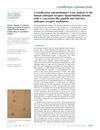
November 2008 in “Acta crystallographica” Scientists successfully created and analyzed the structure of a part of the human androgen receptor with specific modulators and a peptide to understand how it binds differently in various tissues.
 January 2025 in “International Journal of Reproduction Contraception Obstetrics and Gynecology”
 PCOS and lifestyle choices like diet and hair removal methods play a key role in moderate hirsutism.
 January 2023 in “Scholars journal of applied medical sciences”
 The main causes of hirsutism in Jordanian women are PCOS and idiopathic hirsutism.
 June 2019 in “Journal of Akhtar Saeed Medical & Dental College”
 Prolactin levels are higher in women with hirsutism but don't relate to its severity.
 January 1994 in “Journal of Dermatological Treatment”
 Spironolactone helped reduce excessive facial hair in a woman with porphyria cutanea tarda.
 January 2009 in “Egyptian Journal of Medical Human Genetics”
 The study suggests that a specific gene variation and higher gene activity are linked to increased baldness in Egyptian men.
 251 citations
,
October 2014 in “The Journal of Clinical Endocrinology & Metabolism”
251 citations
,
October 2014 in “The Journal of Clinical Endocrinology & Metabolism” The guidelines advise against using testosterone and DHEA in women for most conditions due to safety and effectiveness concerns, but suggest considering testosterone for postmenopausal women with low sexual desire.
 December 2015 in “University of Birmingham Institutional Research Archive (University of Birmingham)”
 AKR1C3 could be a treatment target for metabolic issues in PCOS.
 282 citations
,
October 2006 in “The Journal of Clinical Endocrinology and Metabolism”
282 citations
,
October 2006 in “The Journal of Clinical Endocrinology and Metabolism” The Endocrine Society advised against routine testosterone therapy for women, citing a need for more research on long-term safety and a clear definition of androgen deficiency.
 119 citations
,
November 2009 in “Human Reproduction”
119 citations
,
November 2009 in “Human Reproduction” Women with PCOS and higher androgen levels are more likely to have fatty liver disease.
 99 citations
,
June 1999 in “The Journal of Clinical Endocrinology and Metabolism”
99 citations
,
June 1999 in “The Journal of Clinical Endocrinology and Metabolism” Testosterone replacement may help some postmenopausal women with symptoms like fatigue and low libido, but more research is needed to fully understand its effects.
 75 citations
,
February 2016 in “The Journal of Sexual Medicine”
75 citations
,
February 2016 in “The Journal of Sexual Medicine” Androgens play a role in female sexual function, and testosterone therapy can help women with low sexual desire, but more research is needed on treatments and long-term safety.
 62 citations
,
August 2018 in “Frontiers in Endocrinology”
62 citations
,
August 2018 in “Frontiers in Endocrinology” Androgens are important for normal ovarian function and estrogen production, but may not be the main cause of follicle death.
 54 citations
,
April 2010 in “Baillière's best practice and research in clinical endocrinology and metabolism/Baillière's best practice & research. Clinical endocrinology & metabolism”
54 citations
,
April 2010 in “Baillière's best practice and research in clinical endocrinology and metabolism/Baillière's best practice & research. Clinical endocrinology & metabolism” Impaired androgen production in 46,XY DSDs causes ambiguous genitalia and requires long-term care.
 54 citations
,
November 2001 in “Urology”
54 citations
,
November 2001 in “Urology” The length of the CAG repeat in the androgen receptor gene affects the risk and progression of prostate cancer, BPH, infertility, and undermasculinized genitalia.
 46 citations
,
August 1990 in “The Journal of clinical endocrinology and metabolism/Journal of clinical endocrinology & metabolism”
46 citations
,
August 1990 in “The Journal of clinical endocrinology and metabolism/Journal of clinical endocrinology & metabolism” Ketoconazole reduced hair growth and improved acne in women, but caused side effects needing careful monitoring.
 44 citations
,
January 2008 in “Fertility and Sterility”
44 citations
,
January 2008 in “Fertility and Sterility” Longer CAG repeat lengths in the androgen receptor gene are linked to higher testosterone levels in women with PCOS.
 41 citations
,
November 2003 in “Annals of the New York Academy of Sciences”
41 citations
,
November 2003 in “Annals of the New York Academy of Sciences” Male hormones, or androgens, affect women's health in areas like mood and bone density, and hormone replacement therapy using antiandrogenic progestogens can improve mood disorders and alertness in menopausal women.
 32 citations
,
July 1999 in “Fertility and Sterility”
32 citations
,
July 1999 in “Fertility and Sterility” Finasteride and flutamide both reduce hair growth, but finasteride has fewer side effects.
 28 citations
,
May 2013 in “The Journal of Steroid Biochemistry and Molecular Biology”
28 citations
,
May 2013 in “The Journal of Steroid Biochemistry and Molecular Biology” Testosterone therapy can improve sexual desire and function in postmenopausal women but should be used cautiously and not based solely on testosterone levels.
 26 citations
,
December 2020 in “Cleveland Clinic Journal of Medicine”
26 citations
,
December 2020 in “Cleveland Clinic Journal of Medicine” Testosterone and DHEA can benefit women's health but must be prescribed carefully due to potential risks.
 22 citations
,
November 2011 in “Journal of Analytical Toxicology”
22 citations
,
November 2011 in “Journal of Analytical Toxicology” Scientists have developed a new method to detect steroid abuse in athletes using cell-based tests, which could be the future of anti-doping methods.
 20 citations
,
December 2000 in “Fertility and Sterility”
20 citations
,
December 2000 in “Fertility and Sterility” The N363S gene variant does not cause higher adrenal androgen levels in women with polycystic ovary syndrome.