 16 citations
,
August 2011 in “Annals of Allergy Asthma & Immunology”
16 citations
,
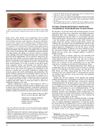
August 2011 in “Annals of Allergy Asthma & Immunology” A woman with severe angioedema improved significantly after treatment with rituximab.
Early diagnosis and treatment of frontal fibrosing alopecia are crucial to prevent permanent hair loss.
 May 2024 in “Australasian journal of dermatology”
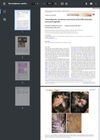
 A man with a type of skin lymphoma had unusual yellowish skin growths despite normal blood lipid levels, and treatment reduced some symptoms but not the growths.
 April 2023 in “Journal of Investigative Dermatology”
 Radiation treatment causes skin fibrosis by increasing certain fibroblast subpopulations, but using a c-Jun inhibitor or fat grafting can reduce this effect.
 April 2020 in “Journal of the Endocrine Society”
 A patient with untreated congenital adrenal hyperplasia had large benign tumors in her adrenal glands removed, improving her symptoms.
2 citations
,
January 2025 in “Journal of Nanobiotechnology” A new engineered treatment shows promise in curing heart fibrosis.
2 citations
,
May 2022 in “bioRxiv (Cold Spring Harbor Laboratory)” Rare Gli1+ fibroblasts are crucial for skin wound healing.
488 citations
,
July 2021 in “Cell” Fibroblasts are crucial for tissue repair and inflammation, and understanding them can help treat fibrotic diseases.
 January 2024 in “Wiadomości Lekarskie”
 Aortic aneurysm treatment has shifted to less invasive methods, improving safety and outcomes.
3 citations
,
February 2023 in “Journal of Investigative Dermatology” Ch55 may help reduce skin scarring and fibrosis.
9 citations
,
April 2022 in “Cell Communication and Signaling” High S100A4 levels worsen glioblastoma by promoting blood vessel growth.
A 16-year-old girl with gum overgrowth and excessive hair growth had successful gum surgery and healed well.
 2 citations
,
August 2008 in “Journal of Liaquat University of Medical & Health Sciences”
2 citations
,
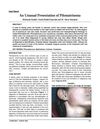
August 2008 in “Journal of Liaquat University of Medical & Health Sciences” A painless cheek lump was misdiagnosed but found to be a rare, benign skin lesion called pilomatrixoma, treatable by surgery.
 4 citations
,
January 1987 in “Journal of The American Academy of Dermatology”
4 citations
,
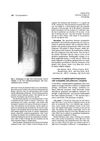
January 1987 in “Journal of The American Academy of Dermatology” A man with both skin lesions and lung cancer improved quickly with chemotherapy, suggesting the skin condition might be a reaction to immune system injury.
January 2005 in “Journal of Cutaneous Pathology” A new benign nail tumor called onychoblastoma was identified.
123 citations
,
January 2012 in “The Keio Journal of Medicine” Anti-angiogenic therapy can help treat cancer but may cause resistance and side effects, so alternative methods are being explored.
 1 citations
,
January 2019 in “Medical principles and practice”
1 citations
,
January 2019 in “Medical principles and practice” A boy's hair loss improved after tumor removal and vitamin D treatment, but hair loss returned despite normal vitamin D and no tumor regrowth.
 May 2019 in “Anais brasileiros de dermatologia/Anais Brasileiros de Dermatologia”
 Frontal fibrosing alopecia mostly affects postmenopausal women, with diagnosis often delayed by 3 years.
January 2024 in “Revista Dermatológica Centro Uraga” Frontal fibrosing alopecia is increasingly affecting men, causing hair loss around the hairline and possibly other areas.
 4 citations
,
January 2019 in “Obstetrics & gynecology science”
4 citations
,
January 2019 in “Obstetrics & gynecology science” A PET-CT scan successfully located a hard-to-find Leydig cell tumor in a woman with hormonal symptoms.
 April 2018 in “Journal of Investigative Dermatology”
 NDRG1 protein helps infantile hemangioma, a common infant tumor, to grow, and its mismanagement by FOXO1 protein plays a big role in causing the tumor.
 November 2022 in “Journal of the Endocrine Society”
 A man's rare adrenal tumor caused feminization and white hair, was removed surgically, and improved after treatment.
24 citations
,
March 2001 in “PubMed” In Freixo de Espada à Cinta, common skin conditions include melanocytic nevi, hemangiomas, and acne, with variations based on age and sex.
 1 citations
,
April 2017 in “Journal of Investigative Dermatology”
1 citations
,
April 2017 in “Journal of Investigative Dermatology” D-OCT shows increased blood vessel growth in response to tissue damage in Frontal Fibrosing Alopecia and is useful for diagnosis and monitoring.
4 citations
,
February 2016 in “Experimental Dermatology” Blocking α1-integrin makes adult fibroblasts more like foetal ones, improving their movement and aiding wound healing.
 June 2022 in “Revista del Hospital Italiano de Buenos Aires”
 A rare case of a man having both frontal fibrosing alopecia and vitiligo was reported.
November 2025 in “Skin Appendage Disorders” Fibrosis contributes to hair loss in androgenetic alopecia, and targeting it may improve treatment.
 April 2018 in “Journal of Investigative Dermatology”
 Anigozanthos Flavidus flower extract helps regenerate skin and reduce wrinkles.
 January 2023 in “Seven Editora eBooks”
 A rare ovarian tumor was diagnosed in a woman from North Brazil, and surgery is the preferred treatment.
 7 citations
,
August 2018 in “The American Journal of Dermatopathology”
7 citations
,
August 2018 in “The American Journal of Dermatopathology” Researchers found a new early sign of Frontal Fibrosing Alopecia that could help avoid misdiagnosis.