43 citations
,
July 2017 in “International journal of pharmaceutics” Using β-cyclodextrin derivatives improves the solubility and bioavailability of steroidal drugs.
 January 2025 in “Organics”
 Micelles can change cetirizine's ionization, affecting its effectiveness in treatments.
 21 citations
,
January 2010 in “JOURNAL OF HEALTH SCIENCE”
21 citations
,
January 2010 in “JOURNAL OF HEALTH SCIENCE” Abietic acid from pine resin can effectively inhibit testosterone 5α-reductase.
12 citations
,
July 2017 in “International Journal of Cosmetic Science” N‐AOHPA is a promising alternative to traditional surfactants for better hair conditioning.
 April 2026 in “Zenodo (CERN European Organization for Nuclear Research)”
 Cationic conditioning systems improve hair combability and sensory feel.
 April 2026 in “Zenodo (CERN European Organization for Nuclear Research)”
 Cationic conditioning systems improve hair combability and sensory feel.
62 citations
,
December 2007 in “Journal of biological chemistry/The Journal of biological chemistry” A specific chemical change in the S100A3 protein leads to the formation of a four-part structure important for hair formation.
 February 2025 in “International Journal of Cosmetic Science”
 A new amino acid derivative, ATS, improves hair texture and moisture, making it easier to straighten curly hair.
 2 citations
,
September 2016 in “Journal of Dermatological Science”
2 citations
,
September 2016 in “Journal of Dermatological Science” Squarticles, tiny particles made from sebum-derived lipids, can effectively deliver minoxidil, a hair growth drug, directly to hair follicles and skin cells, with less skin penetration and more tolerability.
 2 citations
,
January 2009 in “Journal of Drug Delivery Science and Technology”
2 citations
,
January 2009 in “Journal of Drug Delivery Science and Technology” Minoxidil in distearyldimethylammonium chloride vesicles significantly promotes hair growth, while minoxidil in microparticles or poloxamer solutions doesn't.
 April 2024 in “JMR. Journal of molecular recognition/Journal of molecular recognition”
 Hydrophilic carbon dots cause one protein to clump more and prevent another from clumping.
1 citations
,
August 1999 in “ACS symposium series” Polymer JR400 sticks to hair but washes off with detergent.
3 citations
,
November 2017 in “International Journal of Cosmetic Science” Solute binding to hair keratin is mainly driven by hydrophobic interactions and changes with pH.
3 citations
,
January 2002 in “Springer eBooks” Alkaline hair relaxers damage hair, but cationic and non-ionic polymers can help reduce this damage.
 226 citations
,
January 2002 in “Biological and Pharmaceutical Bulletin”
226 citations
,
January 2002 in “Biological and Pharmaceutical Bulletin” A new method quickly extracts and identifies proteins from hair and other keratin sources.
 67 citations
,
April 2007 in “Journal der Deutschen Dermatologischen Gesellschaft”
67 citations
,
April 2007 in “Journal der Deutschen Dermatologischen Gesellschaft” Shampoos are designed to clean and improve hair and scalp health, with specific ingredients for different hair types and conditions.
 66 citations
,
September 1982 in “Biochemical Pharmacology”
66 citations
,
September 1982 in “Biochemical Pharmacology” Liver enzyme helps minoxidil work better for blood vessel relaxation.
 44 citations
,
January 2010 in “International journal of trichology”
44 citations
,
January 2010 in “International journal of trichology” Choosing the right shampoo for your hair type is crucial.
 36 citations
,
November 2018 in “BMC plant biology”
36 citations
,
November 2018 in “BMC plant biology” ROXY proteins help plants respond to nitrate shortage by affecting nutrient sensing and growth.
 24 citations
,
November 2009 in “Pharmaceutical Development and Technology”
24 citations
,
November 2009 in “Pharmaceutical Development and Technology” Transcutol P best increases Finasteride absorption for hair loss treatment.
 6 citations
,
January 2016 in “Annals of Dermatology”
6 citations
,
January 2016 in “Annals of Dermatology” Human hair contains more glycosaminoglycans in children than adults, and these compounds decrease with age, possibly affecting hair thickness.
 5 citations
,
February 2010 in “Drug development and industrial pharmacy”
5 citations
,
February 2010 in “Drug development and industrial pharmacy” Vesicles made of behenyltrimethylammonium chloride and stearic acid can triple the skin absorption of hinokitiol, which may help with hair growth.
 5 citations
,
April 2005 in “Journal of applied polymer science”
5 citations
,
April 2005 in “Journal of applied polymer science” PEI diffuses into hair at a constant rate, and urea speeds up this process.
 4 citations
,
November 2017 in “Journal of Cosmetic Dermatology”
4 citations
,
November 2017 in “Journal of Cosmetic Dermatology” Certain polymers can stick to hair and increase volume, working best at a pH of 7 to 9.
 2 citations
,
August 2015 in “Journal of dermatology”
2 citations
,
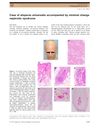
August 2015 in “Journal of dermatology” A possible link exists between minimal change nephrotic syndrome and complete hair loss.
 2 citations
,
April 2008 in “Journal of Dispersion Science and Technology”
2 citations
,
April 2008 in “Journal of Dispersion Science and Technology” Shampoos with more than 0.6% of cationic minoxidil particles can promote hair growth.
 September 2025 in “Advanced Pharmaceutical Bulletin”
 Genosomes are promising for safe and effective gene delivery in therapy.
 January 2019 in “Springer eBooks”
 Modified HDL can better deliver drugs and genes, potentially improving treatments and reducing side effects.
 January 2014 in “University of the Arts London Research Online (University of the Arts London)”
 Certain ingredients can help protect hair color.
 January 1997 in “Elsevier eBooks”
 The document explains how shampoos clean, rinses condition, one-step shampoos offer convenience, and hair growth promoters aim to prevent hair loss, emphasizing the importance of scientific evidence for their effectiveness.