 17 citations
,
October 2016 in “Artificial Cells Nanomedicine and Biotechnology”
17 citations
,
October 2016 in “Artificial Cells Nanomedicine and Biotechnology” Using tiny fat particles to deliver arginine to hair follicles could be a new way to treat hair loss.
 16 citations
,
April 2007 in “Journal of Medical Primatology”
16 citations
,
April 2007 in “Journal of Medical Primatology” The monkey's hair loss was due to an autoimmune disease, not genetics.
 13 citations
,
February 2007 in “British Journal of Dermatology”
13 citations
,
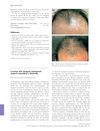
February 2007 in “British Journal of Dermatology” EF and PXE not closely related.
 8 citations
,
April 2020 in “Journal of The American Academy of Dermatology”
8 citations
,
April 2020 in “Journal of The American Academy of Dermatology” Bicalutamide may be a promising alternative treatment for female pattern hair loss.
 3 citations
,
June 2006 in “Expert Review of Dermatology”
3 citations
,
June 2006 in “Expert Review of Dermatology” The document concludes that hair loss is complex, affects many people, has limited treatments, and requires more research on its causes and psychological impact.
 1 citations
,
October 2006 in “Journal of Family Planning and Reproductive Health Care”
1 citations
,
October 2006 in “Journal of Family Planning and Reproductive Health Care” The contraceptive implant Implanon may be linked to hair loss, but the reported case of alopecia could be unrelated to the implant.
Low-dose oral minoxidil is generally safe for treating hair loss, with mostly mild side effects.
Clinical signs don't match inflammation levels in lichen planopilaris and frontal fibrosing alopecia.
 January 2020 in “Elsevier eBooks”
 Plant-based chemicals may help hair growth and prevent hair loss but need more research to compete with current treatments.
 April 2012 in “Journal of the American Academy of Dermatology”
 Clofazimine may be effective for treating ashy dermatosis.
 January 2007 in “Yearbook of Dermatology and Dermatologic Surgery”
 Intramuscular triamcinolone and pulse therapy with oral predonine are effective for alopecia areata with manageable side effects, but better relapse prevention is needed.
 117 citations
,
March 2013 in “Journal of the European Academy of Dermatology and Venereology”
117 citations
,
March 2013 in “Journal of the European Academy of Dermatology and Venereology” No effective treatment for frontal fibrosing alopecia was found, but oral 5-alpha-reductase inhibitors had the best response; for lichen planopilaris, topical corticosteroids were commonly used but had a high relapse rate.
 34 citations
,
March 2003 in “Veterinary Dermatology”
34 citations
,
March 2003 in “Veterinary Dermatology” Most dogs with alopecia had higher than normal levels of certain hormones, but hair loss might not always be linked to these hormone changes.
 11 citations
,
April 2020 in “Journal of Dermatological Treatment”
11 citations
,
April 2020 in “Journal of Dermatological Treatment” Taking oral isotretinoin with creams worked better for treating a type of hair loss than creams alone.
 8 citations
,
April 2020 in “Journal of Ethnopharmacology”
8 citations
,
April 2020 in “Journal of Ethnopharmacology” Herbs might help with hair loss, but more research is needed to confirm their safety and effectiveness.
 4 citations
,
August 2020 in “Journal of Cosmetic Dermatology”
4 citations
,
August 2020 in “Journal of Cosmetic Dermatology” QR 678 and QR678 Neo treatments are effective for hair loss in women with PCOS.
 July 2026 in “International Journal of Drug Delivery Technology”
 New drug delivery systems show promise for better alopecia treatment but need more safety tests and standardization.
 June 2026 in “International Journal of Drug Delivery Technology”
 New drug delivery systems can better target hair follicles to treat hair loss effectively.
 February 2024 in “International journal of biology, pharmacy and allied sciences”
 Plant-based treatments can effectively and safely treat hair loss.
 October 2023 in “International journal of biology, pharmacy and allied sciences”
 Personalized treatment plans combining natural and synthetic approaches are important for managing alopecia effectively.
 1 citations
,
May 2014 in “European Journal of Inflammation”
1 citations
,
May 2014 in “European Journal of Inflammation” A lotion with minoxidil, hydrocortisone butyrate, and 17a-estradiol can improve or stabilize Frontal Fibrosing Alopecia in some cases, but there's no universally-accepted treatment yet.
 June 2026 in “Revista Ibero-Americana de Humanidades, Ciências e Educação”
 5% topical Minoxidil is the best treatment for female hair loss, improving hair density and thickness.
 September 2023 in “Medical lasers”
 The botanical shampoo with Morus alba root extract is safe and effective for treating hair loss.
Two nutritional supplements improved hair growth and reduced hair loss in women with hair loss conditions.
 100 citations
,
April 2010 in “Expert Opinion on Pharmacotherapy”
100 citations
,
April 2010 in “Expert Opinion on Pharmacotherapy” Hair loss in men treated best with early medication or transplant, new treatments researched.
 98 citations
,
January 2013 in “Journal of The American Academy of Dermatology”
98 citations
,
January 2013 in “Journal of The American Academy of Dermatology” Dutasteride may help stabilize Frontal Fibrosing Alopecia, but more research is needed.
 87 citations
,
March 2011 in “Australasian Journal of Dermatology”
87 citations
,
March 2011 in “Australasian Journal of Dermatology” Genetics and hormones play a role in male and female hair loss, but more research is needed to fully understand it.
 80 citations
,
April 2018 in “Trends in Molecular Medicine”
80 citations
,
April 2018 in “Trends in Molecular Medicine” Lichen Planopilaris and Frontal Fibrosing Alopecia may help us understand hair follicle stem cell disorders and suggest new treatments.
 69 citations
,
August 2008 in “Journal of The European Academy of Dermatology and Venereology”
69 citations
,
August 2008 in “Journal of The European Academy of Dermatology and Venereology” Oral dutasteride and topical pimecrolimus can safely and effectively treat Frontal Fibrosing Alopecia, leading to significant hair regrowth.
 64 citations
,
June 2009 in “Journal of The American Academy of Dermatology”
64 citations
,
June 2009 in “Journal of The American Academy of Dermatology” Oral dutasteride can potentially treat frontal fibrosing alopecia in postmenopausal women, with some patients showing disease arrest and hair regrowth.