 September 2023 in “Clinical, cosmetic and investigational dermatology”
 A patient with a rare form of lupus improved after treatment for skin ulcers and hair loss on the face and scalp.
 100 citations
,
March 2006 in “Journal of biological chemistry/The Journal of biological chemistry”
100 citations
,
March 2006 in “Journal of biological chemistry/The Journal of biological chemistry” Cystatin M/E strongly inhibits cathepsin V and cathepsin L, important for skin formation.
1 citations
,
January 2026 in “International Journal of Dermatology” Amivantamab can cause severe skin eruptions and scarring, requiring drug discontinuation and early treatment.
3 citations
,
July 2023 in “Cells” MG53 helps reduce skin damage caused by nitrogen mustard.
 August 2025 in “International Journal of Research in Dermatology”
 Combining glucocorticoids with immunosuppressants like cyclophosphamide improves remission and reduces relapse in pemphigus patients.
 April 2023 in “Journal of Investigative Dermatology”
 Booster shots of mRNA vaccines for COVID-19 increased protective antibodies without worsening autoimmune skin conditions in patients.
 1 citations
,
June 2017 in “Skin”
1 citations
,
June 2017 in “Skin” Apremilast may help treat lichen planopilaris and frontal fibrosing alopecia when other treatments fail.
 4 citations
,
August 2017 in “International journal of molecular sciences”
4 citations
,
August 2017 in “International journal of molecular sciences” The conclusion is that Pigmented Epithelioid Melanocytoma can start from hair follicle stem cells or from a mole on the skin.
3 citations
,
November 2023 in “The Journal of Dermatology” 67 citations
,
January 1992 in “Journal of Investigative Dermatology” 1 citations
,
July 2025 in “Journal of Investigative Dermatology”  September 2017 in “The journal of investigative dermatology/Journal of investigative dermatology”
 Scarred skin in lichen planopilaris loses immune cells due to a decrease in a specific protein in skin cells.
 10 citations
,
March 2015 in “Journal of dermatology”
10 citations
,
March 2015 in “Journal of dermatology” The boy's severe skin disorder is caused by two new mutations in his TGM1 gene.
 September 2022 in “Frontiers in genetics”
 A Chinese male with a new genetic mutation has a skin condition and severe urinary issues, with treatments having mixed success.
11 citations
,
June 1974 in “Journal of Cutaneous Pathology” Follicular mucinosis causes significant damage to hair follicle cells.
12 citations
,
November 2018 in “Archives of Dermatological Research” 34 citations
,
January 1983 in “Journal of Investigative Dermatology”  11 citations
,
December 2010 in “Archives of Dermatology”
11 citations
,
December 2010 in “Archives of Dermatology” A man with rare skin changes on his fingers was diagnosed with multiple myeloma-linked amyloidosis.
 23 citations
,
November 2014 in “Anais Brasileiros de Dermatologia”
23 citations
,
November 2014 in “Anais Brasileiros de Dermatologia” Trichoscopy helps tell apart scalp lesions in pemphigus vulgaris and pemphigus foliaceus and is useful for choosing biopsy locations.
 44 citations
,
May 2006 in “The Journal of the American Animal Hospital Association/Journal of the American Animal Hospital Association”
44 citations
,
May 2006 in “The Journal of the American Animal Hospital Association/Journal of the American Animal Hospital Association” Both treatments for pemphigus foliaceus in dogs are effective, but combination therapy has more side effects.
 September 2019 in “The journal of investigative dermatology/Journal of investigative dermatology”
 Not having enough cystatin M/E protein causes less hair growth and dry skin.
 10 citations
,
July 2013 in “British Journal of Dermatology”
10 citations
,
July 2013 in “British Journal of Dermatology” High MUC-18/MCAM levels in blood indicate a worse outlook for melanoma patients.
January 2018 in “INTAS POLIVET” The dog recovered successfully after treatment with multiple medications.
 133 citations
,
May 2016 in “Cell Host & Microbe”
133 citations
,
May 2016 in “Cell Host & Microbe” Human dermal fibroblasts are the main cells targeted by a virus that can cause a deadly skin cancer, and a certain inhibitor can effectively block this infection.
 1 citations
,
October 2012 in “QJM”
1 citations
,
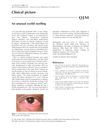
October 2012 in “QJM” A 47-year-old man's eyelid swelling didn't improve with basic treatments, so a biopsy was needed.
8 citations
,
August 1986 in “Journal of Investigative Dermatology” August 1994 in “American Journal of Veterinary Research” Monoclonal antibody B72.3 selectively reacts with certain dog tissues, mainly in the gastrointestinal and respiratory tracts.

Brunsting-Perry pemphigoid can cause scarring hair loss and may be underdiagnosed.
1 citations
,
January 2023 in “Journal of Clinical Medicine” Minoxidil can cause a skin reaction called ALEP.
10 citations
,
December 2008 in “Molecular Carcinogenesis” The PML protein helps prevent skin cancer in mice.