Search
for
Sort by
Research
330-360 / 1000+ results
research Comparison of effectiveness of weekly azathioprine pulse (WAP) and betamethasone oral mini pulse (BOMP) in the treatment of moderate to severe alopecia areata
Both treatments help with hair regrowth in alopecia areata, but azathioprine has milder side effects than betamethasone.
research Factors Affecting the Response and Patient Satisfaction of Topical Immunotherapy in Alopecia Areata: A Nationwide Study
DPCP immunotherapy is effective for alopecia areata, and understanding influencing factors can improve treatment and satisfaction.
research Combined Low Laser Light Phototherapy and Growth Factor Hair Formulation Infiltration Therapy in Androgenetic Alopecia (AGA Combo Treatment)
Combining laser light therapy and growth factor treatment improves hair growth in people with hair loss.
research Congenital atrichia with papular lesions resulting from novel mutations in human hairless gene in four consanguineous families
Mutations in the hairless gene cause a rare form of permanent hair loss.
research An anti‐hair loss treatment in the management of mild androgenetic alopecia: results from a large, international observational study
AC5 improves hair loss and hair quality with high satisfaction rates.
research Androgenetic Alopecia
research Contrast-Enhanced Ultrasound (CEUS) Evaluation of Canine Prostatic Hyperplasia before and after Osaterone Acetate Therapy: Preliminary Results
Osaterone acetate reduces prostate size and enzyme levels in dogs with benign prostatic hyperplasia.
research Androgenetik Alopesi
Androgenetic alopecia causes hair loss, affects men more severely, and treatments are only temporarily effective.

research A dual-mechanism injectable hydrogel integrating reactive oxygen species regulationand low-level laser therapy for androgenetic alopecia remediation
The hydrogel helps treat hair loss by reducing harmful molecules and improving blood flow to hair follicles.
research Androgenetic alopecia: An autosomal dominant disorder
Hair loss in androgenetic alopecia is caused by genetic factors and androgen excess, and can be treated with combined therapies.
research Atherogenic index of plasma in non-obese women with androgenetic alopecia
Non-obese women with hair loss have higher heart disease risk.

research Discovery of a Novel Non-invasive AR PROTAC Degrader for the Topical Treatment of Androgenetic Alopecia
A new topical treatment for hair loss shows promise by targeting androgen receptors.
research Genotype-Phenotype Delineation of Autoimmune Polyendocrinopathy, Candidiasis, and Ectodermal Dystrophy in a Pediatric Patient: A Case Report
A new AIRE gene mutation causes rare autoimmune symptoms in a Lebanese boy.
research The Effectiveness of Forensic Science in the Criminal Justice System - Tasmanian Institute of Law Enforcement Studies (TILES)
Korean adolescents with androgenetic alopecia often have a family history, milder symptoms than adults, and normal hormone levels.
research PENANGANAN RAMBUT RONTOK JENIS ALOPECIA ANDROGENETIC DENGAN AKUPUNKTUR TITIK ZUSANLI (ST36), ZHUBIN (KI9), SHAOFU (HT8), DAN SANYINJIAO (SP6) SERTA GEL LIDAH BUAYA (Aloe vera) DAN DAUN SELEDRI (Apium graveolens L.)
Acupuncture and herbal treatments effectively reduced hair loss in androgenetic alopecia.

research An International Multicenter, Retrospective Cohort Study of 203 Patients with Pediatric Androgenetic Alopecia
Standardized treatment protocols are needed for children with androgenetic alopecia.

research Hubungan andropause dengan alopesia androgenik pada aparatur sipil negara di Pusat Pemerintahan Kabupaten Badung tahun 2022
Andropause is strongly associated with hair loss in male civil servants.
research Congenital atrichia with papular lesions
Congenital atrichia with papular lesions causes permanent hair loss and skin bumps due to a gene mutation.
research 712 A small molecule modulator of the wnt pathway (SM04554) as a potential topical treatment for androgenetic alopecia (AGA)
SM04554 may increase hair growth as a topical treatment for androgenetic alopecia.
research Efficacy of diphenylcyclopropenone in alopecia areata: a comparison of two treatment regimens
Treating alopecia areata every 3 weeks with diphenylcyclopropenone is more effective than weekly treatments.
research Ornithine decarboxylase is a target for chemoprevention of basal and squamous cell carcinomas in Ptch1+/– mice
Targeting ornithine decarboxylase can help prevent skin cancer.
research MOOEW: Inovasi Hair Tonic Gel Eco-Friendly Berbasis Hydroxyproline Limbah Tulang Ikan Tenggiri dengan Ekstrak Chamomile Solusi Alopesia Kucing
MOOEW Hair Tonic Gel is a profitable, eco-friendly solution for cat hair loss.
research PROTAC Degraders of Androgen Receptor‐Integrated Dissolving Microneedles for Androgenetic Alopecia and Recrudescence Treatment via Single Topical Administration
A new hair loss treatment using dissolving microneedles was found to speed up hair growth and was more effective than daily use of common hair growth drugs.
research Fructose-1,6-bisphosphate aldolase A levels decrease in hair keratinocytes during androgenetic alopecia
ALDOA levels drop in hair cells during hair loss.
research An Uncontrolled Case Series testing Cryo-Chilled Carbon Dioxide as a Novel Amplification of a Nano-Botanical Multi-Acting Therapy in Advanced Stage Androgenetic alopecia (AGA)
The treatment showed promising results in improving advanced-stage hair loss.
research Keeping Our Eye on the Ball: The American Society of Preventive Oncology in 2009
Cancer prevention is crucial, with a focus on research and improved screening methods.

research An Academic Dermatology Center's Structured Platelet-rich Plasma Approach to Patients with Androgenetic Alopecia.
Standardized PRP therapy can improve treatment for hair loss.
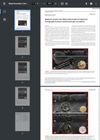
research Alopecia areata: Line‐field confocal optical coherence tomography features and dermoscopy correlation
LC-OCT is a promising tool for diagnosing and monitoring Alopecia areata.