 September 2016 in “Journal of Dermatological Science”
 Plasmacytoid dendritic cells, which overproduce IFN-α, may play a crucial role in starting alopecia areata, an autoimmune disease causing hair loss.
 May 2026 in “Theranostics”
 Targeting DKK3–CKAP4 can help reverse hair loss in androgenetic alopecia.
 6 citations
,
January 2020 in “International journal of biological sciences”
6 citations
,
January 2020 in “International journal of biological sciences” Removing the ROBO4 gene in mice reduces skin inflammation and hair loss by affecting certain inflammation pathways and gene expression.
55 citations
,
March 2014 in “EMBO Reports” Protein ubiquitylation is crucial for controlling stem cell functions and could be targeted for cancer treatment.
1 citations
,
September 1986 in “Journal of the Forensic Science Society” Hair root sheaths can be used to accurately analyze genetic markers.
 20 citations
,
May 2007 in “Asian-Australasian Journal of Animal Sciences”
20 citations
,
May 2007 in “Asian-Australasian Journal of Animal Sciences” KAP8.2 gene variations affect cashmere quality in goats.
Lhx2 helps retinal cells respond to signals for eye development.
The document describes a rare case of IFAP syndrome, a genetic condition with symptoms of hair loss, light sensitivity, and scaly skin.
 February 2020 in “Definitions”
 KRT72 gene helps form hair.
 22 citations
,
July 2012 in “International Journal of Trichology”
22 citations
,
July 2012 in “International Journal of Trichology” Miniaturized hairs stay connected to muscle in alopecia areata, allowing possible regrowth, but not in androgenetic alopecia.
1 citations
,
January 2020 in “Indian journal of dermatology, venereology, and leprology” CD117 and platelet-derived growth factor receptor α may play a role in alopecia areata.
 January 2001 in “Biomedical Research”
 THH and PAD type III appear together early in hair growth, but deiminated THH appears later, suggesting another factor is involved.
8 citations
,
October 2024 in “Developmental Cell”  June 2021 in “bioRxiv (Cold Spring Harbor Laboratory)”
 KIF18B is important for correctly positioning cell division machinery in skin cells, affecting hair follicle development.
 5 citations
,
January 2018 in “Acta Dermatovenerologica Alpina Pannonica et Adriatica”
5 citations
,
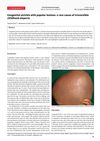
January 2018 in “Acta Dermatovenerologica Alpina Pannonica et Adriatica” Congenital atrichia with papular lesions causes permanent hair loss in children.
52 citations
,
February 2012 in “PloS one” Lack of Ctip2 in skin cells delays wound healing and disrupts hair follicle stem cell markers in mice.
 81 citations
,
September 2005 in “The American journal of pathology”
81 citations
,
September 2005 in “The American journal of pathology” Activin helps skin growth and healing mainly through stromal cells and affects keratinocytes based on its amount.
 June 2026 in “Communications Biology”
 Hoxc13 and hair keratin are needed for forming rough skin on frog mating pads.
13 citations
,
April 1964 in “PubMed” Phosphatide distribution in mouse skin remains consistent in both normal and cancerous growths.
 28 citations
,
July 2007 in “Development”
28 citations
,
July 2007 in “Development” TAF4 is important for skin cell growth and helps prevent skin cancer in mice.
 58 citations
,
June 2000 in “The Journal of Steroid Biochemistry and Molecular Biology”
58 citations
,
June 2000 in “The Journal of Steroid Biochemistry and Molecular Biology” Different types of androgens bind differently to two receptors, AR1 and AR2, in Atlantic croaker's brain and ovarian tissues, suggesting these receptors may control different androgen actions in fish.
 4 citations
,
January 2017 in “Biological & pharmaceutical bulletin”
4 citations
,
January 2017 in “Biological & pharmaceutical bulletin” Inhibiting ALOX12 can help hair cuticle maturation by increasing S100A3 citrullination.
December 2021 in “OPAL (Open@LaTrobe) (La Trobe University)” BBS7 is crucial for maintaining healthy periodontal ligaments by supporting Shh signaling.
 61 citations
,
May 2016 in “Scientific reports”
61 citations
,
May 2016 in “Scientific reports” The peptide IMT-P8 can effectively deliver proteins into the skin and cells for potential skin treatments.
11 citations
,
July 2015 in “Journal of Anatomy” SLVs help maintain muscle stretch sensitivity and could aid in treating hypertension and muscle spasticity.
71 citations
,
January 2011 in “Orphanet Journal of Rare Diseases” IFAP syndrome is a rare genetic disorder causing skin, hair, and eye issues, with limited treatment options.

Certain plasma proteins and genes are linked to obstructive sleep apnea, suggesting potential new treatments.
 12 citations
,
February 2014 in “PLoS ONE”
12 citations
,
February 2014 in “PLoS ONE” Topical rapamycin may effectively treat fibrous papules on the face.
 11 citations
,
June 2019 in “Tissue & Cell”
11 citations
,
June 2019 in “Tissue & Cell” Hair stem cells produce a protein called COL17A1 that plays a key role in their development and is linked to hair thinning and baldness.