32 citations
,
May 1986 in “Archives of Dermatology” The condition is likely inherited in an autosomal-dominant pattern.
 46 citations
,
December 2010 in “The journal of investigative dermatology/Journal of investigative dermatology”
46 citations
,
December 2010 in “The journal of investigative dermatology/Journal of investigative dermatology” Disrupting Acvr1b in mice causes severe hair loss and thicker skin.
 32 citations
,
November 2011 in “International Journal of Dermatology”
32 citations
,
November 2011 in “International Journal of Dermatology” Diagnose and manage CCCA with thorough history, exams, and labs; treat with anti-inflammatory agents, stress reduction, and stopping harmful hair practices.
3 citations
,
April 2018 in “Journal of Investigative Dermatology” CCCA may be a fibroproliferative disorder, and anti-fibrotic therapies could help.
 December 2023 in “bioRxiv (Cold Spring Harbor Laboratory)”
 AP-2α and AP-2β proteins are essential for healthy adult skin and hair.
11 citations
,
January 2022 in “Experimental Dermatology” Severe CCCA may be biologically and clinically different from milder forms.
 21 citations
,
October 2019 in “The journal of investigative dermatology/Journal of investigative dermatology”
21 citations
,
October 2019 in “The journal of investigative dermatology/Journal of investigative dermatology” A specific gene change plus an additional mutation in the same gene cause hereditary trichilemmal cysts.
 1 citations
,
September 2023 in “Clinical, cosmetic and investigational dermatology”
1 citations
,
September 2023 in “Clinical, cosmetic and investigational dermatology” Certain genetic variants linked to immune response increase the risk of alopecia areata in Taiwanese people.
50 citations
,
December 2017 in “Nanoscale” Polymeric micelle nanocarriers deliver adapalene more effectively to hair follicles than commercial products.
147 citations
,
August 2005 in “The Plant Cell” The TIP1 gene is crucial for normal plant cell growth in Arabidopsis.
August 2025 in “Journal of Polymer Science” AcD scaffolds improve tissue repair and regeneration by combining stem cells with a supportive matrix.
 July 2012 in “European journal of cancer”
 MPA increases cancer spread by boosting Eph A2 activity.
 May 2023 in “The journal of investigative dermatology/Journal of investigative dermatology”
 A potential treatment for atopic dermatitis could be to increase PADI1 expression to improve skin barrier function.
 January 2023 in “Indian dermatology online journal”
 A boy with Pachyonychia congenita has a confirmed gene mutation, highlighting the need for a local genetic database in India.
 2 citations
,
June 2012 in “PubMed”
2 citations
,
June 2012 in “PubMed” The document concludes that central centrifugal cicatricial alopecia (CCCA) should be considered in African American men with vertex hair loss and scalp symptoms, and that prompt diagnosis and treatment can slow disease progression.
33 citations
,
August 2000 in “Experimental Cell Research” 9 citations
,
July 2007 in “Circulation Research” Defects in certain proteins cause major heart abnormalities during early development.
 1 citations
,
June 2022 in “Chinese medical journal/Chinese Medical Journal”
1 citations
,
June 2022 in “Chinese medical journal/Chinese Medical Journal” Two new mutations in the CDH3 gene cause hair loss and vision problems in a young girl.
 8 citations
,
January 2018 in “Journal of the American Academy of Dermatology”
8 citations
,
January 2018 in “Journal of the American Academy of Dermatology” Diphenylcyclopropenone treatment helps prevent hair loss relapse in alopecia areata patients.
January 1982 in “Clinical Cosmetic and Investigational Dermatology” Familial dyskeratotic comedones are a rare, inherited skin condition that is hard to treat but may improve slightly with topical retinoids and urea cream.
 1 citations
,
April 2017 in “Journal of Investigative Dermatology”
1 citations
,
April 2017 in “Journal of Investigative Dermatology” CCL5 is important for the hair growth potential of human dermal papilla cells.
 45 citations
,
January 2010 in “International journal of trichology”
45 citations
,
January 2010 in “International journal of trichology” Topical immunotherapy, especially with DPCP, is effective for treating severe alopecia areata.
61 citations
,
September 1994 in “Journal of Medical Genetics” Pachyonychia congenita is linked to a keratin gene on chromosome 17.
Controlling Tslp can improve health in AEC syndrome patients.
 May 2025 in “The Journal of Rheumatology”
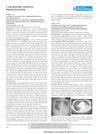
 Middle-aged women with dilated cardiomyopathy should be screened for antiphospholipid syndrome.
 December 2024 in “Indian Journal of Dermatology”
 Dermoscopy is useful for diagnosing Atrichia with Papular Lesions in children without needing a biopsy.
 1 citations
,
January 2020 in “Benha Journal of Applied Sciences”
1 citations
,
January 2020 in “Benha Journal of Applied Sciences” Certain gene variations may increase the risk and severity of alopecia areata.
 10 citations
,
January 2019 in “Advances in Clinical and Experimental Medicine”
10 citations
,
January 2019 in “Advances in Clinical and Experimental Medicine” Certain variations in the vitamin D receptor gene are linked to an increased risk of polycystic ovary syndrome.
1 citations
,
July 2023 in “Clinical Cosmetic and Investigational Dermatology” Familial dyskeratotic comedones are a rare, benign skin disorder that is hard to treat.
64 citations
,
March 2004 in “Journal of Clinical Investigation” Targeting ornithine decarboxylase can help prevent skin cancer.