 February 2017 in “International Journal of Research in Dermatology”
 A six-year-old girl unusually had a hair loss condition common in middle-aged women.
21 citations
,
May 2023 in “The Journal of Allergy and Clinical Immunology In Practice” December 2022 in “Brazilian Journal of Health Review” Patients with Complete Androgen Insensitivity Syndrome need psychological support and multidisciplinary care for complex treatment decisions.
9 citations
,
March 1998 in “PubMed” Surgery successfully treated the ferret's adrenal issue, leading to hair regrowth and improved health.
January 2026 in “JDDG Journal der Deutschen Dermatologischen Gesellschaft” A 5-year-old boy has Nevus Comedonicus Syndrome, causing skin lesions and a cataract.
 May 2025 in “The Journal of Rheumatology”
 Mixed Connective Tissue Disease can develop from overlapping symptoms of several autoimmune diseases, making diagnosis complex.
November 2022 in “Journal of Investigative Dermatology” ILC1-like cells can cause alopecia areata by themselves.
2 citations
,
January 2024 in “Revista Paulista de Pediatria” A rare genetic mutation caused severe symptoms in a 6-year-old girl with mandibuloacral dysplasia type A.
April 2020 in “Journal of the Endocrine Society” The patient with a misplaced pituitary gland and interrupted pituitary stalk is being treated with hormone replacement.
23 citations
,
July 2003 in “Journal of Investigative Dermatology” Genetic testing for hairless gene mutations is crucial to correctly diagnose and treat atrichia with papular lesions.
1 citations
,
December 2018 in “Veterinary dermatology” The hair coat disorder in Schipperkes is similar to Alopecia X and involves increased androstenedione levels and hair cycle arrest.
February 2026 in “Boletín Médico del Hospital Infantil de México” Children with alopecia areata often have related health issues like allergies, autoimmune diseases, or mental health conditions.
 5 citations
,
December 1964 in “Australasian journal of dermatology”
5 citations
,
December 1964 in “Australasian journal of dermatology” Congenital atrichia is a rare condition where children are born without hair, and treatment is often ineffective.
April 2016 in “Journal of the American Academy of Dermatology” A 4-year-old girl had a rare hair disorder affecting only part of her scalp.
January 2024 in “Indian Journal of Paediatric Dermatology” A rare case links early-onset alopecia universalis and nephrotic syndrome, suggesting genetic immune issues.
The woman's skin and health issues were due to a severe zinc deficiency.
75 citations
,
January 2004 in “Molecular and Cellular Biology” XEDAR deficiency prevents muscle degeneration in EDA-A2 transgenic mice.
December 2004 in “Microbial Ecology in Health and Disease” Pityriasis amiantacea is linked to Staphylococcus aureus infection and can be effectively treated with antibiotics, corticosteroids, and coal tar.
November 2023 in “Skin Appendage Disorders” A rare scalp condition can occur due to leukemia affecting the skin.
 1 citations
,
December 2018 in “Journal of genetic medicine”
1 citations
,
December 2018 in “Journal of genetic medicine” A small change in the TRPS1 gene leads to a less severe form of a syndrome affecting hair, nose, and finger development.
1 citations
,
November 2016 in “Frontiers in neurology” Steroid treatment improved both gut and nerve symptoms in a man with Cronkhite–Canada syndrome.
87 citations
,
March 2017 in “Journal of Clinical Investigation” PSENEN gene mutations can cause both Dowling-Degos disease and acne inversa.
14 citations
,
March 1994 in “Archives of Dermatology” A married couple both developed alopecia areata, possibly due to shared stress.
 21 citations
,
January 2013 in “Clinical Endoscopy”
21 citations
,
January 2013 in “Clinical Endoscopy” First Korean case of Cronkhite-Canada syndrome with colon cancer and serrated adenoma.
 October 2023 in “The American Journal of Gastroenterology”
 Cronkhite-Canada syndrome is rare, with high mortality and cancer risk, needing more research for treatment guidelines.
 August 2023 in “Gastroenterology”
 A 78-year-old man with Cronkhite-Canada syndrome improved significantly after treatment and remains symptom-free.
January 2023 in “Indian Dermatology Online Journal” Uncombable hair syndrome is linked to Zellweger syndrome.
Understanding both skin and mental health aspects of alopecia areata is crucial for better patient care.
 16 citations
,
April 1978 in “Genetics Research”
16 citations
,
April 1978 in “Genetics Research” Mice with the ab gene have abnormal sebaceous gland development, affecting sebum production.
 9 citations
,
July 2017 in “Dermatologic Therapy”
9 citations
,
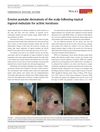
July 2017 in “Dermatologic Therapy” Two elderly men developed scalp inflammation after using a gel for skin lesions, which healed with treatment except for some permanent hair loss.