28 citations
,
June 2010 in “Pediatric dermatology” Short anagen syndrome causes short hair that may grow longer after puberty.
52 citations
,
December 2014 in “Journal of Dermatological Science” Apremilast may help treat hair loss in alopecia areata.
 June 2006 in “Annales de Dermatologie et de Vénéréologie”
 Tranexamic acid effectively reduced swelling episodes in a girl with a rare form of hereditary angioneurotic edema.
 21 citations
,
January 2013 in “Annals of dermatology/Annals of Dermatology”
21 citations
,
January 2013 in “Annals of dermatology/Annals of Dermatology” The combination of cyclosporine and PUVA might help treat severe alopecia areata.
 May 2002 in “British Journal of Dermatology”
 A pregnant woman's skin condition improved after giving birth, possibly due to high estrogen levels during pregnancy.
 1 citations
,
December 2015 in “Vestnik dermatologii i venerologii”
1 citations
,
December 2015 in “Vestnik dermatologii i venerologii” Patients with non-scarring alopecia often experience emotional disorders like depression and stress.
 1 citations
,
January 2014 in “Health Renaissance”
1 citations
,
January 2014 in “Health Renaissance” Pseudopelade of Brocq is hard to diagnose and treat, with limited effective options.

A rash from semaglutide may be due to propylene glycol, not the drug itself.
5 citations
,
September 1989 in “Pediatric dermatology” Persistent papular plaques on children's faces need better understanding and treatment.
1 citations
,
April 2024 in “Russian Journal of Clinical Dermatology and Venereology” Atopic diseases worsen alopecia areata, leading to earlier onset and more severe forms.
January 2026 in “Acta Dermato Venereologica” Dupilumab effectively treats severe skin issues in a rare genetic disorder.
 13 citations
,
August 2012 in “Journal of the American Academy of Dermatology”
13 citations
,
August 2012 in “Journal of the American Academy of Dermatology” A rare scalp condition causing hair loss and cysts in young men can be treated effectively with a specific steroid injection.
 20 citations
,
July 2013 in “European Journal of Oral Sciences”
20 citations
,
July 2013 in “European Journal of Oral Sciences” A new PAX9 gene mutation causes missing teeth and hair problems, but not skin or nail issues.
12 citations
,
May 2006 in “Journal of Neurology Neurosurgery & Psychiatry” Neuromyotonia and morphoea can occur together in the same body areas.
 January 2025 in “Case Reports in Medicine”
 Early detection, consistent management, and lifestyle changes are crucial for managing HAIR-AN syndrome effectively.
 10 citations
,
August 2011 in “Clinics”
10 citations
,
August 2011 in “Clinics” The author clarified that Alopecia Areata Incognita (AAI) and diffuse Alopecia Areata (AA) are different conditions and the case discussed was actually AA, not AAI.
 20 citations
,
August 2018 in “Clinics in Dermatology”
20 citations
,
August 2018 in “Clinics in Dermatology” The conclusion is that understanding and addressing the psychological effects of alopecia areata is important for effective treatment.
1 citations
,
January 2026 in “International Journal of Dermatology” Amivantamab can cause severe skin eruptions and scarring, requiring drug discontinuation and early treatment.
38 citations
,
September 2017 in “Journal of zoo and wildlife medicine” Oclacitinib maleate successfully treated alopecia in Andean bears.
28 citations
,
October 2017 in “Journal of the American Academy of Dermatology” Pediatric alopecia areata is rare, affecting more girls than boys, and peaks at ages 9-12.
 7 citations
,
January 2015 in “Case reports in endocrinology”
7 citations
,
January 2015 in “Case reports in endocrinology” The document concludes that HAIR-AN syndrome should be considered when a patient shows severe hyperandrogenism and insulin resistance after excluding tumors.
4 citations
,
October 2021 in “Journal of Clinical Medicine” Carriers of a specific gene mutation have subtle skin changes without visible symptoms.
 September 2024 in “Journal of Medicine and Life”
 A specific gene mutation causes a severe skin disorder in a family.
 November 2009 in “Journal of Pediatric Nursing”
 Nonclassic congenital adrenal hyperplasia is a common genetic disorder that can cause a range of symptoms and requires personalized treatment.
 10 citations
,
May 1978 in “Acta Dermato Venereologica”
10 citations
,
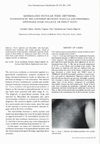
May 1978 in “Acta Dermato Venereologica” Pustules in toxic erythema are linked to hair follicles or sweat ducts.
June 2025 in “British Journal of Dermatology” Syphilis can mimic other diseases, making diagnosis challenging, but proper testing and treatment are effective.
April 2026 in “UNC Libraries” Pulsed electric field treatment may help shrink untreated liver tumors.
 8 citations
,
September 2004 in “Contact dermatitis”
8 citations
,
September 2004 in “Contact dermatitis” Avoiding dyed wigs and clothing improved severe allergic reactions in a woman treated with diphencyprone.
 7 citations
,
January 2009 in “Immunological investigations”
7 citations
,
January 2009 in “Immunological investigations” A 3-year-old boy lost all his hair due to a rare reaction to phenobarbital, but it grew back after steroid treatment.
 January 2014 in “International Journal of Trichology”
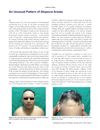
 A man had an unusual type of hair loss that didn't match known patterns and didn't improve with treatment.