14 citations
,
March 2023 in “Bioengineering” Standardized PRP is effective for tendinopathies, with most patients improving after one injection.
 September 2023 in “Medical & Clinical Case Reports Journal”
 Platelet-Rich Plasma (PRP) may increase hair density and thickness in Androgenetic Alopecia, but it's not significantly better than a placebo.
Platelet-rich plasma may improve hair transplant results.
 January 2021 in “Esculapio”
 Using your own blood (PRP) can effectively increase hair count and strength in men with hair loss.
January 2022 in “Springer eBooks” Combining PRP with lipofilling shows promise for tissue regeneration but needs more clinical trials to confirm benefits.
April 2023 in “Journal of Investigative Dermatology” PRP shows promise for treating hair loss but needs more research.
 June 2020 in “Aesthetic Surgery Journal”
 Estradiol-rich plasma can increase hair density faster and more effectively in male pattern baldness treatment than regular plasma.
25 citations
,
August 2022 in “Frontiers in Reproductive Health” Platelet-rich plasma shows promise for treating erectile dysfunction, but more research is needed.
 136 citations
,
February 2017 in “International Journal of Molecular Sciences”
136 citations
,
February 2017 in “International Journal of Molecular Sciences” PRP treatment improves hair growth, and the device used can affect results, with some being more effective.
January 2019 in “11th World congress for hair research”  9 citations
,
December 2020 in “Journal of The American Academy of Dermatology”
9 citations
,
December 2020 in “Journal of The American Academy of Dermatology” Platelet-rich plasma may help restore immune balance in bald patches, but its effectiveness in treating hair loss is limited.
9 citations
,
June 2025 in “Journal of Clinical Medicine” PRP is a promising and safe treatment for early to moderate knee osteoarthritis but needs standardized protocols.
 April 2021 in “Journal of Investigative Dermatology”
 PRP treatment helps hair growth and reduces hair loss in women, but more research needed.
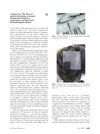 February 2021 in “Journal of The American Academy of Dermatology”
 Platelet-rich plasma therapy's effectiveness for female hair loss needs more accurate data and further examination.
February 2025 in “Drug Delivery and Translational Research” 15 citations
,
July 2020 in “Applied Sciences” PRS injections can improve knee function and reduce pain for up to a year.
 March 2025 in “Human Movement”
 PRP might help athletes' injuries, but more research is needed.
44 citations
,
May 2022 in “Journal of Assisted Reproduction and Genetics”  January 2024 in “Journal of Education, Health and Sport”
 Platelet-rich plasma therapy shows promise in treating hair loss caused by androgenic alopecia.
 May 2018 in “Journal of dermatology and dermatitis”
 PRP is a promising treatment for autoimmune hair loss but its exact workings are not fully understood.
 April 2024 in “Archiv EuroMedica”
 Platelet-Rich Plasma therapy helps increase hair density and regrowth for some types of hair loss.
January 2023 in “The Egyptian Journal of Hospital Medicine” PRP therapy is a promising and effective treatment for hair loss with minimal side effects.
 September 2024 in “Zagazig University Medical Journal”
 PRP did not significantly improve hair restoration results but improved scar tissue quality.
September 2022 in “Dermatologic Therapy” January 2018 in “Journal of Visualized Experiments” PRP injections significantly increased hair count and density with less pain.
 4 citations
,
September 2020 in “Journal of Cosmetic Dermatology”
4 citations
,
September 2020 in “Journal of Cosmetic Dermatology” PRP treatment significantly increased hair density and thickness in male hair loss.
 1 citations
,
October 2021 in “Cureus”
1 citations
,
October 2021 in “Cureus” Platelet-rich plasma treatment may safely and effectively reduce skin lesions in psoriasis and atopic dermatitis.
 December 2025 in “International Journal of Pharmacology”
 iPSC-derived artificial platelets show promise for consistent and effective regenerative therapies.
July 2025 in “OPAL (Open@LaTrobe) (La Trobe University)” Single-spin PRP may be more effective for hair loss, but more research is needed.
 December 2025 in “Aesthetic Cosmetology and Medicine”
 Injectable platelet-rich fibrin therapy improved hair and scalp conditions in women with excessive hair loss.