 March 2012 in “Faculty Opinions – Post-Publication Peer Review of the Biomedical Literature”
 Hair loss can be an early sign of prostate enlargement.
 4 citations
,
February 2024 in “Scientific Reports”
4 citations
,
February 2024 in “Scientific Reports” Platelet-rich plasma is as effective as mineral trioxide aggregate for pulp capping and may offer better cellular responses.
 3 citations
,
March 2016 in “Journal of Cosmetic Dermatology”
3 citations
,
March 2016 in “Journal of Cosmetic Dermatology” GPIGS peptide increases thick hair growth in balding Japanese men.
38 citations
,
January 2017 in “PPAR Research” PPAR-γ helps control skin oil glands and inflammation, and its disruption can cause hair loss diseases.
 August 2025 in “Benha Medical Journal”
 PRP therapy improves hair growth safely in androgenetic alopecia but needs standardized methods.
 25 citations
,
May 2014 in “Facial Plastic Surgery”
25 citations
,
May 2014 in “Facial Plastic Surgery” PRFM may help treat hair loss, especially in mild cases.
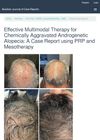 October 2025 in “Brazilian Journal of Case Reports”
 Combining PRP and mesotherapy effectively improved hair density and scalp health in a patient with severe hair loss.

Polydopamine is promising for personalized medicine and biomedical technology due to its strong adhesion and biocompatibility.
1 citations
,
October 2009 in “Cancer Epidemiology Biomarkers & Prevention” Cancer prevention is crucial, with a focus on research and improved screening methods.
Children with Parry Romberg Syndrome had successful facial fat-grafting surgeries after disease stabilization with no complications.
November 2025 in “Journal of Investigative Dermatology” IMG-007 helps regrow hair and reduce scalp inflammation in severe alopecia areata.
 September 2024 in “Cureus”
 A new method improves platelet testing for heart disease patients.
February 2026 in “Chemical Engineering Journal” PCA hydrogel promotes hair growth by enhancing blood vessel formation and hair follicle stem cell activity.
 11 citations
,
June 2017 in “Journal of cell science”
11 citations
,
June 2017 in “Journal of cell science” AGD1's PH domain is essential for its role in root hair growth and polarity.
1 citations
,
August 2022 in “Journal of Drugs in Dermatology” More frequent PRP sessions with shorter intervals improve hair loss treatment.
 11 citations
,
March 2021 in “Dermatology and therapy”
11 citations
,
March 2021 in “Dermatology and therapy” Researchers created a new tool to measure the effects of alopecia areata from the patient's view, focusing on hair loss, daily life, and emotional health.

Most patients with hair loss used alternative treatments, especially topical applications and health food supplements, based on recommendations from others.
 September 2025 in “Journal of Cutaneous and Aesthetic Surgery”
 Scalp micropigmentation improves appearance and satisfaction in scarring alopecia but may require repeat sessions.
 September 2024 in “Journal of the American Academy of Dermatology”
 AH-001 could be a safer and more effective treatment for hair loss.
 1 citations
,
April 2017 in “Journal of Investigative Dermatology”
1 citations
,
April 2017 in “Journal of Investigative Dermatology” SM04554 may increase hair growth as a topical treatment for androgenetic alopecia.
Integrating ABI screening in clinics can improve patient care for those at risk of peripheral artery disease.
December 2022 in “Plastic and Reconstructive Surgery” PRPF is a safer and more effective treatment for hair loss than PRP.
May 2023 in “GLOBAL JOURNAL FOR RESEARCH ANALYSIS” Combining PRP with Minoxidil is more effective for hair regrowth than PRP alone.
 2 citations
,
January 2014 in “Hair transplant forum international”
2 citations
,
January 2014 in “Hair transplant forum international” Platelet Rich Plasma (PRP) therapy can improve hair thinning in male pattern baldness patients, but more research is needed to confirm its effectiveness.
June 2026 in “International Journal of Drug Delivery Technology” Polymeric micelles offer a promising new way to treat hair loss with fewer side effects.
 5 citations
,
December 2018 in “Journal of Cosmetic Dermatology”
5 citations
,
December 2018 in “Journal of Cosmetic Dermatology” PRP treatment improves hair count, density, and reduces hair loss in AGA patients.

IP-PA1 helps grow hair in mice and affects human cell growth-related genes differently than traditional hair growth treatments.
July 2026 in “Journal of the American Academy of Dermatology” The lotion helps manage mild to moderate hair loss.
1 citations
,
January 2021 in “PubMed” Four PRP with microneedling sessions effectively treat androgenetic alopecia.
16 citations
,
January 2018 in “Dermatology Online Journal” PRP shows promise for treating hair loss but needs more research.