January 2015 in “프로그램북(구 초록집)” Trichoscopy effectively diagnoses and assesses hair loss severity in androgenetic alopecia and alopecia areata.
 March 2024 in “Healthcare”
 Stem cell treatment improved life quality and sexual function in women with hair loss.
PRP treatment mildly to moderately improves hair loss in most men with AGA.
Herpes zoster can cause lasting nail and hair damage.
75 citations
,
September 1985 in “Archives of dermatology” Two boys had a rare skin condition needing to be differentiated from similar disorders, with unclear inheritance due to few cases.
 May 2025 in “Journal of medical and dental science research.”
 i-PRF and A-PRF are promising treatments for hair regrowth in androgenetic alopecia.
 38 citations
,
July 1989 in “Archives of dermatological research”
38 citations
,
July 1989 in “Archives of dermatological research” Testosterone causes hair loss in AGA mice, which are good for testing baldness treatments, and both minoxidil and cyproterone acetate can prevent this hair loss.
 April 2026 in “Zenodo (CERN European Organization for Nuclear Research)”
 DHT increases scalp heat, causing hair loss.
40 citations
,
December 2010 in “Human Genetics”  3 citations
,
May 2011 in “Journal of the American Academy of Dermatology”
3 citations
,
May 2011 in “Journal of the American Academy of Dermatology” A woman's excessive hair growth around a leg ulcer was linked to a treatment with Prostaglandin E1 ointment.
 June 2021 in “Dermatology Online Journal”
 A girl with a rare genetic condition affecting hair and nails also developed a common type of hair loss, suggesting a possible genetic link.
October 2025 in “Indian Journal of Paediatric Dermatology” Trichoscopy is a helpful tool for diagnosing Netherton syndrome.
 June 2023 in “GLOBAL JOURNAL FOR RESEARCH ANALYSIS”
 PRP is a promising treatment for hair loss.
8 citations
,
October 2006 in “Journal of Experimental and Clinical Anatomy”  11 citations
,
September 2012 in “The journal of investigative dermatology/Journal of investigative dermatology”
11 citations
,
September 2012 in “The journal of investigative dermatology/Journal of investigative dermatology” A mutation in the KRT71 gene causes a hair disorder by disrupting hair follicle structure and texture.
August 2021 in “Zenodo (CERN European Organization for Nuclear Research)” Platelet-rich plasma can temporarily improve hair growth in androgenetic alopecia but may need additional treatments for long-term results.
 December 2025 in “IP Indian Journal of Clinical and Experimental Dermatology”
 Androgenetic alopecia treatments are becoming more personalized and include new therapies like topical antiandrogens and regenerative strategies.
 15 citations
,
March 2018 in “Journal of The American Academy of Dermatology”
15 citations
,
March 2018 in “Journal of The American Academy of Dermatology” PRP therapy improves hair density and thickness in AGA patients, even with other treatments.
 5 citations
,
September 2013 in “The Journal of Dermatology”
5 citations
,
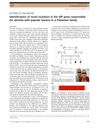
September 2013 in “The Journal of Dermatology” Researchers found a new mutation in the HR gene causing hair loss and skin bumps in a Pakistani family.
 August 2019 in “Journal of The American Academy of Dermatology”
 PFD patch helps laser tattoo removal, trichoscopy diagnoses AGA, and serum boosts SOD activity.
 January 2025 in “Indian Journal of Paediatric Dermatology”
 Biopsy is crucial to correctly diagnose granuloma annulare, which can mimic other conditions like alopecia mucinosa.
39 citations
,
November 2007 in “Journal of Histochemistry & Cytochemistry” NG2 is crucial for normal skin and hair development in mice.
 February 2025 in “Journal of Investigative Dermatology”
 DMG-Na may help reduce hair loss and improve hair growth, but more research is needed.
75 citations
,
September 2015 in “Acta biomaterialia” Alkylation of human hair keratin allows for adjustable drug release rates in hydrogels for medical use.
 140 citations
,
August 2011 in “Biomaterials”
140 citations
,
August 2011 in “Biomaterials” Keratose, derived from human hair, is a non-toxic biomaterial good for tissue regeneration and integrates well with body tissues.
September 2021 in “Dermatologic Surgery” 
Proper medical treatments can control and even reverse female pattern hair loss, but it's important to check for related conditions like excessive male hormone production, especially in severe cases.
 1 citations
,
July 2014 in “Nepal journal of dermatology, venereology & leprology”
1 citations
,
July 2014 in “Nepal journal of dermatology, venereology & leprology” Patients with chronic kidney disease on hemodialysis often have skin problems.
 1 citations
,
January 2022 in “Journal of Biosciences and Medicines”
1 citations
,
January 2022 in “Journal of Biosciences and Medicines” Understanding how androgens and their receptors work can lead to improved treatments for skin diseases.
 20 citations
,
January 2019 in “Journal of dermatological science”
20 citations
,
January 2019 in “Journal of dermatological science” Male hormones indirectly affect skin cell development by increasing growth factor levels from skin fibroblasts.