46 citations
,
June 2013 in “Journal of structural biology” High glycine–tyrosine keratin-associated proteins help make hair strong and maintain its shape.
 7 citations
,
January 2017 in “Clinical and medical investigations”
7 citations
,
January 2017 in “Clinical and medical investigations” Suriname uses many plants for beauty, with potential for a beauty industry, but more evidence is needed for product effectiveness.
 2 citations
,
November 2017 in “Journal of Endocrinological Investigation”
2 citations
,
November 2017 in “Journal of Endocrinological Investigation” The painting of an 18th-century Sicilian baroness shows she had hair loss, possibly due to ovarian issues, insulin resistance, or a specific type of tumor.
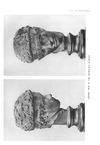 November 1919 in “The Journal of Hellenic Studies”
 The bronze head shows the high skill and beauty valued by ancient Greek sculptors.
 September 2025 in “Journal of Science Innovations and Nature of Earth”
 Anthocyanins in berries and purple veggies offer health benefits but need better processing for full use.
The early Iron Age settlement at Raposal shows diverse cultural influences and challenges previous ideas about settlement types in the Ebro Valley.
 2 citations
,
October 2021 in “bioRxiv (Cold Spring Harbor Laboratory)”
2 citations
,
October 2021 in “bioRxiv (Cold Spring Harbor Laboratory)” The DNA of ancient Koreans from the Three Kingdoms period shows a mix of northern Chinese and Japanese-Jomon ancestry, revealing two distinct genetic groups.
Communities adapt and reinterpret the landscape of the former Stutthof concentration camp, balancing memory and identity.
1 citations
,
August 1992 in “Proceedings annual meeting Electron Microscopy Society of America” Mammoth hair from different ages shows distinct surface textures and elemental compositions.
12 citations
,
January 2010 in “The anthropologist/Anthropologist” Human hair is valuable for identifying people and detecting drug use.
 December 2019 in “Periodicals of Engineering and Natural Sciences (PEN)”
 Hair analysis can provide insights into a person's medical history and location over time.
27 citations
,
November 2015 in “American Journal of Primatology” Stable isotope analysis of hair helps study primate diets over time non-invasively.
44 citations
,
June 2018 in “Journal of Visualized Experiments” A culturally sensitive method was developed to collect hair samples from African Americans for stress analysis.
 28 citations
,
November 2018 in “Journal of structural biology”
28 citations
,
November 2018 in “Journal of structural biology” Different populations have distinct hair structures related to their ancestry.
 7 citations
,
August 2005 in “Evolutionary anthropology”
7 citations
,
August 2005 in “Evolutionary anthropology” Human hair is unique and important for understanding human evolution and identity.
1 citations
,
April 2009 in “Wiley Encyclopedia of Forensic Science” Microscopic hair analysis helps identify species and sometimes individuals in forensic science.
6 citations
,
January 2005 in “Han-guk hyeonmigyeong hakoeji/Applied microscopy” The 16th-century mummy's hair was well-preserved due to a calcium surface coat.
18 citations
,
April 2018 in “Biotechniques/BioTechniques” A new method was developed to extract and analyze proteins from very short human hairs.
October 2025 in “Experimental & Molecular Medicine” Hair analysis is valuable for health and forensics but faces challenges like growth variability and contamination.
 December 2025 in “International Journal For Multidisciplinary Research”
 Microscopic hair analysis is important in forensics but has limitations; new technologies are improving its accuracy.
The 16th-century mummy's hair was well-preserved due to a calcium coating.
8 citations
,
July 1997 in “Archives of Gerontology and Geriatrics”  2 citations
,
January 2013
2 citations
,
January 2013 Hair can help solve crimes by revealing personal and chemical information.
January 1980 in “中国科学A辑(英文版)” The protein structures in the hair and tendon were preserved, but their molecular arrangements changed.
April 2024 in “American Journal of Biological Anthropology” Hair traits vary widely and are not reliable indicators of ancestry.
 January 2012 in “TRANSACTIONS OF THE JAPAN SOCIETY FOR AERONAUTICAL AND SPACE SCIENCES AEROSPACE TECHNOLOGY JAPAN”
 Human hair can be used to study mineral changes from long-term space flight.
May 1988 in “Journal of Forensic Sciences” A new method accurately determines hair blood type and can be used on dust samples.
68 citations
,
August 2014 in “PeerJ” Human hair proteins vary by individual, body site, and ethnicity, useful for forensics.
2 citations
,
January 1990 8 citations
,
October 2011 in “Anthropologischer Anzeiger” Pubic hair is thicker than axillary and scalp hair, useful for forensic identification.