January 2026 in “Medicina” JAK inhibitors show promise for treating various skin disorders effectively and safely.
AI can personalize exercise routines to improve skin health.
April 2025 in “Preprints.org” AI can personalize exercise to improve skin health.
January 2025 in “Conservation Physiology” Bear hair grows 0.10 to 1.05 mm per day, varying by individual and season.
May 2020 in “International journal of dermatology and venereology” Hair matrix cysts are rare skin nodules with unique features, often needing surgical removal.
May 2005 in “Journal of the American Academy of Dermatology”  March 2026 in “Reports of Vinnytsia National Medical University”
 Alopecia areata in young Ukrainian men varies in severity, requiring personalized treatment.
 1 citations
,
October 2013 in “Our Dermatology Online”
1 citations
,
October 2013 in “Our Dermatology Online” 5α reductase type 2 enzyme mutation and oxidative stress may increase androgenetic alopecia risk in Egyptians.
January 2022 in “International journal of dermatology and venereology” A Chinese man with KID syndrome had a new mutation in the GJB2 gene.
June 2009 in “Pigment Cell & Melanoma Research” Preventing hair graying may be possible by managing oxidative stress and activating melanocyte stem cells.
13 citations
,
April 1994 in “Baillière's clinical endocrinology and metabolism” Some people have genetic mutations that make them resistant to vitamin D, leading to rickets even with enough vitamin D intake.
4 citations
,
October 1993 in “PubMed” Valproic acid can cause mild side effects like anorexia and hair loss in some epileptic patients.
48 citations
,
January 2008 in “European Neurology” Thallium poisoning causes pain, hair loss, and nerve issues, treatable with hemoperfusion and hemodialysis.
 April 2025 in “Turkish Journal of Hematology”
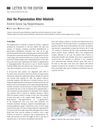
 Nilotinib may cause gray hair to return to its original color.
 January 2024 in “Clinical and Experimental Vaccine Research”
 Rabies vaccine might cause hair loss due to immune issues.
 2 citations
,
November 2015 in “Endocrinology, Diabetes & Metabolism Case Reports”
2 citations
,
November 2015 in “Endocrinology, Diabetes & Metabolism Case Reports” A man with X-ALD improved after treatment, highlighting the need to consider X-ALD in similar patients and test their relatives.
1 citations
,
July 2020 in “Acta Neuropsychologica” Valproic acid effectively reduces aggressive and impulsive behaviors in brain injury patients with acceptable side effects.
January 2022 in “The Pan African medical journal” Hypertrichosis causes excessive hair growth and needs psychological support due to its impact on self-esteem.
22 citations
,
January 1999 in “Dermatology” The condition might be caused by genetic changes after birth.
4 citations
,
August 2005 in “Clinical Infectious Diseases” The man's symptoms improved after treating his scurvy with high-dose vitamin C.
October 2024 in “Journal of the Endocrine Society” A rare genetic mutation causes resistance to vitamin D, leading to severe rickets and requires high doses of calcium and vitamin D for management.
 7 citations
,
December 2013 in “The Journal of Dermatology”
7 citations
,
December 2013 in “The Journal of Dermatology” A woman's hair turned gray and fell out after starting a cancer drug called imatinib mesylate.
 January 2012 in “Yearbook of Dermatology and Dermatologic Surgery”
 Alopecia areata is a hair loss condition that often starts before age 30 and can affect various body parts, with unpredictable hair regrowth chances.
16 citations
,
January 2013 in “Pediatric Gastroenterology Hepatology & Nutrition” Azathioprine caused side effects in over half of the Korean pediatric inflammatory bowel disease patients, requiring close monitoring.
November 2025 in “Journal of Investigative Dermatology” Alopecia areata requires addressing both emotional and financial challenges for better patient care.
February 2013 in “Pediatrics in Review” The girl's symptoms suggest a complex condition that's hard to diagnose despite normal test results.
 July 2024 in “Journal Archives of Health”
 Woolly hair is a rare genetic condition with no effective treatments.
 March 2014 in “Journal of The American Academy of Dermatology”
 Azathioprine may be an effective treatment for severe hair loss.
25 citations
,
May 1995 in “Journal of the American Academy of Dermatology” Erythromelanosis follicularis faciei can also affect women, though it's rare.
1 citations
,
January 1986 in “PubMed” The boy's symptoms suggest a possible new medical condition.