Search
for
Sort by
Research
870-900 / 1000+ resultsresearch Altered hypothalamus functional connectivity and psychological stress in patients with alopecia areata
Altered hypothalamic activity may contribute to stress in alopecia areata patients.

research Faculty Opinions recommendation of Androgen receptor gene polymorphisms and risk for androgenetic alopecia: a meta-analysis.
Certain gene variations are significantly linked to hair loss, especially in white people.
research Identification of human hair follicle antigens targeted in the presumptive autoimmune hair follicle disorder alopecia areata and their potential functional relevance in vitro : methods development for isolation and identification of alopecia areata-relevant human hair follicle antigens using a proteomics approach and their functional assessment using an ex vivo hair follicle organ culture model
Alopecia areata may be caused by antibodies targeting specific hair follicle proteins, hindering hair growth.
research Long-term Efficacy and Safety of Ritlecitinib in Adults and Adolescents with Alopecia Areata: 3-year Results from the ALLEGRO-LT Phase 3, Open-label Study
Ritlecitinib is effective and safe for long-term treatment of alopecia areata.

research An adolescent girl presenting with primary amenorrhea: A case report of complete androgen insensitivity syndrome
A 15-year-old girl with no menstrual period was diagnosed with a genetic condition that makes her body unable to respond to male hormones, leading to female characteristics despite having male genetic makeup.
research Alopecia Areata - Current and Emerging Therapies
New treatments like JAK inhibitors offer hope for hair regrowth in severe alopecia areata.
research Adverse events associated with aromatase inhibitors: an analysis of real-world datasets and drug-gene interaction network
Aromatase inhibitors can cause various adverse reactions, so monitoring is crucial.
research Androgenetic alopecia and metabolic syndrome: A cross-sectional study in Northeast India
Androgenetic alopecia may predict metabolic syndrome, so routine screening is recommended to prevent cardiovascular issues.
research The hairless gene in androgenetic alopecia: results of a systematic mutation screening and a family-based association approach
Hairless gene not strongly linked to baldness.
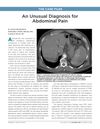
research The Case Files
A 65-year-old man with sudden abdominal pain and seizures was diagnosed with a rare, non-traumatic splenic rupture and treated without surgery.

research Long-term Prophylaxis with Androgens in the management of Hereditary Angioedema (HAE) in emerging countries
Long-term use of androgens can help manage Hereditary Angioedema (HAE) but may cause serious side effects, so alternative treatments with fewer side effects are being considered.
research Clinico-epidemiological study of alopecia areata
Alopecia areata mainly affects young people, often showing as patchy hair loss on the scalp.
research Alopecia areata and primary sclerosing cholangitis
The study concluded that patients with total hair loss and recurring hair loss had an earlier onset, longer-lasting condition, and a greater negative impact on their quality of life, with allergic conditions linked to more severe hair loss.
research Predominance of CD27-PD-1- Effector Memory T Cells Re-Expressing CD45RA Characterizes Treatment-Resistant Severe Alopecia Areata
CD8+ T cells re-expressing CD45RA may predict treatment resistance in severe alopecia areata.
research Granulomatous alopecia areata is a valid but rare histologic subset of a common disease
Granulomatous alopecia areata is a rare but real form of hair loss.
research Aromatase inhibitor–induced hair loss in two adolescents
Two teenage boys lost hair after taking a drug for growth, which was not a known side effect for kids.
research Reporting on Adverse Clinical Events
Different medications can cause serious side effects in some people.
research All-Cause and Cause-Specific Mortality Risks Associated With Alopecia Areata
People with alopecia areata have similar overall death rates as others but higher risks of death from self-harm, psychiatric issues, and lung cancer in certain cases.
research STEROIDS AND STEROID-LIKE COMPOUNDS
Athletes use steroids to enhance performance despite health risks and legal issues, and education on their dangers is needed.
research CONGENITAL ATRICHIA.*
Congenital atrichia is a rare condition where children are born without hair, and treatment is often ineffective.

research Alopecia in adolescents-A survey
The document's conclusion cannot be provided because the document is not accessible or understandable.

research The Relationship Between Patient-Reported Severity of Hair Loss and Health-Related Quality of Life and Treatment Patterns Among Patients with Alopecia Areata
People with moderate hair loss from Alopecia Areata feel more impacted than those with no or almost complete hair loss, and are more likely to seek treatment.
research Ankyloblepharon-ectodermal dysplasia-clefting syndrome: Surgical and medical management in an infant with bilateral corneal perforations
Early and aggressive treatment is crucial for preserving vision in infants with AEC syndrome.
research Evaluation of the relationship between androgenetic alopecia and blood groups and Rhesus factor
No link between hair loss and blood groups or Rhesus factor.
research Resolution of refractory generalized granuloma annulare after treatment with alitretinoin
Alitretinoin helped clear up a skin condition called generalized granuloma annulare in an elderly man.
research Rheumatologists have an important role in the management of interstitial lung disease (ILD): a cross-speciality, multi-centre, UK perspective
Rheumatologists are crucial in managing interstitial lung disease by working closely with respiratory specialists.

research The pathogenesis of alopecia areata
Alopecia areata is an autoimmune disease affecting hair follicles and may harm heart health.
research Prolonged Drug-Induced Hypersensitivity Syndrome/DRESS With Alopecia Areata and Autoimmune Thyroiditis
A severe medication reaction required long treatment and led to hair loss and thyroid issues.
research A case of ophiasis type of alopecia areata in a patient with ring chromosome 18 syndrome
A patient with a rare chromosome condition also had a rare type of hair loss.