 8 citations
,
May 2018 in “Primary Care: Clinics in Office Practice”
8 citations
,
May 2018 in “Primary Care: Clinics in Office Practice” Doctors should use a detailed patient history and physical exam to diagnose joint pain, and consult a rheumatologist early for suspected autoimmune diseases.
November 2004 in “Emergency Medicine News” CA-MRSA is a growing health issue needing new treatments and better hygiene to prevent spread.
 October 2023 in “CHEST Journal”
 Early recognition and treatment of severe SLE symptoms can improve outcomes.
13 citations
,
July 2009 in “Pediatrics in Review” Early diagnosis and treatment of congenital adrenal hyperplasia are crucial to manage symptoms and prevent complications.
 November 2025 in “Clinical Cosmetic and Investigational Dermatology”
 LIPH mutations cause woolly hair in some Chinese people.
January 2025 in “Dermatologic Therapy” Alopecia areata may be linked to higher heart disease risk.
 November 2024 in “SKIN The Journal of Cutaneous Medicine”
 Ritlecitinib provides new treatment options for diverse alopecia areata patients.
 8 citations
,
February 2020 in “Fertility and Sterility”
8 citations
,
February 2020 in “Fertility and Sterility” Operative hysteroscopy is still the main treatment for Asherman syndrome, but more research is needed on post-surgery methods.
 2 citations
,
April 2019 in “Proceedings of Singapore Healthcare”
2 citations
,
April 2019 in “Proceedings of Singapore Healthcare” Collaborative care between physicians and pharmacists improved medication management for rheumatoid arthritis without raising costs.
May 2015 in “The Journal of Dermatology” Alopecia areata and polymyalgia rheumatica may be linked autoimmune conditions.

A new AIRE gene mutation causes rare autoimmune symptoms in a Lebanese boy.
5 citations
,
July 2009 in “Experimental and Clinical Endocrinology & Diabetes” Nuclear AR levels give better insight into hormone effects in skin conditions.
 42 citations
,
April 2013 in “Steroids”
42 citations
,
April 2013 in “Steroids” Non-classic congenital adrenal hyperplasia is a common disorder causing symptoms like acne and infertility, and it's managed based on symptoms, not just test results. Treatment can improve fertility and reduce miscarriage risk.

A genetic variant in the KRT71 gene may cause loose anagen hair and wooly hair, and symptoms might improve with age.
 February 2010 in “Journal of The American Academy of Dermatology”
 Alopecia areata has different forms and can significantly affect quality of life, especially in more severe cases.
 1 citations
,
May 2021 in “Mayo Clinic Proceedings”
1 citations
,
May 2021 in “Mayo Clinic Proceedings” A 69-year-old man with sinus infection and fainting spells was diagnosed with a rare kidney disease, treated with steroids and a specific drug, which improved his condition.
3 citations
,
January 2019 in “JOURNAL OF CLINICAL AND DIAGNOSTIC RESEARCH” Idiopathic hirsutism is the most common cause, followed by PCOS, and insulin resistance should be checked in patients with acanthosis nigricans.
 6 citations
,
May 2012 in “Archives of Dermatological Research”
6 citations
,
May 2012 in “Archives of Dermatological Research” A new mutation in the HR gene is linked to a rare form of hair loss with limb deformities.
 April 2024 in “JEADV clinical practice”
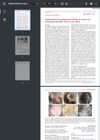
 Upadacitinib significantly improved both rheumatoid arthritis and alopecia areata in a patient.
June 2025 in “American Journal of Dermatopathology” Granulomatous Alopecia Areata is rare and may be caused by hair antigens or follicle destruction.
July 2020 in “Benha Journal of Applied Sciences” Young men with early hair loss and high SAA3 levels are at higher risk for heart disease.
February 2026 in “Advanced Science” Targeting the p300/AR axis may help treat polycystic ovary syndrome.
January 2026 in “International Society of Hair Restoration Surgery” September 2025 in “International Society of Hair Restoration Surgery” July 2025 in “International Society of Hair Restoration Surgery”  23 citations
,
May 2019 in “Expert Opinion on Therapeutic Patents”
23 citations
,
May 2019 in “Expert Opinion on Therapeutic Patents” New androgen receptor modulators show promise for treating diseases like prostate cancer and muscle wasting.
May 2020 in “International journal of molecular biology” Mutations in the AR gene cause hair thinning and loss.
 3 citations
,
January 2024 in “Annals of Dermatology”
3 citations
,
January 2024 in “Annals of Dermatology” The criteria help doctors diagnose and treat alopecia areata more effectively.
January 2026 in “Clinical and Experimental Dermatology” Ruxolitinib helped a patient with alopecia areata regrow hair.
 3 citations
,
January 2008 in “Endocrine journal”
3 citations
,
January 2008 in “Endocrine journal” A new mutation linked to partial Androgen Insensitivity Syndrome and prostate cancer was found in a patient unhappy with their female gender assignment.