 2 citations
,
January 2019 in “Medizinische Genetik”
2 citations
,
January 2019 in “Medizinische Genetik” The document reports findings on genetic research, including ethical concerns about genome editing, improved diagnosis of mitochondrial mutations, solving inherited eye diseases, confirming gene roles in epilepsy, linking a gene to aneurysms, and identifying genes associated with age-related macular degeneration.
 2 citations
,
April 2018 in “Journal of Cosmetic Dermatology”
2 citations
,
April 2018 in “Journal of Cosmetic Dermatology” Tumescent fluid increases scalp hair angles, which may improve hair transplant results and reduce surgeon fatigue.
 1 citations
,
January 2017 in “Elsevier eBooks”
1 citations
,
January 2017 in “Elsevier eBooks” The document concludes that new treatments for hair loss may involve a combination of cosmetics, clinical methods, and genetic approaches.
 1 citations
,
January 2017 in “Journal of Aesthetic & Reconstructive Surgery”
1 citations
,
January 2017 in “Journal of Aesthetic & Reconstructive Surgery” Combining FUT and FUE hair transplant methods in one session provides more grafts and higher patient satisfaction.
 October 2025 in “Pakistan journal of urology.”
 Personalized, minimally invasive treatments improve urology outcomes.
 April 2024 in “arXiv (Cornell University)”
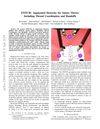
 STITCH improves suture accuracy and efficiency, especially with human help.
 December 2023 in “Juan Cuevas eBooks”
 Advanced reconstructive plastic surgery techniques improve outcomes with personalized care and innovative treatments.
 January 2019 in “LASER THERAPY”
 Laser technologies improve medical treatments and outcomes.
Technology enhances human design thinking, creating new possibilities.
Technology expands design thinking possibilities, requiring a hybrid, reflective approach.