 14 citations
,
September 2009 in “International Journal of Dermatology”
14 citations
,
September 2009 in “International Journal of Dermatology” DCPA is a chronic leg infection often related to Staphylococcus aureus, affecting mostly young men in India.
32 citations
,
July 2018 in “FEBS letters” A specific protein complex increases the activity of a plant enzyme, but this action is not required for plant root hair growth.
October 2004 in “Emergency Medicine News” Carbuncles and other skin infections need specific treatments, and preventing nasal colonization can stop recurring infections.
189 citations
,
July 2000 in “American Journal of Botany” Arabidopsis thaliana root hairs efficiently acquire phosphorus in low-phosphorus conditions.
 2 citations
,
July 2015 in “Biochemical Systematics and Ecology”
2 citations
,
July 2015 in “Biochemical Systematics and Ecology” Different types of Armillaria fungus have a high genetic variety when partnering with Polyporus umbellatus mushrooms in China.
Zinc supplements and genetic analysis help treat acrodermatitis enteropathica in children.
 3 citations
,
January 2016 in “Chemical sciences journal”
3 citations
,
January 2016 in “Chemical sciences journal” Tridax procumbens plant extracts, especially from ethanol, have strong antibacterial effects and contain beneficial compounds like flavonoids and tannins.
 134 citations
,
January 2019 in “American journal of clinical dermatology”
134 citations
,
January 2019 in “American journal of clinical dermatology” Antibiotics can reduce acne but may lead to resistant bacteria, and understanding the skin's bacteria is important for treatment.
75 citations
,
August 2018 in “Plant physiology” Hydrogen sulfide disrupts protein function and root hair growth in plants by modifying proteins.
 April 2026 in “Journal of Microbiology Biotechnology and Food Sciences”
 Carthamus caeruleus leaves are a good source of natural antioxidants and antibacterial agents.
8 citations
,
June 2011 in “Journal of Zoo and Wildlife Medicine” Staphylococcus simulans may cause dermatitis in African pygmy hedgehogs.
6 citations
,
January 2024 in “International Journal of Dermatology” Certain gut bacteria may cause alopecia areata.
26 citations
,
September 1999 in “Canadian Journal of Botany” The RHD4 gene is crucial for consistent root hair growth in Arabidopsis thaliana.
September 2023 in “Journal of the American Academy of Dermatology” Dermatologists should consider alpha-gal syndrome in patients with unexplained chronic skin issues.
 April 2024 in “bioRxiv (Cold Spring Harbor Laboratory)”
 A gene network led by RSL4 is crucial for early root hair growth in response to cold in Arabidopsis thaliana.
 1 citations
,
November 2020 in “International Journal of Dermatology”
1 citations
,
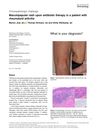
November 2020 in “International Journal of Dermatology” Methotrexate caused a rare skin rash in a rheumatoid arthritis patient, which resolved after stopping the drug.
The patient improved with treatment for depilating folliculitis.
5 citations
,
October 2020 in “Food Science and Technology” Better hygiene is needed in handling dry salted shrimp to ensure safety.
12 citations
,
December 2023 in “Plant Communications” ADF8 and ADF11 help root hairs grow longer at high pH.
April 2022 in “Microbiology and Immunology” A specific DNA pattern in Malassezia restricta may be linked to hair loss in men.
 August 2025 in “International Journal of Research in Dermatology”
 Increasing zinc intake improved skin and hair symptoms in a rare genetic disorder.
 May 2025 in “Annals of surgical case reports & images.”
 Certain gut bacteria may protect against hair loss, while others may increase the risk.
 April 2023 in “Journal of Investigative Dermatology”
 Type 2 cytokines IL-4 and IL-13 increase skin's vulnerability to Staphylococcus aureus, which could be important for treating atopic dermatitis.
1 citations
,
January 1886 1 citations
,
September 1986 in “Journal of the Forensic Science Society” Hair root sheaths can be used to accurately analyze genetic markers.
 11 citations
,
January 2020 in “BMC pediatrics”
11 citations
,
January 2020 in “BMC pediatrics” New mutations in the SLC39A4 gene found in twins help understand the genetic cause of acrodermatitis enteropathica.

Enterococcus faecalis delays wound healing by disrupting cell functions and creating an anti-inflammatory environment.
3 citations
,
October 2024 in “International Journal of Molecular Sciences” Acetylsalicylic acid affects platelet-rich plasma activation, requiring personalized approaches for effective treatment.
 August 2025 in “Frontiers in Pharmacology”
 [6]-Gingerdiol 3-monoacetate shows promise for treating T. whipplei infections.
The woman's skin and health issues were due to a severe zinc deficiency.