June 2021 in “The Journal of Family Practice” A 69-year-old woman has a fast-growing hand lesion that didn't improve with salicylic acid.
2 citations
,
June 2013 in “Journal of Dermatological Case Reports” Olmsted syndrome is a rare skin disorder causing thickened skin and other symptoms.
 January 2016 in “Journal of The American Academy of Dermatology”
 The woman has a type of scarring hair loss with red bumps around hair follicles.
January 2014 in “ACTA SCIENTIAE VETERINARIAE” The cat's skin condition was resistant to treatment and did not improve.
 April 2024 in “Journal of cutaneous pathology”
 Skin conditions like seborrheic dermatitis can make it harder to correctly diagnose hair loss because they can cause the oil glands in the skin to shrink.
1 citations
,
January 2014 SAHA syndrome links oily skin, acne, excess hair, and hair loss in women, similar to PCOS.
 February 2024 in “Buletin Veteriner Udayana”
 The dog with severe hair loss and itching improved after treatment for ehrlichiosis and demodicosis.
1 citations
,
April 2024 in “Veterinary Science and Medicine Journal” The dog's skin condition improved with treatment, and prevention includes keeping it dry, clean, and away from stray dogs.
 January 2026 in “Dermatology Practical & Conceptual”
 Nail changes are common in alopecia areata and can indicate its severity.
32 citations
,
January 1971 in “Annals of Internal Medicine” People with anhidrotic ectodermal dysplasia may get severe bronchitis if exposed to dust.
 150 citations
,
April 2008 in “Journal of The American Academy of Dermatology”
150 citations
,
April 2008 in “Journal of The American Academy of Dermatology” Scalp dermoscopy is good for diagnosing a type of hair loss and helps choose the best spots for biopsy.
 1 citations
,
July 2018 in “Elsevier eBooks”
1 citations
,
July 2018 in “Elsevier eBooks” Alopecia Areata is an autoimmune hair loss condition, with various treatments showing mixed effectiveness and no guaranteed cure.
19 citations
,
April 2014 in “Veterinary Dermatology” Demodicosis should be considered in cats with facial skin issues exposed to inhalant glucocorticoids.
 September 2022 in “JAMC. Journal of Ayub Medical College, Abbotabad, Pakistan/Journal of Ayub Medical College”
 A boy with a rare skin condition improved quickly after starting zinc supplements.
 August 2018 in “Pediatric Dermatology”
 A baby had a unique skin condition with a pale patch and surrounding dark hairs, not linked to other health issues.
11 citations
,
January 2009 in “Indian journal of dermatology, venereology, and leprology” DCPA is a chronic skin condition affecting the lower limbs, mainly in men, with unclear causes and treatments that often don't work well.
 February 2025 in “Dermatology and Therapy”
 Alopecia areata incognita causes sudden hair loss but usually improves with topical steroids.
1 citations
,
July 2025 in “Indian Dermatology Online Journal” Certain hair and scalp features indicate a worse outcome in alopecia areata.
 42 citations
,
January 2008 in “Dermatology”
42 citations
,
January 2008 in “Dermatology” Dermoscopy effectively distinguishes between acute total hair loss and other types of female hair loss.
 January 1982 in “Journal of The American Academy of Dermatology”
 Experts discussed treatments for skin conditions in children, emphasizing hydration, cautious medication use, and early intervention for infections.
3 citations
,
January 2016 in “CES Medicina Veterinaria y Zootecnia” Nutritional deficiencies in small animals can cause skin issues like allergies and hair loss.
 1 citations
,
October 2013 in “Expert Review of Dermatology”
1 citations
,
October 2013 in “Expert Review of Dermatology” Diagnosing alopecia areata is challenging and requires careful examination and various tests to distinguish it from other hair loss types.
41 citations
,
December 2008 in “Pediatric Dermatology” Trichoscopy can diagnose Netherton syndrome without pulling hairs.
August 2024 in “Skin Research and Technology” TAF can be identified by excessive skin thickening and clogged hair follicles, helping distinguish it from similar skin conditions.
22 citations
,
January 2020 in “Veterinary dermatology” The conclusion is that certain dog and cat breeds are prone to Malassezia dermatitis, which can be diagnosed with skin tests and treated with antifungal shampoos or medications, and preventing relapses involves managing underlying issues and maintaining good hygiene.
10 citations
,
November 2017 in “Skin Appendage Disorders” Erosive pustular dermatosis in elderly people may be linked to aging immune systems and skin damage.

The document concludes that various skin conditions have specific treatments and that adequate calcium intake may prevent osteoporosis.
 2 citations
,
July 2022 in “Pediatric dermatology”
2 citations
,
July 2022 in “Pediatric dermatology” A toddler with a rash and developmental delays improved after treatment for severe malnutrition caused by a diet lacking in protein.
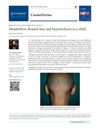 January 2026 in “Cosmoderma”
 A 9-year-old girl has a rare hair disorder causing beaded, sparse hair.
 August 2019 in “Reactions Weekly”
 Daclizumab may cause psoriasis-like skin problems in multiple sclerosis patients.