10 citations
,
April 2003 in “Clinical neurology and neurosurgery” Autoimmune polyglandular syndrome can cause temporary brain issues that may improve on their own.
 15 citations
,
June 2019 in “Journal of Neuroendocrinology”
15 citations
,
June 2019 in “Journal of Neuroendocrinology” Isoallopregnanolone may be a safe and effective treatment for reducing tics in a mouse model of Tourette syndrome.
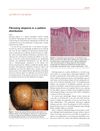 16 citations
,
February 2010 in “Journal of the European Academy of Dermatology and Venereology”
16 citations
,
February 2010 in “Journal of the European Academy of Dermatology and Venereology” Fibrosing alopecia in a pattern distribution is a unique hair loss condition that may respond to antiandrogen therapy.
 15 citations
,
May 2016 in “Archives of Dermatological Research”
15 citations
,
May 2016 in “Archives of Dermatological Research” ULBP3 could be a marker for diagnosing alopecia areata incognita and may be linked to its cause and development.
 87 citations
,
December 2016 in “British journal of dermatology/British journal of dermatology, Supplement”
87 citations
,
December 2016 in “British journal of dermatology/British journal of dermatology, Supplement” Cancer patients treated with immune checkpoint inhibitors may develop alopecia, but some hair regrowth is possible with treatment.
 January 2025 in “Geneesmiddelenbulletin”
 Baricitinib is effective and safe for treating severe alopecia areata with ongoing use.
 September 2024 in “Journal of the American Academy of Dermatology”
 Continued baricitinib treatment leads to significant scalp hair regrowth in severe alopecia areata patients.
 April 2026 in “Frontiers in Medicine”
 Upadacitinib effectively treats psoriasis and lichen planus together.
 May 2026 in “Malahayati Nursing Journal”
 Acupuncture may help reduce hair loss and improve scalp health in alopecia.
 January 2025 in “Investigative and Clinical Urology”
 SHPro® improved urinary symptoms and erectile function in men and is safe.
October 2020 in “The American journal of gastroenterology” Para-aminobenzoic acid in hair supplements can cause autoimmune hepatitis.
 May 2026 in “Malahayati Nursing Journal”
 Facial acupuncture improved skin appearance and health.
15 citations
,
September 2018 in “Hearing research” Rapamycin reduces age-related hearing cell loss in mice, but acarbose does not.
May 2025 in “International Ayurvedic Medical Journal” Ayurvedic treatment effectively improved alopecia areata symptoms quickly and affordably.
1 citations
,
September 2024 in “Journal of the American Academy of Dermatology” Poor air quality increases the risk of atopic dermatitis in Taiwan.
August 2024 in “JAAD Case Reports” Upadacitinib successfully regrew hair in a child with alopecia universalis and specific genetic mutations.
 August 2025 in “JURNAL PEMBELAJARAN DAN BIOLOGI NUKLEUS”
 Alopecia in bats is more common in urban areas due to habitat conditions.
Baricitinib may effectively treat oral lichen planus.
3 citations
,
July 2025 in “International Immunopharmacology” 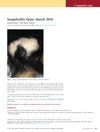 February 2016 in “The journal of investigative dermatology/Journal of investigative dermatology”
 JAK inhibitors may help treat alopecia areata by reversing hair loss.
July 2025 in “Skin Research and Technology” Hsa-miR-193a-5p is important in alopecia areata by promoting inflammation and involving specific genes in hair and immune function.
14 citations
,
November 2024 in “International Journal of Molecular Sciences” YAP and TAZ proteins control skin cell growth and repair.
January 2026 in “Pattern Recognition” The new method improves accuracy in segmenting scalp tissue layers.
 February 2024 in “Curēus”
 Secukinumab can cause hair loss, which may improve after stopping the medication.
 8 citations
,
October 2019 in “Immunological investigations”
8 citations
,
October 2019 in “Immunological investigations” The AIRE gene variant rs2075876 is linked to a higher risk of alopecia areata in males.
5-ARI therapy may help prevent prostate cancer progression.
20 citations
,
January 2024 in “Journal of the European Academy of Dermatology and Venereology” Baricitinib is the most effective treatment for alopecia areata.
 2 citations
,
July 2019 in “PLOS ONE”
2 citations
,
July 2019 in “PLOS ONE” Certain genetic variations are linked to higher liver enzyme levels in patients treated for chronic hepatitis C with specific drugs.
 6 citations
,
June 2019 in “International Journal of Dermatology”
6 citations
,
June 2019 in “International Journal of Dermatology” Frontal fibrosing alopecia has occurred in two related male families.
 6 citations
,
May 2022 in “Medicina-lithuania”
6 citations
,
May 2022 in “Medicina-lithuania” IMA may indicate oxidative stress in skin and hair disorders, but more research is needed.