27 citations
,
April 2004 in “Biochemical and Biophysical Research Communications” Two new gene clusters important for hair formation were found on human chromosome 11.
December 2025 in “The Journal of Cell Biology” Keratin 15 helps maintain skin cell growth and repair.
 April 2017 in “The journal of investigative dermatology/Journal of investigative dermatology”
 HSD11b1 affects skin nerves and increases non-histaminergic itch.
April 2020 in “The FASEB journal” Poncirin is a promising inhibitor of Janus Kinase 3, potentially better than tofacitinib.
August 2022 in “Journal of Investigative Dermatology” Baricitinib reduces inflammation and mitochondrial damage in skin cells.
 June 2018 in “Surgical Case Reports”
 S-1 treatment led to a complete response in pancreatic cancer with manageable side effects.
26 citations
,
October 2018 in “Cancer Management and Research” High DKK1 levels predict worse survival in head and neck cancer.
 February 2025 in “bioRxiv (Cold Spring Harbor Laboratory)”
 Keratin 15 helps keep skin cells in a young, undifferentiated state.
35 citations
,
October 2002 in “Biochemical and Biophysical Research Communications” The research cloned keratin 7 genes from humans, mice, and marsupials, found similarities between human and mouse genes, and discovered new areas of K7 expression in mice.
March 2026 in “Wound Repair and Regeneration” MARCKSL1 is important for wound healing and could be a target to reduce scarring.
2 citations
,
January 2014 in “Photochemical & photobiological sciences” Grasp protein helps maintain skin health after UVB exposure.
15 citations
,
July 2015 in “Developmental Dynamics” Orai1 protein is crucial for tooth development and affects enamel thickness and mineralization.
 27 citations
,
July 2017 in “Scientific Reports”
27 citations
,
July 2017 in “Scientific Reports” N-WASP is essential for healthy skin and preventing inflammation.
Ritlecitinib helps reduce inflammation and promote hair regrowth in alopecia areata, especially in patchy-type cases.
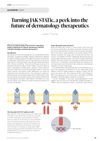 August 2024 in “New Zealand Medical Student Journal”
 JAK inhibitors show promise for treating skin diseases effectively and safely.
 1 citations
,
February 2022 in “bioRxiv (Cold Spring Harbor Laboratory)”
1 citations
,
February 2022 in “bioRxiv (Cold Spring Harbor Laboratory)” A peptide from hair follicle stem cells promotes hair growth by activating specific skin cells.
1 citations
,
January 2025 in “Burns & Trauma” Targeting Midkine can help reduce pain and itching in keloids.
1 citations
,
April 2016 in “Journal of lipid research” Lipin-1 is important for skin cell differentiation and skin barrier function.
11 citations
,
June 2019 in “Journal of dermatology” New medicines that block a specific pathway are showing promise for treating severe hair loss but need more testing for safety and effectiveness.
July 2025 in “Journal of Investigative Dermatology” Upadacitinib effectively treats pyoderma gangrenosum.
1 citations
,
August 2015 in “Experimental Dermatology” KIT's role in skin cells is not entirely independent, as other cells can influence its function.
 54 citations
,
July 2017 in “Scientific Reports”
54 citations
,
July 2017 in “Scientific Reports” JMJD3 and NF-κB activate Notch1, which is essential for skin cell movement and wound healing.
305 citations
,
March 2008 in “AJP Endocrinology and Metabolism” SSAT is a key enzyme affecting cell growth and metabolism, with potential but risky use in disease treatment.
January 2026 in “Human Mutation” T cell subsets are crucial in kidney cancer, and a new model predicts patient outcomes using key genes.
 1 citations
,
May 2023 in “Biochemical and Biophysical Research Communications”
1 citations
,
May 2023 in “Biochemical and Biophysical Research Communications” Blocking DKK1 with siRNA can improve hair growth.
December 1981 in “ビジネスコミュニケ-ション” TRPV1 affects sebaceous gland function and could help treat acne.
8 citations
,
March 2023 in “PubMed” JAK inhibitors show promise in treating difficult skin diseases.
 November 2022 in “Journal of Investigative Dermatology”
 Scientists found a new type of skin cell that could help with skin repair and these cells work better with a certain protein.
 30 citations
,
December 2011 in “Journal of biological chemistry/The Journal of biological chemistry”
30 citations
,
December 2011 in “Journal of biological chemistry/The Journal of biological chemistry” Keratin 17 is modified by RSK1 in response to growth and stress, affecting skin growth and stress response.
 January 2024 in “American journal of clinical dermatology”
 Ritlecitinib is safe and well-tolerated for treating alopecia areata in patients aged 12 and older.