January 2009 in “IRIS UNIMORE (University of Modena and Reggio Emilia)” Neurosteroids from glia cells help control seizure development in epilepsy.
44 citations
,
October 2016 in “Epilepsia” 2-DG reduces seizures by enhancing brain inhibition through specific receptor activation.
June 2022 in “Annals of Indian Academy of Neurology” A woman's shingles infection triggered her first episode of a rare neurological disorder and blood vessel inflammation.
3 citations
,
September 2024 in “Brain and Behavior” ASA and CM may protect the brain and work better together.
January 2026 in “Pharmaceutics” Extracellular vesicles can worsen Alzheimer's but also offer potential for diagnosis and treatment.
 September 2025 in “Dietary Supplements and Nutraceuticals”
 Cerebronal® may help improve certain brain health markers.
 12 citations
,
May 2019 in “Molecular Medicine Reports”
12 citations
,
May 2019 in “Molecular Medicine Reports” Forsythiaside A helps reduce brain damage from lack of blood flow by activating certain protective pathways.
 3 citations
,
September 2018 in “Journal of Biomaterials Science, Polymer Edition”
3 citations
,
September 2018 in “Journal of Biomaterials Science, Polymer Edition” Different materials affect the growth of brain cells and fibroblasts, with matrigel being best for brain cell growth.
 130 citations
,
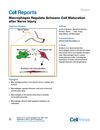
September 2018 in “Cell Reports”
130 citations
,
September 2018 in “Cell Reports” Macrophages help heal nerves by aiding the maturation of Schwann cells and are important for nerve repair.
9 citations
,
October 2020 in “bioRxiv (Cold Spring Harbor Laboratory)” Microglia are essential for zebrafish brain repair by controlling inflammation.
2 citations
,
July 2020 in “bioRxiv (Cold Spring Harbor Laboratory)” Neural stem cells use local feedback to maintain balance in the adult brain.
17 citations
,
April 2006 in “Brain Research” 5α-reduced neurosteroids may help regulate glial cell differentiation.
12 citations
,
February 2023 in “Stem Cell Research & Therapy” HGF-modified hair follicle stem cells help brain recovery after injury in rats.
 201 citations
,
November 1964 in “Journal of neurophysiology”
201 citations
,
November 1964 in “Journal of neurophysiology” The cuneate nucleus has two main neuron types: relay neurons and interneurons.
Spiny mice have resilient, large mitochondria that help them regenerate tissue.
10 citations
,
July 2023 in “World Journal of Stem Cells” The secretome helps protect and regenerate retinal cells by enabling communication between stem cells and retinal cells.
16 citations
,
November 2011 in “Neuroscience Letters” Progesterone protects brain cells by converting to allopregnanolone and involving GABAA receptors.
33 citations
,
September 2008 in “Biochemical and Biophysical Research Communications” Hair follicles can be used to easily create neurons and glial cells for potential nerve repair.
4 citations
,
January 2025 in “Annals of the New York Academy of Sciences” Spiny mice can regenerate tissues instead of forming scars.
35 citations
,
April 2009 in “Journal of Neuroscience Research” HDAC inhibitors help brain cells grow and improve brain function.
 June 2026 in “Cell Regeneration”
 The olfactory epithelium can regenerate throughout life, aided by specific cells, genes, and new research methods.
 1 citations
,
June 2023 in “Reproduction”
1 citations
,
June 2023 in “Reproduction” Microglia, the brain's immune cells, may contribute to Polycystic Ovary Syndrome (PCOS) by altering the female brain's structure and function, with kisspeptin neurons and GABA neurotransmitters also playing a role.
 11 citations
,
March 2024 in “Cell and Tissue Research”
11 citations
,
March 2024 in “Cell and Tissue Research” Telocytes have potential in therapy and tissue regeneration, but challenges in identification and cultivation remain.
45 citations
,
November 2024 in “International Journal of Molecular Sciences” Functional foods and nutrients like flavonoids, vitamin D, omega-3s, and probiotics can boost brain health and reduce stress.
24 citations
,
July 2016 in “Steroids” Progesterone and testosterone protect brain cells from damage through specific pathways.
February 2026 in “Advanced Science” TTNPB helps turn stem cells into neural stem cells, improving depression-like behaviors in rats.
 14 citations
,
February 2020 in “Scientific reports”
14 citations
,
February 2020 in “Scientific reports” Telocytes in the scalp may help with skin regeneration and maintenance.
37 citations
,
May 2018 in “Developmental Biology” Adult neural crest-derived cells can become multipotent and aid tissue repair when stressed or injured.
3 citations
,
December 2024 in “Stem Cell Reports” Low fucosylation boosts stem cell growth in the eye.
April 2023 in “Journal of clinical and translational science”