July 2022 in “Journal of Investigative Dermatology” Arg1+ macrophages may play a role in Alopecia Areata, offering new treatment targets.
 11 citations
,
May 2015 in “Stem Cells Translational Medicine”
11 citations
,
May 2015 in “Stem Cells Translational Medicine” Megestrol acetate helps fat-derived stem cells grow, move, and turn into fat cells through a specific receptor.
4 citations
,
December 2013 in “Journal of Investigative Dermatology Symposium Proceedings”  June 2021 in “bioRxiv (Cold Spring Harbor Laboratory)”
 KIF18B is important for correctly positioning cell division machinery in skin cells, affecting hair follicle development.
 178 citations
,
October 2001 in “Genes & Development”
178 citations
,
October 2001 in “Genes & Development” The mutated hairless gene causes hair loss by acting as a new type of corepressor affecting thyroid hormone receptors.
 7 citations
,
March 2020 in “PloS one”
7 citations
,
March 2020 in “PloS one” α-parvin is necessary for skin and hair growth and for the correct orientation of skin cells.
16 citations
,
August 2021 in “Tumor Biology” TMPRSS2 helps viruses enter cells and protects the prostate from inflammation-related cancer.
37 citations
,
December 1995 in “Journal of Cell Science” Nexin 1 may help control hair growth.
 1 citations
,
December 2018 in “Journal of genetic medicine”
1 citations
,
December 2018 in “Journal of genetic medicine” A small change in the TRPS1 gene leads to a less severe form of a syndrome affecting hair, nose, and finger development.
 18 citations
,
April 2014 in “Stem cells”
18 citations
,
April 2014 in “Stem cells” The study found stem cells in minor salivary glands that can differentiate and are involved in tumor formation when exposed to tobacco.
 13 citations
,
November 2017 in “Journal of Cellular and Molecular Medicine”
13 citations
,
November 2017 in “Journal of Cellular and Molecular Medicine” The workshop discussed the role of a protein called calreticulin in health and disease, its potential as a treatment target, and its possible use as a disease marker.
 13 citations
,
August 1995 in “The Journal of Steroid Biochemistry and Molecular Biology”
13 citations
,
August 1995 in “The Journal of Steroid Biochemistry and Molecular Biology” The activity of a specific rat enzyme in the prostate and epididymis is highly dependent on the acidity level.
24 citations
,
March 2016 in “Journal of Investigative Dermatology” TIP39 and PTH2R help control calcium levels and skin cell development.
July 2025 in “Journal of Investigative Dermatology” Ritlecitinib reduces alopecia areata symptoms by blocking JAK3/TEC signaling and T-cell activity.
 1 citations
,
May 2026 in “bioRxiv (Cold Spring Harbor Laboratory)”
1 citations
,
May 2026 in “bioRxiv (Cold Spring Harbor Laboratory)” UT-018 speeds up wound healing and boosts hair growth in mice.
 December 2023 in “The journal of cell biology/The Journal of cell biology”
 The mTurq2-Col4a1 mouse model shows how the basement membrane develops in live mammals.
 May 2024 in “Scientific reports”
 Twist2 is essential for scarless skin healing and hair growth in mouse fetuses.
21 citations
,
October 2017 in “Cell death and disease” Sesn2 protects inner ear hair cells from damage by regulating certain cell survival pathways.
2 citations
,
January 2014 in “Photochemical & photobiological sciences” Grasp protein helps maintain skin health after UVB exposure.
7 citations
,
September 2003 in “Journal of Investigative Dermatology” PAR-1 may play a role in hair growth regulation in human hair follicles.
Loss of the p53 gene alone causes tumors, and losing both p53 and Rb genes speeds up aggressive skin cancer.
53 citations
,
April 2016 in “Stem cell research & therapy” LL-37 helps stem cells grow and move, aiding tissue regeneration and hair growth.
January 2024 in “Animals” Circular RNA ERCC6 helps activate stem cells important for cashmere goat hair growth by interacting with specific molecules in an m6A modification-dependent way.
88 citations
,
August 1998 in “Carcinogenesis” High levels of ODC and a mutant Ha-ras gene cause tumors in mice.
 10 citations
,
November 2018 in “Genetics in medicine”
10 citations
,
November 2018 in “Genetics in medicine” Lack of cystatin M/E causes thin hair and dry skin.
 16 citations
,
March 2013 in “The Journal of Dermatology”
16 citations
,
March 2013 in “The Journal of Dermatology” Low TRPS1 expression in skin and hair cells is linked to hair problems in Trichorhinophalangeal syndrome.
 April 2017 in “Journal of Investigative Dermatology”
 A virus protein can activate a pathway that may lead to abnormal hair follicle development.
 6 citations
,
October 2012 in “Journal of Heredity”
6 citations
,
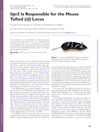
October 2012 in “Journal of Heredity” The Itpr3 gene causes a specific hair pattern in mice.
12 citations
,
December 2023 in “Plant Communications” ADF8 and ADF11 help root hairs grow longer at high pH.
April 2023 in “Journal of clinical and translational science”